Life
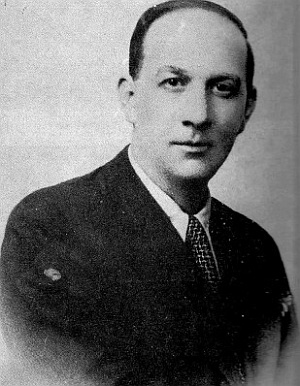
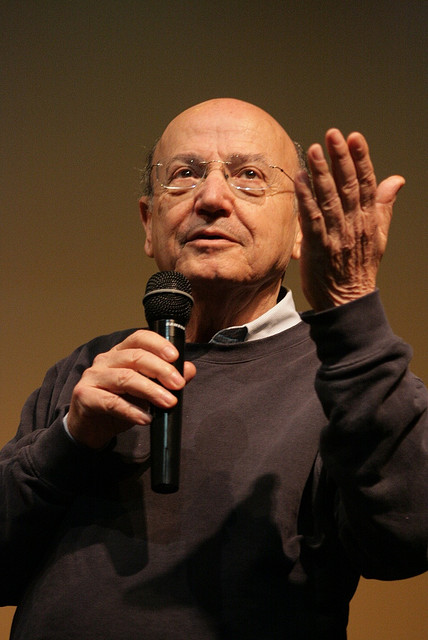
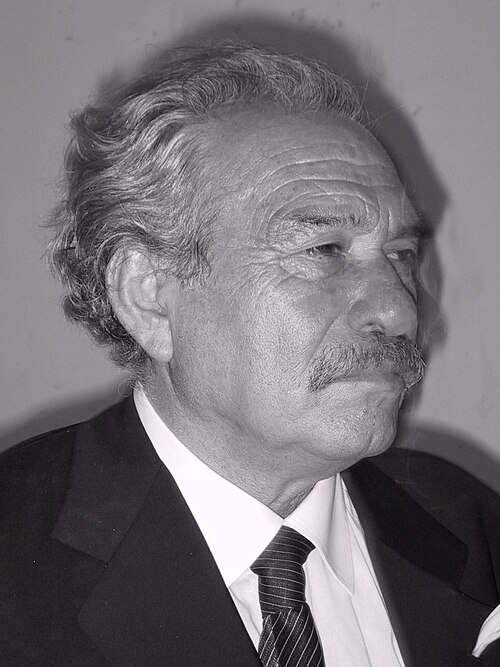
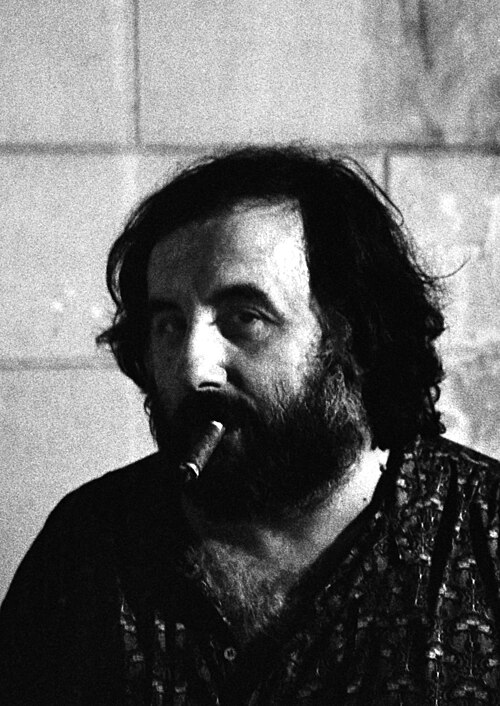
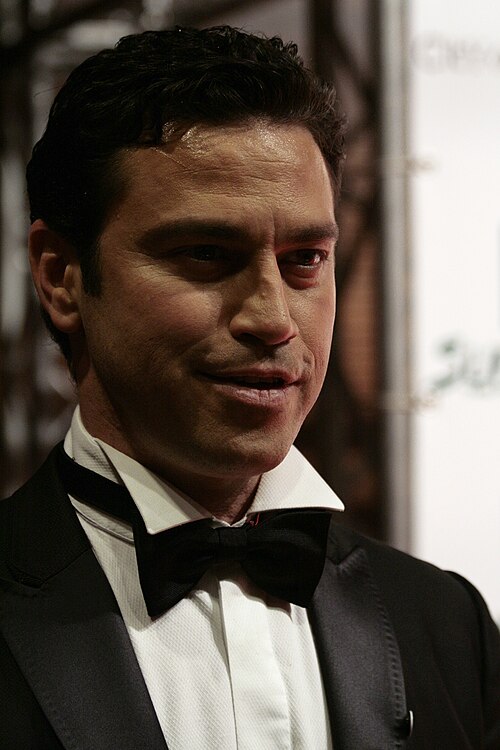
Spyros Evangelatos was born in Athens on 20 October 1940, the son of the composer Antiochos Evangelatos and the harpist Xeni Bourexaki. He graduated from the Drama School of the National Theatre in 1961 and studied philology at the University of Athens, where he received his doctorate in 1970. Between 1966 and 1970 he studied theatre studies at the University of Vienna on a scholarship. He began directing professionally at about twenty-one with Φορτουνάτος (Fortounatos), a Cretan comedy by Markos Antonios Foskolos whose text he had found in an Athens bookshop.
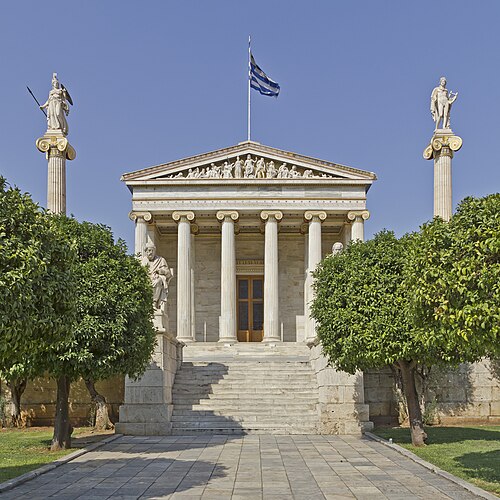
Early in his career he founded a company called Νεοελληνική Σκηνή (Modern Greek Stage); sources give 1962 or 1972. In the 1970s he directed for the National Theatre at Epidaurus, and in 1975 he founded the Amphi-Theatre. He was Director General of the State Theatre of Northern Greece from 1977 to 1980 and of the Greek National Opera from 1984 to 1987, and later chaired its board. He became a professor at the University of Athens in 1989 and joined its new Department of Theatre Studies in 1991. Elected to the Academy of Athens in 2005, he was its Vice-President in 2012 and President in 2013. In February 2011 financial difficulties forced him to suspend the Amphi-Theatre. He died on 24 January 2017.
Works
Evangelatos approached a play first as a philologist, studying its text and history, and then as a man of the rehearsal room. He wrote many studies on Cretan theatre and the theatrical tradition of the Ionian Islands, and he put that research on stage. Among the older works he revived were Kornaros’s Ερωτόκριτος (Erotokritos), Chortatsis’s Ερωφίλη (Erofili), Katsaitis’s Ιφιγένεια εν Ληξουρίω (Iphigenia in Lixouri), which he presented at the Edinburgh Festival, and Montseleze’s Ευγένα (Evgena). He also translated plays by Greek and foreign authors.
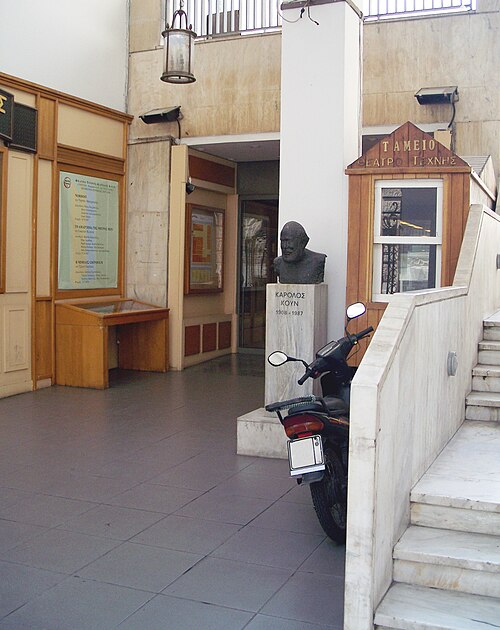
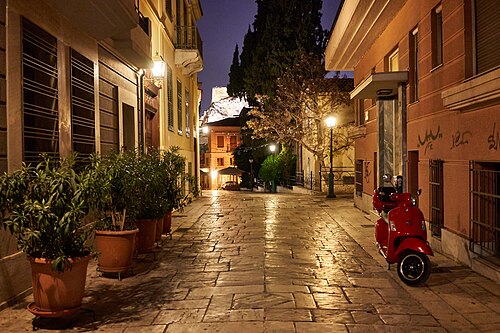
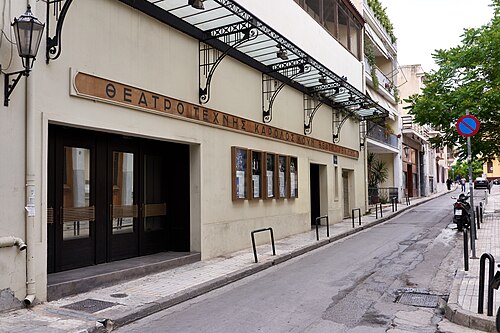
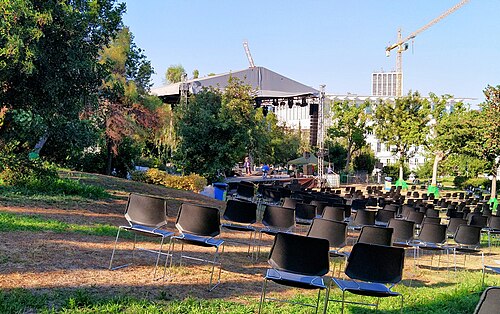
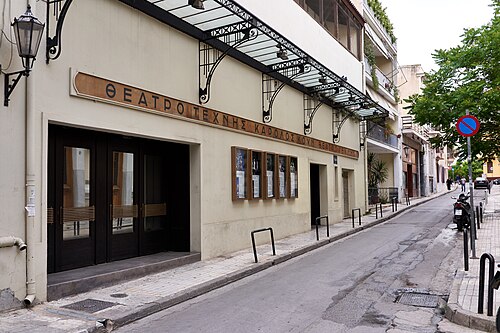
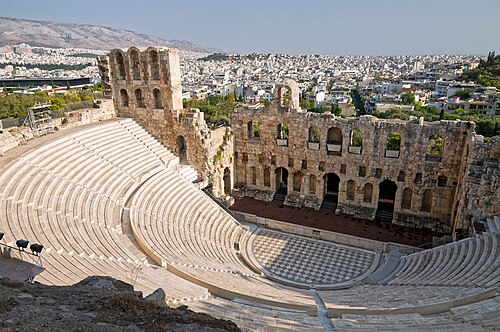
Ancient drama was central to his work. For the National Theatre he directed Sophocles’ Ηλέκτρα (Electra) at Epidaurus in 1972 and Euripides’ Βάκχαι (Bacchae) in 1975. The Amphi-Theatre, based for many years on Adrianou Street in Plaka, staged 95 productions and appeared at about thirty international festivals, publishing a scholarly programme for each show. He also directed many operas for the Greek National Opera, the last of them Massenet’s Werther in 2014. His prizes included the Karolos Koun Prize in 1988 for an Oresteia. His last production, Αμύντας (Amyntas), attributed to Georgios Mormoris, opened at the Odeon of Herodes Atticus on 8 July 2016.
Legacy in Greece today
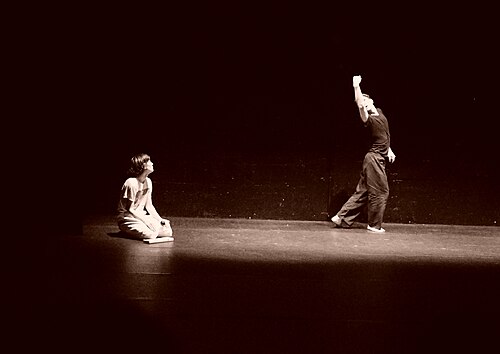
His work lives on in Greek theatre research and on stage. In 2017 the Athens Festival revived Αμύντας (Amyntas) under the supervision of his daughter, the director Katerina Evangelatou, who in 2019 was appointed artistic director of the Athens and Epidaurus Festival. In 2022 an international conference in Kefalonia, held with the Academy of Athens, examined his theatre. Many Greek newspaper reviews of his productions are digitised in the National Theatre archive. Find the 1972 cutting headed Μία νέα «Ηλέκτρα» του ’72 (A new Electra of ’72) and read its Greek headline. Then take one stage action and phrase it twice in Greek: as a suggestion, Ίσως θα μπορούσες να γυρίσεις αργά (Perhaps you could turn slowly), and as an order, Γύρνα αμέσως! (Turn now!). These are our own practice sentences.
Did you know?
- He found the text of his first production, Fortounatos, in a bookshop after a professor mentioned it.
- His last opera production, Massenet’s Werther, played at the Olympia Theatre in Athens in 2014.
- Every Amphi-Theatre production came with a programme edited under the responsibility of theatre scholars.
- Asked in 2016 what had guided him for so many years, he answered in one word: Το ψώνιο (the obsession).
Key works
| Greek title | Title | Year |
|---|---|---|
| Φορτουνάτος | Fortounatos — Foskolos’s Cretan comedy, his first production | c. 1961 |
| Ηλέκτρα | Electra — Sophocles, National Theatre, Epidaurus | 1972 |
| Βάκχαι | Bacchae — Euripides, National Theatre, Epidaurus | 1975 |
| Βέρθερος | Werther — Massenet, Greek National Opera | 2014 |
| Αμύντας | Amyntas — attributed to Mormoris, Odeon of Herodes Atticus | 2016 |
A line to remember
Τρία πράγματα είναι διαχρονικά: η γέννηση, ο έρωτας και ο θάνατος.
Tría prágmata íne diachroniká: i génnisi, o érotas ke o thánatos.
Three things are timeless: birth, love and death.