Life
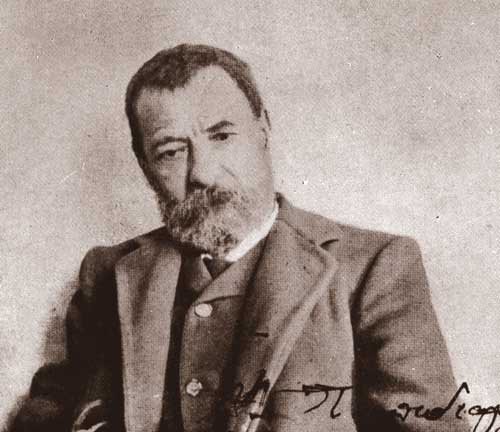
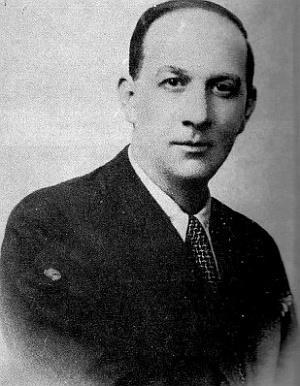
Dimitrios Rodopoulos was born in Athens on 23 June 1908 into a well-off family. He enrolled at the University of Grenoble to study commerce but came home in 1925 for financial reasons, and in 1930 he graduated from the Law School of the University of Athens; he never practised. His pen name comes from the elm tree, the καραγάτσι, in the churchyard of Rapsani, the village where his family spent the summers, on the slopes of Mount Olympus. The «Μ.» was never explained: perhaps Mitia, a family nickname, perhaps Michalis.
His first novel, Ο συνταγματάρχης Λιάπκιν (Colonel Liapkin), appeared in 1933 and made him famous overnight. In 1935 he married the painter Niki Karystinaki; their daughter, Marina Karagatsi, later looked after his work. He lived from his pen and from journalism: after the war he wrote theatre criticism for the newspaper Βραδυνή from 1946, worked as a war correspondent in 1949 during the Civil War, wrote and directed a film, and from 1952 worked for an advertising agency. He even stood, unsuccessfully, for parliament in 1956 and 1958, for Spyros Markezinis's Progressive Party. He wrote very fast and very much: novels, stories, plays, chronicles. After a heart attack in 1958, he died of a long attack of tachycardia in Athens on 14 September 1960, at fifty-two, leaving his last novel, Το 10, unfinished. On his tomb is a line from his own work.
Works

Karagatsis wanted Greek fiction to leave the village and the ethographic idyll behind, and to write the big, modern, European novel of passion. His first three novels form a trilogy he called Εγκλιματισμός κάτω από τον Φοίβο (Acclimatisation under Phoebus): foreigners who come to Greece and are transformed, or destroyed, by its sun and its people. In Ο συνταγματάρχης Λιάπκιν (1933) a White Russian officer in exile sinks slowly in a provincial Thessalian town; in Γιούγκερμαν (Jungerman, 1938) a Finnish former officer of the tsar's White Guard, a refugee from the Bolsheviks, becomes a great financier of interwar Athens; in Χίμαιρα (Chimera, 1936), reworked in 1953 as Η μεγάλη χίμαιρα (The Great Chimera), a young Frenchwoman married to a Greek seaman lives on the island of Syros and is consumed by desire and guilt.
Later came Ο κοτζάμπασης του Καστρόπυργου (The Notable of Kastropyrgos), the story of a Greek notable of the Ottoman era who changes faith to save his life, first part of an unfinished family saga, the dark Ο μεγάλος ύπνος (The Great Sleep, 1946), the satirical Σέργιος και Βάκχος (Sergius and Bacchus), and Το 10 (Number 10), the portrait of a working-class apartment building in Piraeus and its tenants, begun in December 1959 and left unfinished. His style is rapid, physical, often coarse, always ironic; critics called him a «born prose writer», and his frank treatment of the body and of sexuality shocked and fascinated his readers.
Legacy in Greece today
Few Greek novelists have been so present on the small screen. Γιούγκερμαν was a television series in 1976 and again in 2007, Ο συνταγματάρχης Λιάπκιν in 1979, Ο κίτρινος φάκελος (The Yellow Envelope) in 1990 and Το 10 in 2007, and in 2014 Η μεγάλη χίμαιρα was a stage success in Athens, directed by Dimitris Tarlow. His novels are always in print and are among the first «big» Greek novels that many young readers choose for themselves. For a C1 learner, Η μεγάλη χίμαιρα is a wonderful challenge, and watching one of the series alongside the book is a good way in.
Did you know?
- His pen name comes from an elm tree (καραγάτσι) in the village of Rapsani, below Mount Olympus.
- No one knows for certain what the «Μ.» stands for; he never said.
- He began Το 10 on 13 December 1959 and died before finishing it.
- He ran twice for parliament, in 1956 and 1958, and lost both times.
Key works
| Greek title | Title | Year |
|---|---|---|
| Ο συνταγματάρχης Λιάπκιν | Colonel Liapkin | 1933 |
| Χίμαιρα | Chimera (later The Great Chimera) | 1936 |
| Γιούγκερμαν | Jungerman | 1938 |
| Ο μεγάλος ύπνος | The Great Sleep | 1946 |
| Ο κοτζάμπασης του Καστρόπυργου | The Notable of Kastropyrgos | |
| Το 10 | Number 10 (unfinished) | 1959–1960 |
A line to remember
Οι μοναδικές ομορφιές είναι προνόμιο του θανάτου.
Oi monadikes omorfies einai pronomio tou thanatou.
Unique beauties are the privilege of death.