Life
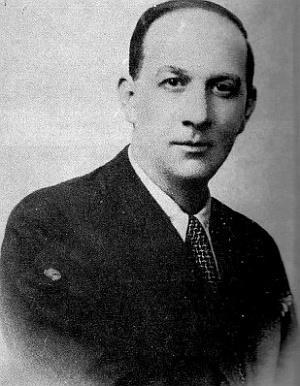
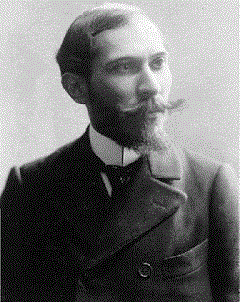
Kalomiris was born in Smyrna (today İzmir) in 1883, in the prosperous Greek community of Asia Minor. He studied music in Athens and Constantinople and then, from 1901, at the Vienna Conservatory, where he took piano and composition and absorbed the music of Wagner, Liszt and the Russian nationalists. In 1906 he went to teach piano in Kharkiv, in the Russian Empire, where he saw at first hand how Russian composers had built a national style on folk song.
In June 1908 he presented a concert of his own works in Athens, accompanied by a printed programme that was in effect a manifesto: Greek composers, he argued, should take their inspiration from Greek folk song and from the demotic poetry of their own time, as the Russians, Czechs and Norwegians had done. In 1910 he settled in Athens and taught at the Athens Conservatory.
The rest of his long career was devoted as much to institutions as to composition. In 1919 he founded the Hellenic Conservatory (Ελληνικό Ωδείο), and in 1926 the National Conservatory (Εθνικό Ωδείο), which still bears the name he gave it and has trained generations of Greek musicians. He wrote books on harmony and theory, gave lectures, and fought endless battles in the press for Greek music and for the demotic language. In 1945 he was elected a member of the Academy of Athens (Ακαδημία Αθηνών). He was composing until the end, and died in Athens in April 1962.
Works

Kalomiris's programme was simple to state and hard to realise: a Greek art music, using the forms of the European tradition, opera, symphony, symphonic poem, but rooted in Greek melodies, rhythms and words. He drew on folk songs, Byzantine echoes and the poetry of the demotic generation, above all Kostis Palamas, many of whose poems he set to music.
His opera Ο Πρωτομάστορας (The Master Builder), first performed in Athens in 1916, has a libretto based on the tragedy by Nikos Kazantzakis, itself drawn from the famous folk ballad of the Bridge of Arta, in which the bridge will stand only if the master builder walls up his own wife in its foundations. It was the first major Greek opera on a Greek folk subject. It was followed by Το δαχτυλίδι της μάνας (The Mother's Ring, 1917), and much later by Ανατολή (Anatoli) and Τα ξωτικά νερά (The Haunted Waters). His last opera, Κωνσταντίνος Παλαιολόγος, again after Kazantzakis, tells of the last emperor of Byzantium.
Among his orchestral works, the Συμφωνία της Λεβεντιάς (Symphony of Levendia, 1918–1920), with its title taken from the untranslatable word for gallant manliness, and the late Παλαμική Συμφωνία (Palamas Symphony, 1956) are the best known. His style is late Romantic, richly orchestrated, often closer to Wagner and Rimsky-Korsakov than to the village, and later Greek composers would criticise it; but he opened the road.
Legacy in Greece today
Kalomiris's most visible legacy is institutional: the National Conservatory (Εθνικό Ωδείο), with branches across Greece, still bears the name he gave it, and thousands of Greek children take their music lessons there. Every Greek history of music begins its modern chapter with him and the «Εθνική Σχολή» he founded, followed by Lavrangas, Riadis, Petridis and others. His operas are revived from time to time by the Greek National Opera, and recordings of his symphonies and songs are available. Streets in Athens and other cities carry his name. A learner can start with the songs on poems by Palamas, or with the story of the Bridge of Arta, which every Greek child knows.
Did you know?
- He taught piano in Kharkiv, in today's Ukraine, before returning to Greece.
- The programme of his 1908 Athens concert is treated as the founding manifesto of the Greek National School of music.
- His opera The Master Builder is based on a play by Kazantzakis, who in turn drew on the folk ballad of the Bridge of Arta.
- He founded two conservatories in Athens, in 1919 and in 1926.
Key works
| Greek title | Title | Year |
|---|---|---|
| Συναυλία-μανιφέστο στην Αθήνα | Manifesto concert in Athens | 1908 |
| Ο Πρωτομάστορας | The Master Builder (opera) | 1916 |
| Το δαχτυλίδι της μάνας | The Mother's Ring (opera) | 1917 |
| Συμφωνία της Λεβεντιάς | Symphony of Levendia | 1918–1920 |
| Εθνικό Ωδείο | The National Conservatory | 1926 |
| Παλαμική Συμφωνία | Palamas Symphony | 1956 |
A line to remember
Μέσα στον Παλαιολόγο έκλεισα όλους τους παλμούς και τους χυμούς της γέρικης καρδιάς μου
Mesa ston Palaiologo eklisa olous tous palmous kai tous chymous tis gerikis kardias mou
Into the Palaiologos I have locked all the beats and all the sap of my old heart