Life
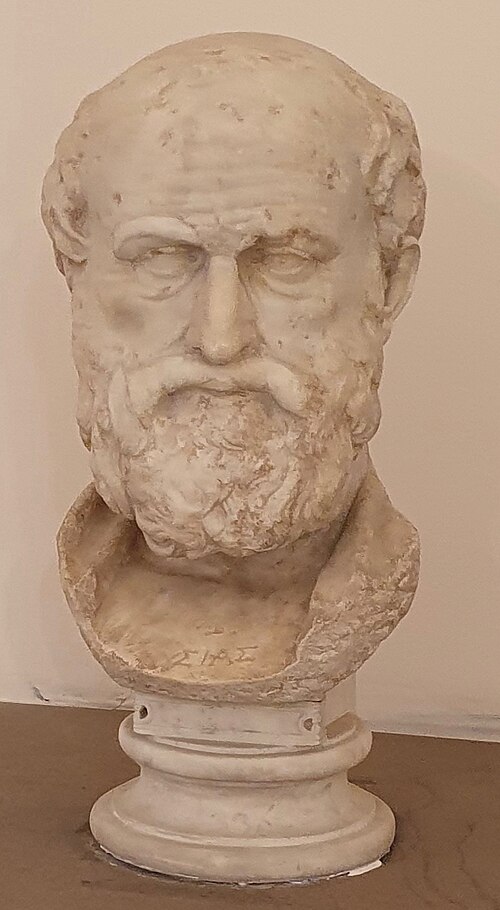
Very little about the life of Tyrtaeus is certain. He belongs to Sparta in the 7th century BC: the Suda places his peak in the 35th Olympiad (640–637 BC), and the Centre for the Greek Language dates him to around 660–600 BC. His poems are linked with the Second Messenian War, when the Messenians, whom Sparta had conquered and reduced to helots, rose in revolt. In the elegy later called Εὐνομία (Eunomia, Good Order), the speaker says that he left “windy Erineus” with the descendants of Heracles and came to the island of Pelops, words that make him sound like a Spartan speaking for his own community.
Ancient writers also told a very different story. Pausanias reports that Delphi told the Spartans to take an adviser from Athens, and the Athenians sent Tyrtaeus, a teacher of letters who was lame in one foot and thought to be of poor intellect. The Athenian orator Lycurgus says Sparta took him from Athens as its leader, and Plato calls him Athenian by birth and later a Spartan citizen. The Suda instead calls him “Laconian or Milesian”, the son of Archembrotus, and both an elegiac poet and an aulos player. Strabo already doubted the Athenian version because of the Erineus line. He also read the poems as saying that Tyrtaeus commanded the Spartans in the war, but this, like the rest of his biography, cannot be checked. Modern scholars usually treat the lame schoolteacher as a legend.
Works

Tyrtaeus wrote elegy, verse in couplets of a hexameter and a pentameter, usually performed with the aulos. The Suda credits him with a constitution for the Spartans, moral precepts in elegiac verse and war songs, in five books. What survives is a set of fragments quoted by later authors, among them four war elegies of some length. The Eunomia, quoted by Strabo, presents Sparta’s order as a gift of Zeus to the descendants of Heracles.
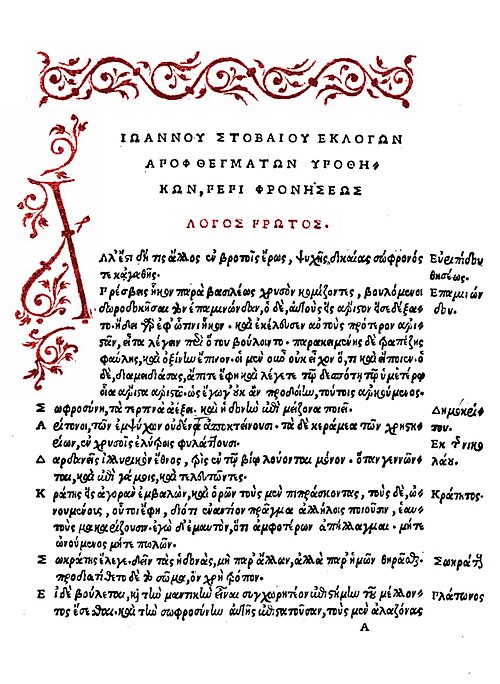
The war elegies speak directly to the young men of the citizen army. Their language is Homeric, but their ideal is new: not the lone hero but the line of hoplites standing side by side in the phalanx. In fragment 10, preserved by Lycurgus, it is called beautiful to fall in the front rank fighting for one’s homeland, while the man who abandons his city becomes a wandering beggar. Fragment 11, preserved by Stobaeus, opens with the encouragement quoted on this page and then describes close combat in harsh detail. Fragment 12 sets aside speed in running, beauty, wealth and eloquence and praises courage in war as the true excellence; Plato discusses its opening in the Laws. These poems belong to a society at war over the land of a people it had enslaved. They are best read as historical evidence of Spartan values, not as timeless advice.
Legacy in Greece today
Tyrtaeus remains a basic witness for archaic Sparta and early Greek elegy. The online anthology of the Centre for the Greek Language presents fragment 10 with a Modern Greek verse translation by Thrasyvoulos Stavrou, under the heading of Horace’s Latin line “Dulce et decorum est pro patria mori”, which echoes it. For your own practice, take the three ancient lines quoted on this page. Find the plural forms ἐστέ (you are), θαρσεῖτε (take heart) and φοβεῖσθε (be afraid). Compare Modern Greek κάνε κουράγιο / κάντε κουράγιο and μη φοβάσαι / μη φοβάστε. Then write two short encouragements before a Greek exam, one for a single friend and one for the whole class: Μη φοβάσαι, Ελένη! Μη φοβάστε, παιδιά, ξέρετε πολλά! (Don’t be afraid, Eleni! Don’t be afraid, everyone, you know a lot!)
Did you know?
- The orator Lycurgus, speaking in Athens in 330 BC, said a Spartan law summoned soldiers on campaign to the king’s tent to hear Tyrtaeus’s verses together.
- According to Philochorus, quoted by Athenaeus, Spartans on campaign sang Tyrtaeus one by one after dinner, and the polemarch gave the best singer a piece of meat.
- The Suda calls him not only a poet but also an αὐλητής (aulos player).
- Strabo used a single line about “windy Erineus” to argue that Tyrtaeus was not an Athenian.
Key works
| Greek title | Title | Year |
|---|---|---|
| Εὐνομία | Eunomia (Good Order) — elegy on the Spartan order, fragments | 7th c. BC |
| «τεθνάμεναι γὰρ καλὸν…» (απόσπ. 10 West) | War elegy on the front rank — fragment 10, quoted by Lycurgus | 7th c. BC |
| «ἀλλ᾿, Ἡρακλῆος γὰρ ἀνικήτου γένος ἐστέ…» (απόσπ. 11 West) | War elegy “Take heart” — fragment 11, quoted by Stobaeus | 7th c. BC |
| «οὔτ᾿ ἂν μνησαίμην…» (απόσπ. 12 West) | Elegy on true excellence — fragment 12, discussed by Plato | 7th c. BC |
A line to remember
ἀλλ᾿, Ἡρακλῆος γὰρ ἀνικήτου γένος ἐστέ, θαρσεῖτ᾿· οὔπω Ζεὺς αὐχένα λοξὸν ἔχει· μηδ᾿ ἀνδρῶν πληθὺν δειμαίνετε, μηδὲ φοβεῖσθε
In today's GreekΑφού είστε γενιά του ανίκητου Ηρακλή, πάρτε θάρρος· ο Δίας δεν έχει ακόμη στρέψει αλλού το κεφάλι του· μην τρομάζετε από το πλήθος των αντιπάλων, μη φοβάστε.
all’, Hēraklêos gàr anikḗtou génos esté, tharseît’· oúpō Zeùs auchéna loxòn échei· mēd’ andrôn plēthỳn deimaínete, mēdè phobeîsthe
Since you are the race of unconquered Heracles, take heart: Zeus has not yet turned his head away; do not dread the crowd of opponents, do not be afraid.