Life
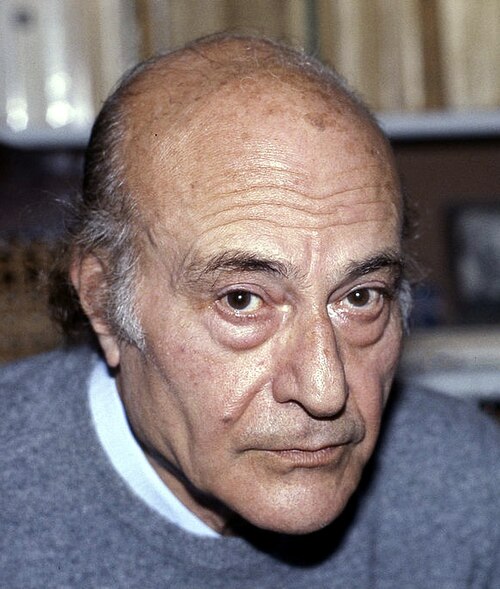
Theodorakis was born on 29 July 1925 on the island of Chios, to a father from Crete and a mother from Çeşme in Asia Minor, and grew up in provincial towns, Mytilene, Syros, Patras, Pyrgos and Tripoli. During the German occupation he joined the resistance in Athens and was arrested and tortured; in the civil war that followed he was deported to the island camps of Ikaria and Makronisos, where he was beaten so badly that his health never fully recovered.
He finished his studies at the Athens Conservatory and in 1954 went to Paris, where he studied analysis with Olivier Messiaen and conducting with Eugène Bigot, won a composition prize at the Moscow music festival in 1957. In 1960 he returned to Greece with a decision that changed Greek music: to set the great modern poets to music for bouzouki and popular singers. The same year he was in parliament for the United Democratic Left (elected in 1964), and when the colonels seized power in April 1967 his music was banned by army order. He was arrested, held in the Oropos camp, then confined with his family in the mountain village of Zatouna, and released in 1970 after an international campaign; he lived in Paris until the junta fell in 1974.
After the restoration of democracy he was again a deputy and briefly a minister in 1990–92, and conducted his own music in stadiums from Athens to Berlin. He died in Athens on 2 September 2021, aged 96, and was buried, as he wished, in his father's village of Galatas near Chania in Crete.
Works

Theodorakis's great idea was that serious poetry and popular song belong together. Επιτάφιος (Epitaphios, 1960), Yannis Ritsos's lament of a mother over her son killed in a tobacco workers' strike, sung by Grigoris Bithikotsis to bouzouki, opened the door; Αρχιπέλαγος (Archipelago) and the Seferis cycle Επιφάνια (Epiphany, 1962) followed, the latter containing Άρνηση (Denial), the song about a hidden beach that every Greek can sing. His masterpiece is Το Άξιον Εστί (It Is Worthy, 1964), a popular oratorio on Odysseas Elytis's long poem for singer, cantor, narrator, choir and orchestra, where Greek history becomes a liturgy. Ρωμιοσύνη (Romiosyni, 1966) on Ritsos and the Μπαλάντα του Μαουτχάουζεν (Ballad of Mauthausen, 1966) on Iakovos Kambanellis's camp memories, sung by Maria Farantouri, are the other pillars.
Abroad his name means Zorba the Greek (1964), Michael Cacoyannis's film with Anthony Quinn, for which Theodorakis wrote the dance now called sirtaki, a slow-to-fast tune on bouzouki that did not exist as a folk dance before the film. He also scored Z (1969) and Serpico (1973). Alongside the songs stand three symphonies, the Canto General on Pablo Neruda, and operas on Medea, Electra and Antigone. His style is instantly recognisable: broad, singable melodies, the bouzouki treated as a noble instrument, and rhythms taken from Greek dance.
Legacy in Greece today
Start with the songs: Άρνηση (Στο περιγιάλι το κρυφό), Της δικαιοσύνης ήλιε νοητέ and Ένα το χελιδόνι from Το Άξιον Εστί, Καημός, Βρέχει στη φτωχογειτονιά, Το τρένο φεύγει στις οχτώ, Μαργαρίτα Μαγιοπούλα. Greeks of every age sing them at tavernas, at school celebrations and at demonstrations, and the crowds at his funeral in September 2021 sang them in the streets of Athens and Chania. The sirtaki from Zorba is danced at the end of countless Greek weddings and tourist evenings. Songs from Το Άξιον Εστί appear in school music books, and the poems he set are read in the literature anthologies. Streets and squares across Greece carry his name, and his scores and papers are kept in the Mikis Theodorakis archive in Athens. A learner can follow the Greek easily: his melodies make the words of Elytis, Ritsos and Seferis stick.
Did you know?
- The sirtaki is not an old folk dance: Theodorakis composed it for Zorba the Greek in 1964, mixing a slow and a fast Cretan step, and it has been danced as «the Greek dance» ever since.
- In 1967 the junta's Army Order No. 13 made it a crime even to play or listen to his music.
- He studied in Paris with Olivier Messiaen and wrote ballets and symphonies before turning, at 35, to popular song with bouzouki.
- He received the Lenin Peace Prize in 1983 and conducted his own music in stadiums well into his eighties.
Key works
| Greek title | Title | Year |
|---|---|---|
| Επιτάφιος | Epitaphios (song cycle on Yannis Ritsos) | 1960 |
| Άρνηση | Denial (song on Giorgos Seferis, from the cycle Epiphany) | 1962 |
| Ζορμπάς | Zorba the Greek (film score, the sirtaki) | 1964 |
| Το Άξιον Εστί | It Is Worthy (popular oratorio on Odysseas Elytis) | 1964 |
| Η μπαλάντα του Μαουτχάουζεν | The Ballad of Mauthausen (on Iakovos Kambanellis) | 1966 |
| Ρωμιοσύνη | Romiosyni (song cycle on Yannis Ritsos) | 1966 |
From the works


Public-domain pictures from Wikimedia Commons.
A line to remember
Στο περιγιάλι το κρυφό κι άσπρο σαν περιστέρι
Sto perigiali to kryfo ki aspro san peristeri
On the secret beach, white as a dove