Life
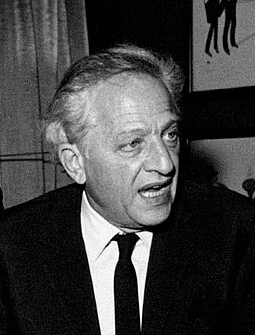
Jules Dassin was born on 18 December 1911 in Middletown, Connecticut, and grew up in Harlem, New York. He started out in the theatre in the 1930s as an actor and writer, and was a member of the Communist Party from 1930 to 1939. In 1940 he went to Hollywood, worked as an assistant to Alfred Hitchcock and directed his first feature film in 1942. Hard-edged crime films such as Brute Force and The Naked City (1947 and 1948) made his name.
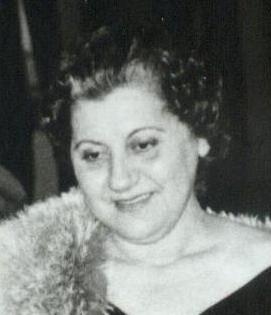
In 1950, during the McCarthy era, he was put on the Hollywood blacklist because of his political beliefs, and in the early 1950s he left for Europe. In France he made Rififi, which brought him a shared best director prize at Cannes in 1955. In France he also met the Greek actress Melina Mercouri; they married in 1966.
When the military dictatorship seized power in Greece in 1967, the couple lived in Paris and campaigned against it. Dassin came back to Greece with Mercouri in 1974 and stayed. He directed plays in Athens, and from 1981 he stood beside her in the campaign for the return of the Parthenon Marbles from the British Museum. After her death in 1994 he founded the Melina Mercouri Foundation to carry on that work. He died in Athens on 31 March 2008.
Works
Dassin’s Greek path began with Celui qui doit mourir (He Who Must Die, 1957), a French film based on Nikos Kazantzakis’s novel Ο Χριστός ξανασταυρώνεται (Christ Recrucified). He later said it was the only one of his own films he really liked.
His best-known Greek work is Ποτέ την Κυριακή (Never on Sunday, 1960). Dassin wrote and directed it and also played Homer Thrace, an earnest American classical scholar who comes to Piraeus. There he meets Ilya, a free-spirited woman of the port played by Mercouri. He tries to “improve” her, while she teaches him to enjoy life. The dialogue mixes Greek and English, and the harbour of Piraeus is the stage for the whole story. Mercouri shared the best actress prize at Cannes in 1960. The film received five Oscar nominations and won for Manos Hadjidakis’s song, known in Greek as Τα παιδιά του Πειραιά (The Children of Piraeus).
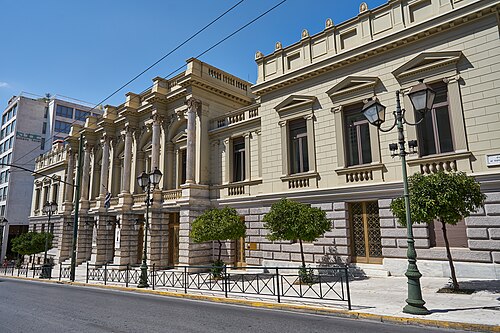
With Mercouri he made more films, among them Phaedra, Topkapi and A Dream of Passion (1978). In Greece he also worked on stage. At the National Theatre he directed Turgenev’s A Month in the Country and Shaw’s Heartbreak House (both 1984) and Chekhov’s The Seagull (1988). In 1985 he staged Verdi’s Otello for the Greek National Opera at the Odeon of Herodes Atticus.
Legacy in Greece today
In Greece, Dassin is remembered above all through Ποτέ την Κυριακή and through his life beside Melina Mercouri. Τα παιδιά του Πειραιά, the song from the film, is still one of the best-known Greek songs abroad. The Melina Mercouri Foundation, which he set up, kept her Parthenon Marbles campaign alive and pressed for a new Acropolis Museum large enough to show the sculptures together.
Try this: the title Ποτέ την Κυριακή contains a day of the week. Say the seven days in Greek, from Δευτέρα (Monday) to Κυριακή (Sunday). Then describe a harbour in one sentence: Το λιμάνι είναι μεγάλο και έχει πλοία (The harbour is big and has ships). The film itself mixes Greek and English at natural speed, so watch a scene with subtitles and listen for the Greek words you know.
Did you know?
- He played the male lead in Never on Sunday himself, as the American scholar Homer Thrace.
- His son Joe Dassin became a famous French pop singer.
- He also directed Illya Darling (1967), the Broadway musical made from Never on Sunday.
- In 1985 he staged Verdi’s Otello in the open air at the Odeon of Herodes Atticus, below the Acropolis.
Key works
| Greek title | Title | Year |
|---|---|---|
| Ριφιφί | Rififi — French heist film; shared best director prize at Cannes | 1955 |
| Ο Χριστός ξανασταυρώνεται | He Who Must Die — film after Kazantzakis’s novel Christ Recrucified | 1957 |
| Ποτέ την Κυριακή | Never on Sunday — film set in Piraeus, with Melina Mercouri | 1960 |
| Ένας μήνας στην εξοχή | A Month in the Country — Turgenev play, National Theatre of Greece | 1984 |
| Οθέλλος | Otello — Verdi opera, Greek National Opera, Odeon of Herodes Atticus | 1985 |
| Ο γλάρος | The Seagull — Chekhov play, National Theatre of Greece | 1988 |
A line to remember
Ο Ζυλ Ντασσέν πέτυχε να βγάλει το Εθνικό Θέατρο από το τέλμα.
O Zyl Ntassén pétyche na vgálei to Ethnikó Théatro apó to télma.
Jules Dassin has managed to pull the National Theatre out of the swamp.