Life
Karaiskakis was born around 1782 near the village of Mavrommati in the Agrafa mountains of western Thessaly. According to the story told in his own lifetime, his mother was a nun and his father a klepht, a mountain outlaw, which is why his enemies (and sometimes his friends) called him «ο γιος της καλογριάς» (the nun's son). He grew up poor, took to the mountains as a young man and, like many klephts, served for a time in the guard of Ali Pasha of Ioannina, the Ottoman ruler of Epirus, where he learned war and politics the hard way.
When the Revolution broke out in 1821 he fought in western Central Greece as an armatolos, the captain of an armed band. He was brave and clever but also proud and difficult, and in 1824 a Greek assembly at Missolonghi even condemned him as a traitor; he was soon taken back into service. He suffered for years from tuberculosis and fever, and he was known for his colourful swearing and his jokes, even in the worst moments.
In 1826, with the Revolution close to collapse, the government made him commander-in-chief (αρχιστράτηγος) of Roumeli. He won a string of victories, at Chaidari near Athens and above all at Arachova in November 1826, and then gathered his army at Faliro to break the Ottoman siege of the Acropolis. On 22 April 1827, during a skirmish, he was shot and mortally wounded; he died the next day, 23 April, the feast of Saint George, his name day.
Works

Karaiskakis did not write books; his work was a campaign. In the summer of 1826 the Ottoman army of Reşid Mehmed Pasha (Kioutachis) was besieging the Acropolis of Athens, and most of Central Greece was back under Ottoman control. Karaiskakis understood that he could not beat the large Ottoman army in open battle, so he used klepht tactics: he moved fast through the mountains, cut supply lines and attacked isolated units.
His greatest success came at Arachova, on the slopes of Mount Parnassus, in November 1826. He trapped an Ottoman force under Mustafa Bey in the village and destroyed it after several days of fighting in the snow; the victory restored Greek morale in all of Roumeli and is still celebrated in Arachova every year. In the following weeks his men retook much of the region, with fighting around Distomo and elsewhere.
In early 1827 he brought his army down to the coast at Faliro and Piraeus to relieve the Acropolis, working uneasily with the foreign officers who now commanded the Greek forces, Lord Cochrane and General Richard Church. His death in April 1827 left the army without a leader the soldiers trusted; a few days later a badly planned attack failed, and the Acropolis surrendered in June. Many Greeks have since believed that if Karaiskakis had lived, the story would have been different. His humour, his anger and his loyalty to his men are known from the memoirs of fighters such as Makrygiannis.
Legacy in Greece today
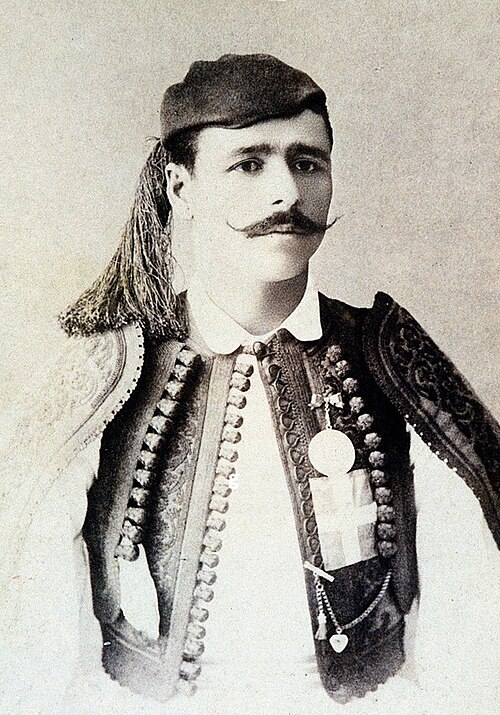
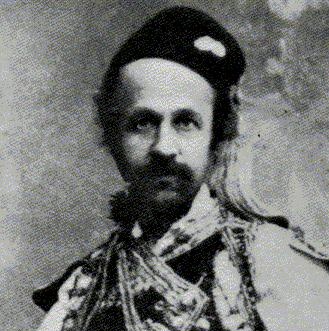
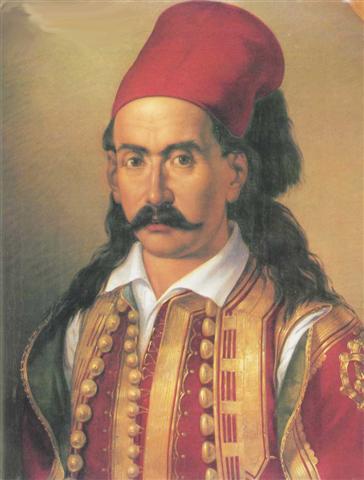
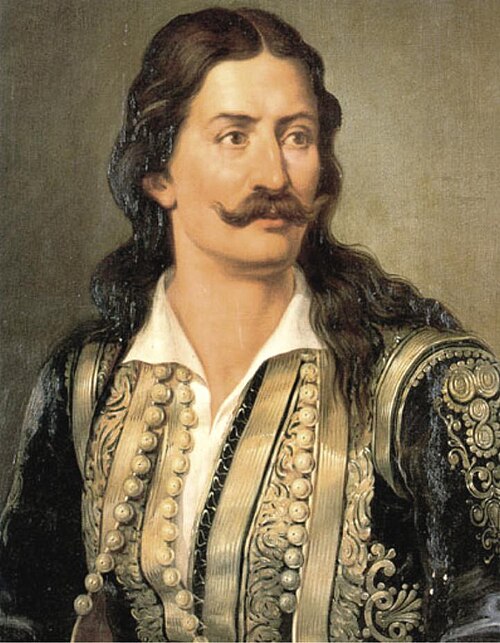
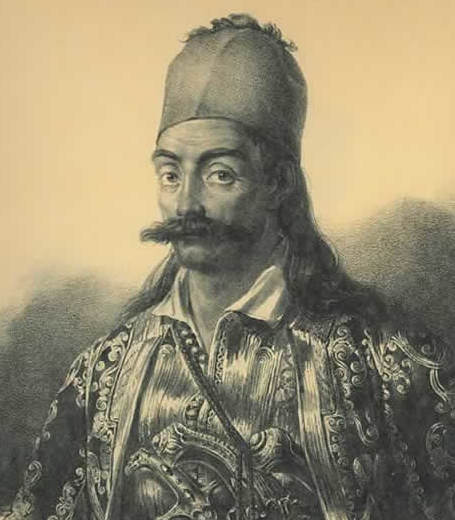
Every Greek knows the name from the Γήπεδο Γεώργιος Καραϊσκάκης (Karaiskakis Stadium) in Neo Faliro, Piraeus, home ground of Olympiacos, built close to the coast where he was wounded. There are Karaiskakis Squares in Athens and in many towns, streets named Καραϊσκάκη everywhere, and a monument in Arachova, where the victory of 1826 is remembered every year. His portrait, with the white fustanella and the long hair of the klephts, appears in school history books about 1821, and the folk songs of Roumeli sing his death. If you visit Piraeus on a match day, you will hear his name shouted by thousands.
Did you know?
- He died on 23 April 1827, the feast of Saint George, which was his name day.
- His nickname «ο γιος της καλογριάς» (the nun's son) came from the story that his mother was a nun.
- He was ill with tuberculosis for much of the war and still led his men from the front.
- In 1824 he was condemned as a traitor by his own side; two years later the same government made him commander-in-chief.
Key works
| Greek title | Title | Year |
|---|---|---|
| Μάχη του Χαϊδαρίου | Battle of Chaidari | 1826 |
| Αρχιστράτηγος της Ρούμελης | Commander-in-chief of Roumeli | 1826 |
| Μάχη της Αράχωβας | Battle of Arachova | 1826 |
| Εκστρατεία στη Ρούμελη | Campaign through Central Greece | 1826–1827 |
| Μάχη του Φαλήρου | Battle of Faliro, where he fell | 1827 |
From the works


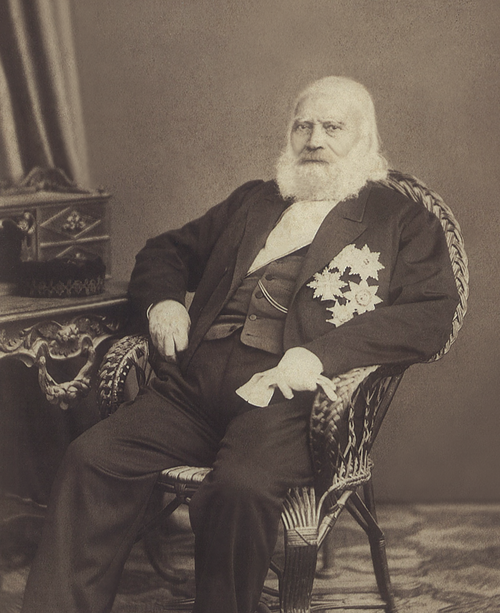
Public-domain pictures from Wikimedia Commons.
A line to remember
Εγώ πεθαίνω· εσείς όμως να είστε μονιασμένοι και να βαστάξετε την πατρίδα.
Ego pethaino; eseis omos na eiste moniasmenoi kai na vastaxete tin patrida.
I am dying; but you must stay united and hold on to our country.