Life
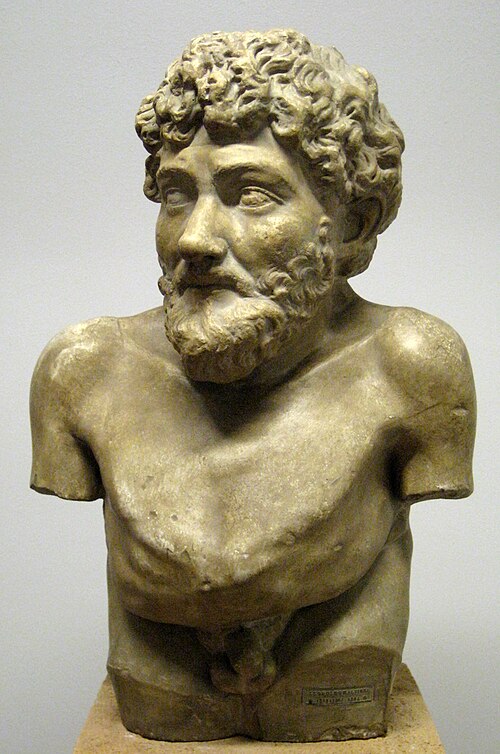
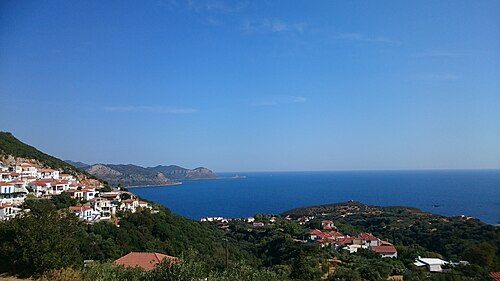
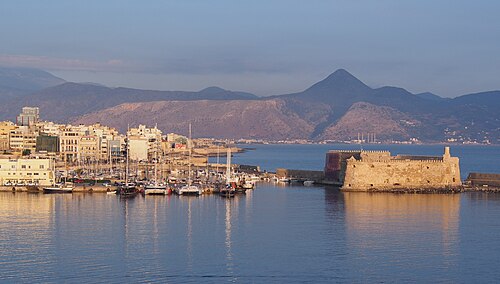
Ibycus was born in Rhegium, a Greek city on the toe of Italy, now Reggio Calabria. Ancient writers give his father several different names, and they disagree about his dates. The Byzantine dictionary known as the Suda places him on Samos in the time of King Croesus, around 564–561 BC, but modern histories usually place his Samian years under the tyrant Polycrates, around 537–523 BC. At Polycrates’ court, costly performances of choral song, with poetry, music and dance, entertained guests and also advertised the glory of the ruler. Later scholars in Alexandria counted Ibycus among the nine canonical lyric poets of Greece.
Nothing reliable is known about his death. A famous story, told centuries later in an epigram by Antipater of Sidon, by Plutarch and by the Suda, says that robbers attacked him in a lonely place, near Corinth in some versions. As he was dying, he called on a flock of passing cranes to avenge him. Later, in the theatre, one of the murderers saw cranes overhead and cried out, “Look, the avengers of Ibycus!”, and the crime was discovered. “The cranes of Ibycus” became a proverb, but the story is a legend, not a historical record.
Works

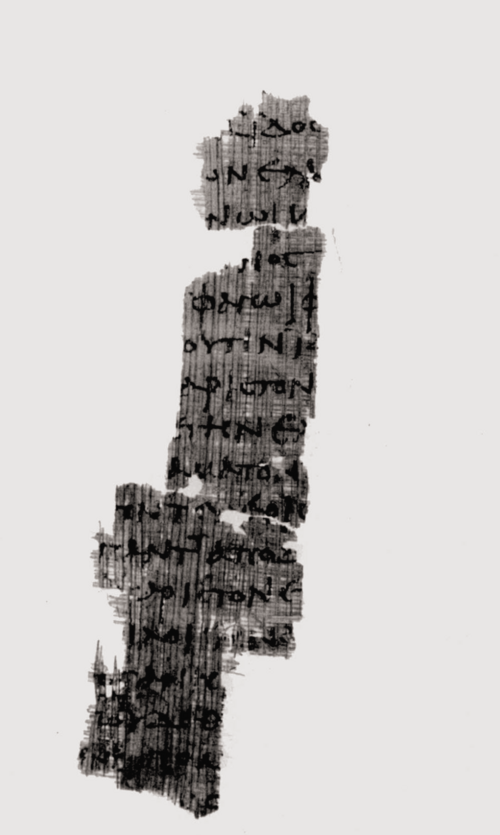
Ibycus wrote in a literary Greek that mixes Doric and Aeolic features with a strong epic colour. His surviving poems fall into two groups: narrative songs on myths, close to the manner of the older poet Stesichorus, and more personal pieces about love and praise. A papyrus fragment from Egypt, transmitted without the author’s name but usually attributed to him, praises the beauty and fame of the young Polycrates. It uses a well-known device: the poet sets aside one subject in order to focus on the one that really matters, the person being praised.
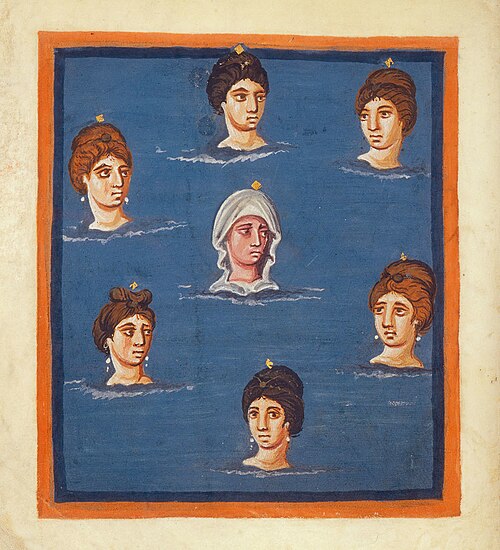
His love poems are the reason ancient readers remembered him. In fragment 286, quoted by Athenaeus in the Deipnosophists, quince trees bloom in spring, watered by rivers, where the untouched garden of the Maidens lies, and vine buds grow under shady branches. Then the picture turns: for the poet, love rests in no season, but rushes down like the Thracian north wind with lightning. In fragment 287, Eros looks at him from under dark eyelids and throws him into the nets of Aphrodite; the poet trembles like an old prize-winning racehorse forced to race again. In Plato’s Parmenides (137a) the philosopher recalls this racehorse, and in the Phaedrus Socrates borrows another line of Ibycus.
Legacy in Greece today
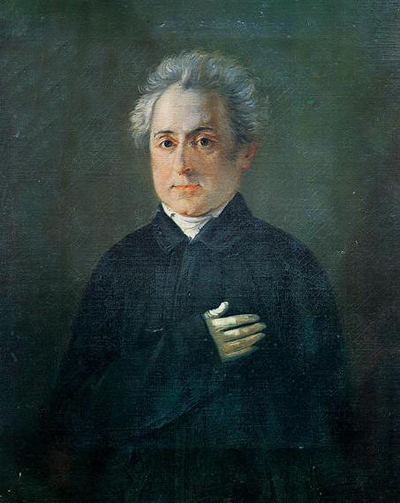
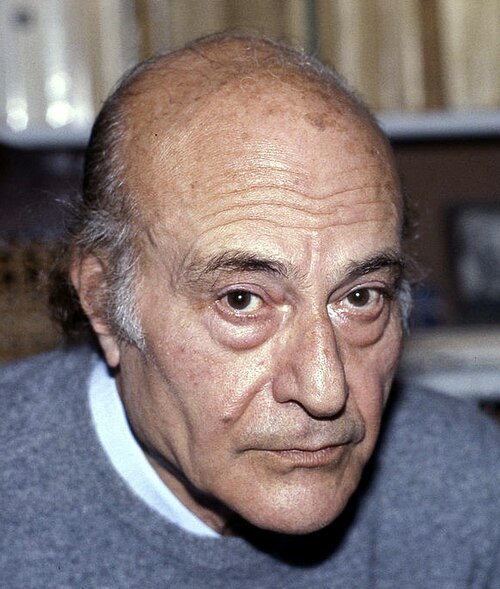
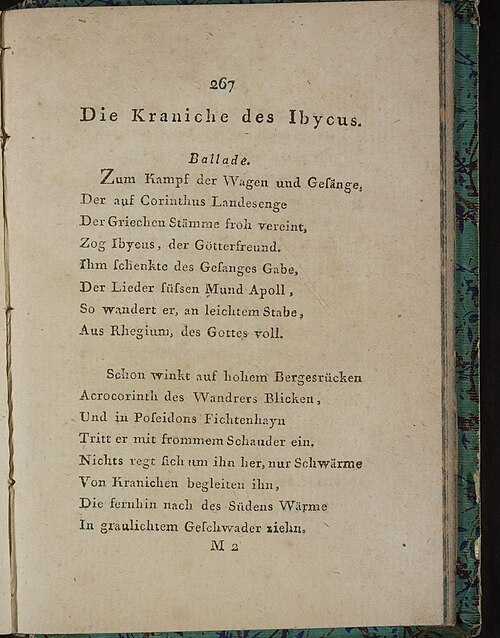
In Greece today the Centre for the Greek Language offers fragments 286 and 287 online, with the ancient text, Modern Greek translations and notes. Odysseas Elytis, in his collection Ημερολόγιο ενός αθέατου Απριλίου (Diary of an Invisible April), calls Ibycus «ερωτομανέστατο» (most passionate in love). In Germany, Friedrich Schiller turned the legend into the ballad Die Kraniche des Ibykus (The Cranes of Ibycus) in 1797, after Goethe passed the subject to him. Try this: open fragment 286 with its Modern Greek translation, find the quince trees and the vines, and write two sentences of your own: «Η κυδωνιά ανθίζει» (The quince tree blooms) and «Το αμπέλι μεγαλώνει» (The vine grows). Then add one more about a plant you can see from your window.
Did you know?
- The Alexandrian canon of nine lyric poets placed Ibycus beside Sappho, Alcaeus, Alcman, Stesichorus, Anacreon, Simonides, Pindar and Bacchylides.
- Fragment 286 survives only because Athenaeus quoted it in a book of dinner conversations, written more than seven centuries after Ibycus.
- The phrase «αἱ Ἰβύκου γέρανοι» (the cranes of Ibycus) became a proverb for a crime revealed in an unexpected way.
- Goethe first planned to write the cranes ballad himself, then left the subject to Schiller and sent him advice on the birds.
Key works
| Greek title | Title | Year |
|---|---|---|
| Εγκώμιο του Πολυκράτη (S151 PMGF) | Praise of Polycrates — papyrus fragment S151, attribution usual but not certain | 6th c. BC |
| Ἦρι μὲν αἵ τε Κυδώνιαι (286 PMG) | In Spring the Quince Trees — fragment 286 PMG | 6th c. BC |
| Ἔρος αὖτέ με (287 PMG) | Love Again — fragment 287 PMG, the old racehorse | 6th c. BC |
| μή τι παρὰ θεοῖς ἀμβλακὼν (310 PMG) | Fear of Offending the Gods — fragment 310 PMG, quoted in Plato’s Phaedrus | 6th c. BC |
A line to remember
ἐμοὶ δ᾽ ἔρος οὐδεμίαν κατάκοιτος ὥραν.
In today's GreekΜα ο δικός μου έρωτας δεν ησυχάζει καμία εποχή.
emoì d’ éros oudemían katákoitos hṓran.
But for me, love lies at rest in no season.