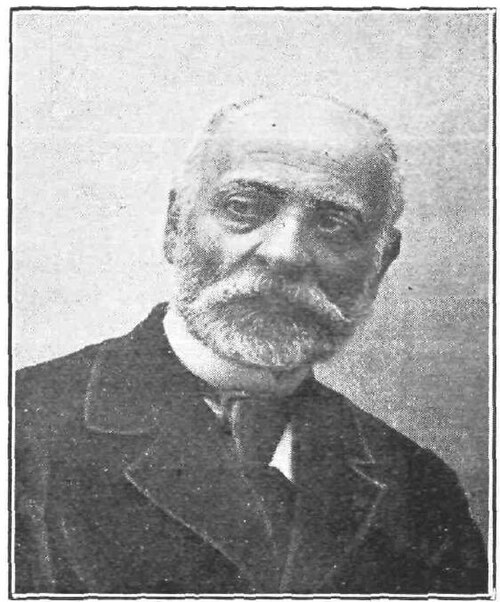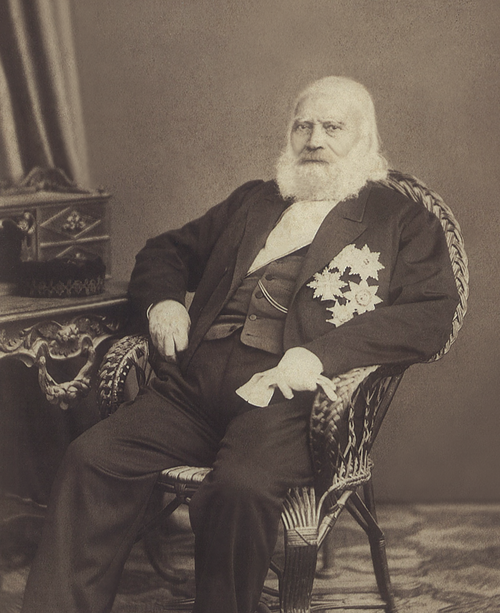
Life
Kanaris was born on Psara, a rocky island near Chios whose people lived from the sea, probably around 1790; the exact year is not known. He grew up on merchant ships and was a ship's captain when the Greek Revolution began in 1821. Psara, together with Hydra and Spetses, gave the revolution its fleet: merchant brigs turned into warships, and old boats turned into πυρπολικά (fireships), filled with tar, gunpowder and dry wood, to be steered against an enemy ship, set alight and abandoned at the last moment.
In April 1822 an Ottoman force landed on Chios and killed or enslaved a great part of its population, a massacre that shocked Europe. On the night of 6 to 7 June 1822 (Old Style), while the Ottoman fleet lay at anchor off Chios celebrating the end of Ramadan, Kanaris brought his fireship alongside the flagship of the Kapudan Pasha, the Ottoman admiral, and set it ablaze. The ship exploded; the admiral and a great number of his men died, and Kanaris escaped in a small boat. Later that year he burned another Ottoman ship off Tenedos.
After independence he served the new state for more than fifty years: as a naval officer and admiral, as a minister, and as prime minister several times, among them in 1864 and again in 1877. He took part in the movement that removed King Otto in 1862. He died in Athens in September 1877, in office as head of a government of national unity, and is buried in the First Cemetery of Athens.
Works

Kanaris did not write books; his work was a handful of night attacks that changed the war at sea. The Ottoman navy had large ships of the line with many guns; the Greeks had small, fast merchant ships. Fireships were the weapon that made the difference, and Kanaris became their master. What made his attacks famous was the nerve they needed: the crew had to sail an explosive boat right up against the enemy hull, fix it there with hooks, light the fuse and row away before the fire spread. One mistake meant death.
The burning of the flagship at Chios in June 1822 was the most spectacular blow of the whole war. It came only weeks after the Chios massacre, and for the Greeks it was seen as revenge; for Europe it was proof that the insurgents could fight. The French poet Victor Hugo wrote a poem called Canaris in his collection Les Orientales (1829), and painters in Paris and London showed the burning ship. Kanaris went on fighting: off Tenedos in 1822, and in 1825 he led a daring attempt to burn the Egyptian fleet inside the harbour of Alexandria, which failed but alarmed the enemy. When his own island of Psara was destroyed by the Ottoman fleet in 1824, he was one of those who escaped and continued the struggle.
In peacetime he was a quiet, almost silent man, respected by all parties because he was seen as honest. That reputation is why he was called to lead the government in difficult moments, even as an old man.
Legacy in Greece today
Every Greek child learns about Kanaris at school, usually around 25 March, Independence Day, when the heroes of 1821 are remembered in school plays and poems. Streets and squares named Κανάρη exist in almost every Greek town, and the Greek Navy has given his name to several warships, including a modern frigate. On Psara, the small island he came from, his memory is everywhere, and the destruction of Psara in 1824 is remembered in Dionysios Solomos's famous short poem «Η καταστροφή των Ψαρών» (The Destruction of Psara), which learners can read in a few minutes. In the National Historical Museum in Athens you can see portraits and relics of the fireship captains. A learner can start by reading the short story of the night at Chios, then look for paintings of the burning flagship.
Did you know?
- Nobody knows exactly when he was born: dates between about 1790 and 1795 are given.
- Victor Hugo, the author of Les Misérables, wrote a poem in his honour.
- He was prime minister of Greece at the time of his death in 1877, at more than eighty years old.
- His home island of Psara was destroyed by the Ottoman fleet in 1824; he escaped and kept on fighting for another three years.
Key works
| Greek title | Title | Year |
|---|---|---|
| Η πυρπόληση της τουρκικής ναυαρχίδας στη Χίο | The burning of the Ottoman flagship at Chios | 1822 |
| Η πυρπόληση στην Τένεδο | The fireship attack off Tenedos | 1822 |
| Η επιχείρηση στην Αλεξάνδρεια | The raid on the harbour of Alexandria | 1825 |
| Πρωθυπουργός της Ελλάδας | Prime minister of Greece (first term) | 1844 |
| Κυβέρνηση εθνικής ενότητας | Head of a government of national unity | 1877 |
From the works


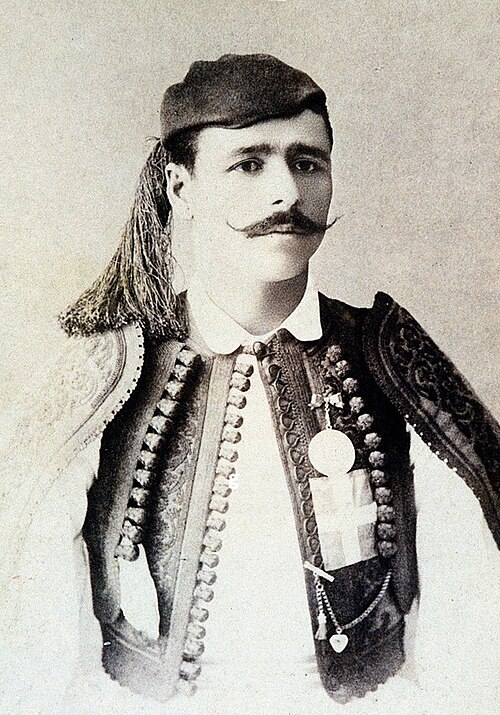
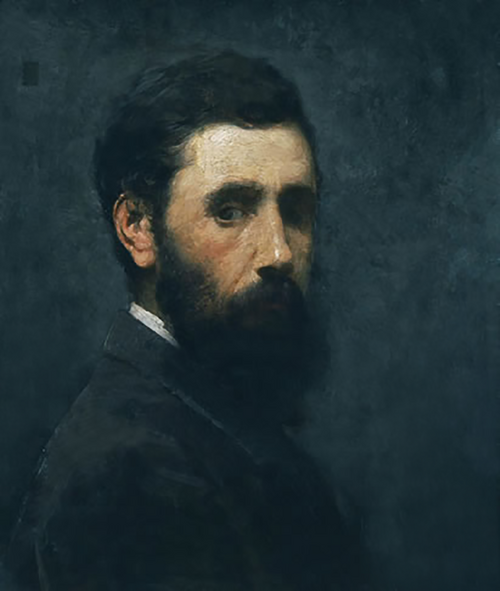
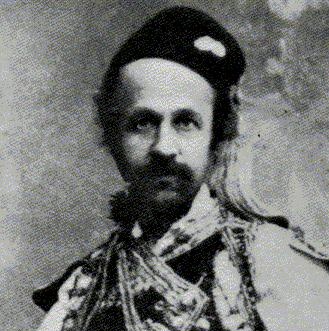
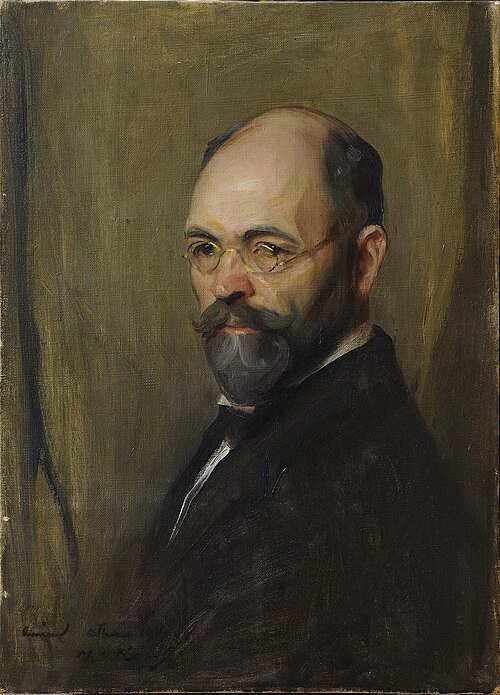
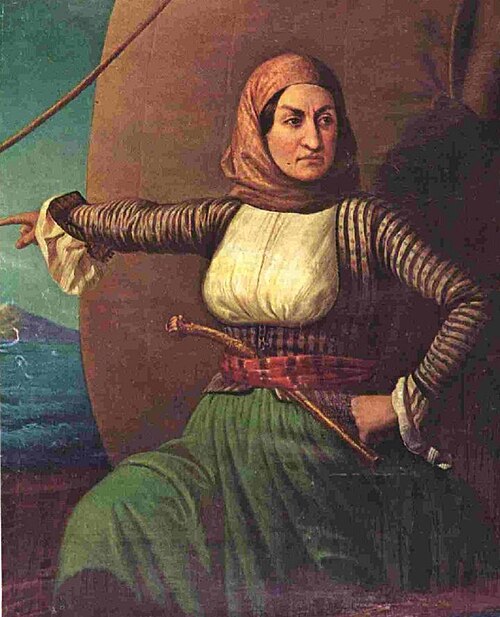
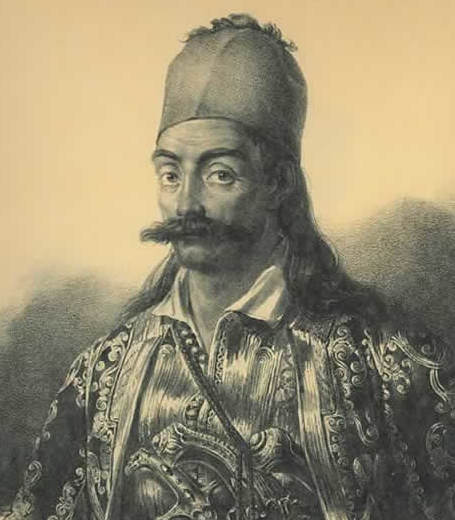
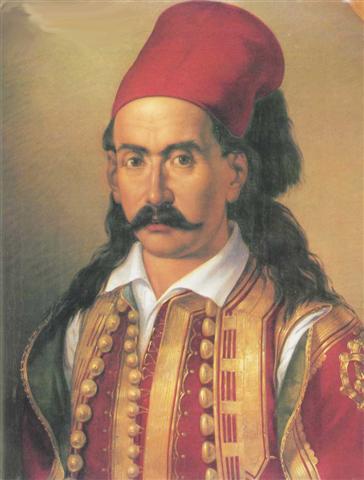
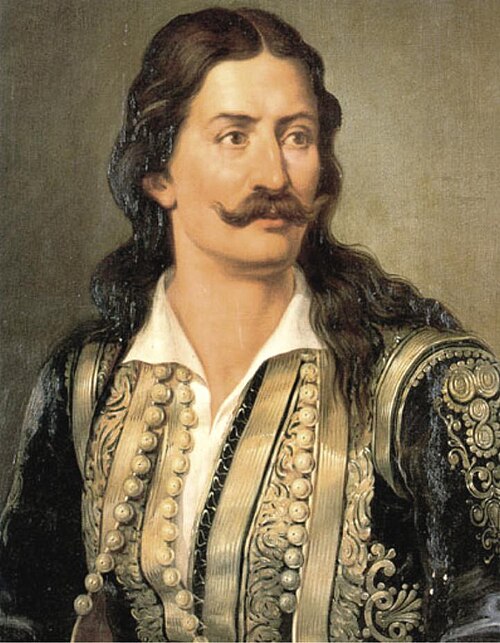
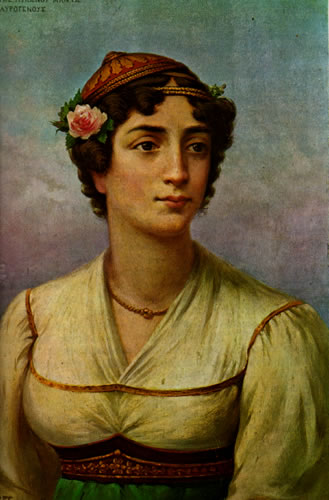
Public-domain pictures from Wikimedia Commons.
A line to remember
Κωνσταντή, θα πεθάνεις!
Konstanti, tha petháneis!
Konstantis, you are going to die!