Life
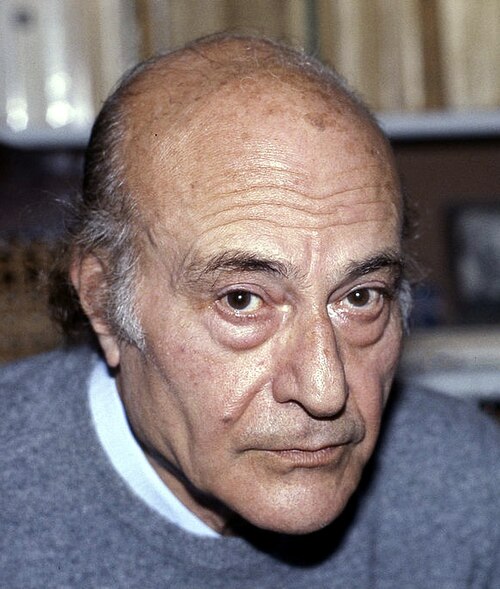
Iliopoulos was born in Alexandria, Egypt, on 12 June 1913, into one of the city's many Greek families, and went to school in Marseille before settling in Athens, the city whose ordinary people he would later play. He failed the entrance exam of the National Theatre's drama school and trained at a private school instead. He came to the stage in 1944, in a comedy with the company of Katerina Andreadi, and went on to play comedies and revues, the evenings of songs, sketches and political jokes that the capital loved. The stage remained his home for the rest of his life; even at the height of his film fame he went back to the theatre every season.
After the Second World War Greek cinema grew quickly. Studios such as Finos Film made dozens of films a year, and comedy was what the public wanted most. Iliopoulos became one of its faces, beside actors such as Vasilis Logothetidis, Orestis Makris, Kostas Hatzichristos and, later, Thanasis Veggos. In films like Ο γρουσούζης (The Jinx, 1952), Ζητείται ψεύτης (Liar Wanted, 1961) and Ο Στρατής παραστράτησε (Stratis Went Astray, 1969) he played clerks, husbands and small businessmen caught in comic situations. When the golden age of the cinemas ended with the arrival of television around 1970, the films found a second life on the small screen. Iliopoulos kept working on stage into old age and also wrote, among other things an autobiography, Ένας Ηλιόπουλος ονόματι Ντίνος (An Iliopoulos Called Dinos). He died in Athens on 4 June 2001, and his death was felt across Greece as the loss of an old friend of the family.
Works

The heart of Iliopoulos's art was a type: the decent, slightly anxious man of the Athenian middle class. He talks fast, he worries, he tries to please everyone, and he usually tells one small lie that becomes a big one. Audiences recognised themselves in him. His comedy was never cruel and rarely vulgar; it came from timing, from his expressive face and his thin, restless body, and from the sympathy he always kept for the people he played.
In Ο γρουσούζης (1952), directed by Giorgos Tzavellas, he shares the screen with Orestis Makris and Mimis Fotopoulos in the story of a grumpy old man who finds a baby on his doorstep. In Ζητείται ψεύτης (1961) the comedy grows out of lies, the subject he played better than anyone. In Μερικοί το προτιμούν κρύο (Some Like It Cold) he sings a duet with Rena Vlachopoulou, one of the brightest comic stars of the period. These films belong to a whole world: the black-and-white Athens of the 1950s and 1960s, with its new apartment blocks, its offices, its tavernas and its summer cinemas. For many Greeks today, watching them is a way of visiting the country of their parents and grandparents. On stage, meanwhile, Iliopoulos played comedy of every kind for over half a century, and the theatre public followed him from role to role.
Legacy in Greece today
The easiest way to meet Iliopoulos is to switch on Greek television on a weekend afternoon: the old black-and-white comedies are shown again and again, and many are easy to find online. Start with Ζητείται ψεύτης, a comedy of lies built entirely around him, or with Ο γρουσούζης. Greeks often quote lines from the old comedies in daily life, the way other countries quote famous sitcoms. Watching these films with Greek subtitles is a classic way for learners to hear the polite, everyday Greek of the city, and Iliopoulos speaks it clearly and fast.
Did you know?
- He was born in Alexandria, Egypt, and went to school in Marseille before settling in Athens.
- He kept acting in the theatre throughout his long film career.
- His films, made for the cinemas of the 1950s and 1960s, found a second, even larger audience on television.
Key works
| Greek title | Title | Year |
|---|---|---|
| Κυρία, σας αγαπώ (πρώτη θεατρική εμφάνιση) | Madam, I Love You (first stage role, company of Katerina Andreadi) | 1944 |
| Ο γρουσούζης | The Jinx (film, dir. Giorgos Tzavellas) | 1952 |
| Ζητείται ψεύτης | Liar Wanted (film) | 1961 |
| Ο Στρατής παραστράτησε | Stratis Went Astray (film) | 1969 |
| Ένας Ηλιόπουλος ονόματι Ντίνος | An Iliopoulos Called Dinos (autobiography) |
A line to remember
Με συγχωρείτε κυρίες μου, που δεν μπορώ να σηκωθώ
Me sygchoreite kyries mou, pou den boro na sikotho
Forgive me, ladies, for not getting up