Life
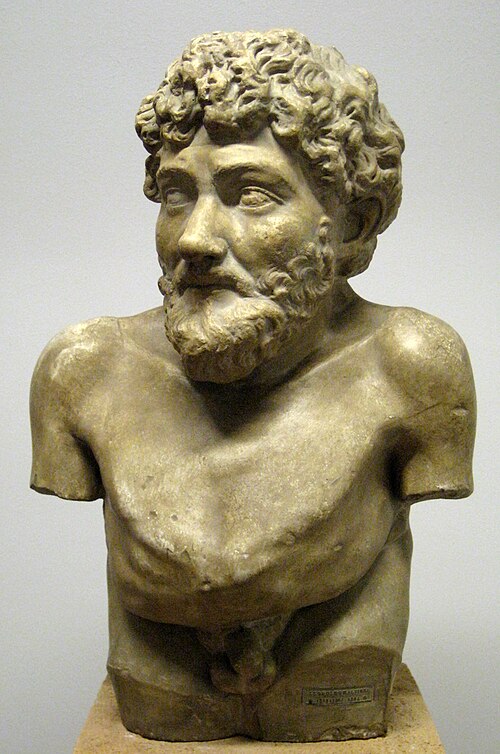
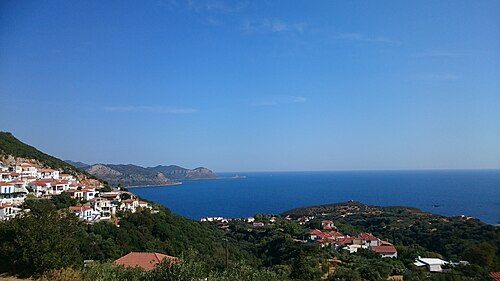
Theognis came from Megara, a city between Athens and Corinth. His dates are uncertain. Ancient chronographers placed him around the 58th or 59th Olympiad, that is about 548–544 BC, while some modern scholars put him in the late 7th century BC. Plato, in the Laws, calls him a citizen of the Sicilian Megara. Ancient commentators already discussed this, and most scholars think he came from the Megara near Athens; one old explanation is that the Sicilian city honoured him with its citizenship.
Almost everything we know about his life comes from the poems themselves. The speaker belongs to the old noble families, whom he calls the ἐσθλοί (the good), and he watches with bitterness as newly rich men, the κακοί (the bad), gain power in the city. He complains that he cannot please all his fellow citizens. Some poems mention journeys to Sicily, Euboea and Sparta. Because the collection mixes many voices, these details describe the poetic speaker; they are not a secure biography. The young Cyrnus, also addressed as Πολυπαΐδης (son of Polypaos), is the person the advice is spoken to.
Works

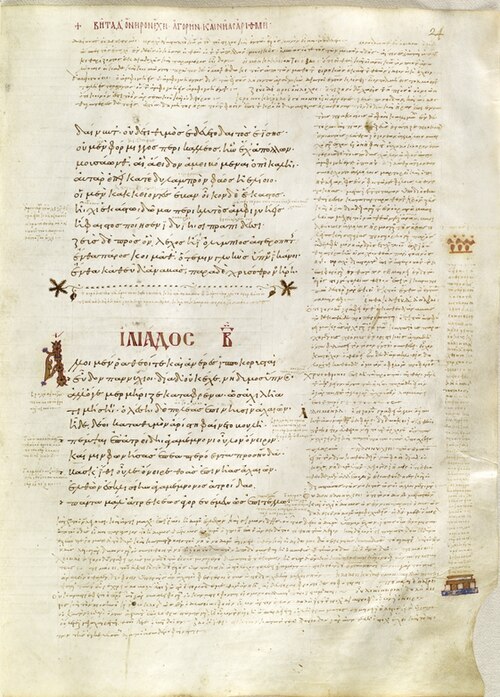
The poems of Theognis are elegies: short pieces in couplets, sung or recited with the flute at the συμπόσιο (symposium), the drinking party of aristocratic friends. About 1,400 lines survive in one collection, often called the Theognidea. Many passages are ὑποθῆκαι (precepts), advice from an older man to Cyrnus: keep company with good men, do not seek honour or wealth through shameful deeds, and share important plans with only a few friends. One couplet says that in a hard conflict a trustworthy man is worth gold and silver.
The collection is not the work of one person only. Some of its lines also survive under the names of Solon, Mimnermus and Tyrtaeus, and others come from unknown poets. For this reason scholars often treat the address to Cyrnus as a sign that a passage is more likely to be by Theognis himself. In lines 19–26 the poet speaks of a σφραγίς (seal) on his verses, so that everyone will say: these are the words of Theognis of Megara. Scholars still debate what the seal is: perhaps the name of Cyrnus, perhaps the poet's own name. In lines 237–254 he tells Cyrnus that his poems have given him wings: young men will sing his name at feasts long after his death.
Legacy in Greece today
Theognis is read today in Greek school and university anthologies of archaic lyric poetry, and the Centre for the Greek Language publishes passages of his elegies online with Modern Greek translations. Start with the two lines in “A line to remember” and our Modern Greek rendering: from good people you learn good things. The A1 level belongs to this page's short reading, not to the ancient original. Then find two words in the rendering, καλούς (good) and μάθεις (you learn), and write three sentences of your own: Αυτός είναι ο φίλος μου. Ο φίλος μου είναι καλός. Εμπιστεύομαι τον φίλο μου (This is my friend. My friend is good. I trust my friend). Say them aloud with a friend's real name.
Did you know?
- In his “seal” passage the poet adds that not even Zeus pleases everyone, whether he sends rain or holds it back.
- The name Cyrnus appears again and again in the collection, often in the vocative Κύρνε (Cyrnus!).
- Some lines in the collection also survive under the name of Solon, the Athenian lawgiver.
- Plato calls Theognis a citizen of the Sicilian Megara, a claim already debated in antiquity.
Key works
| Greek title | Title | Year |
|---|---|---|
| Ἐλεγεῖαι 19–26 (η «σφραγίς») | Elegies, lines 19–26 — the “seal” with the name of Theognis | 6th c. BC |
| Ἐλεγεῖαι 27–38 | Elegies, lines 27–38 — advice to Cyrnus: keep company with the good | 6th c. BC |
| Ἐλεγεῖαι 77–78 | Elegies, lines 77–78 — a trustworthy man is worth gold and silver | 6th c. BC |
| Ἐλεγεῖαι 237–254 | Elegies, lines 237–254 — wings for Cyrnus: poetry and fame | 6th c. BC |
A line to remember
ἐσθλῶν μὲν γὰρ ἄπ᾽ ἐσθλὰ μαθήσεαι· ἢν δὲ κακοῖσιν συμμίσγῃς, ἀπολεῖς καὶ τὸν ἐόντα νόον.
In today's GreekΑπό τους καλούς θα μάθεις καλά· αν όμως σμίξεις με τους κακούς, θα χάσεις και το μυαλό που έχεις.
esthlôn mèn gàr áp’ esthlà mathḗseai; ḕn dè kakoîsin symmísgēis, apoleîs kaì tòn eónta nóon.
From good people you will learn good things; but if you mix with the bad, you will lose even the good sense you have.