Life
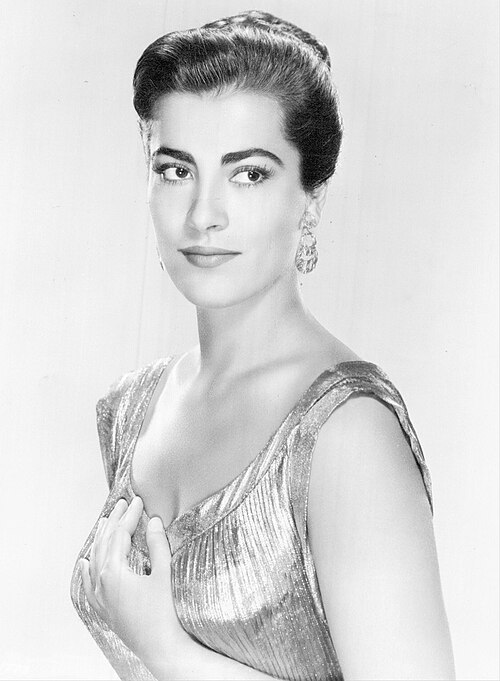
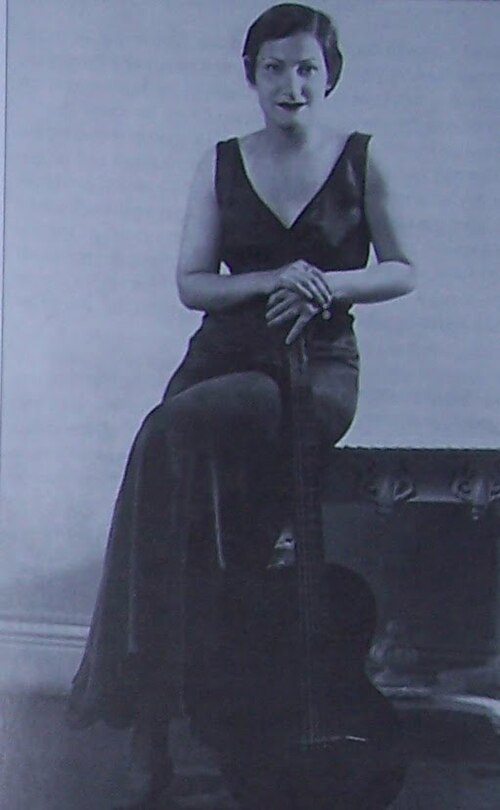
Danai Stratigopoulou was born in the Metaxourgeio district of Athens on 8 February 1913; some sources give 1911. Her father, Ippolytos Stratigopoulos, was an engineer and journalist. She spent her childhood in France, in Paris and Marseille, and studied political science as well as diction and singing. Her first job was in journalism. In 1935 she accompanied the composer Attik (Kleon Triantafyllou) on a tour of Egypt as a young reporter and, as she later told it, came back a professional singer. In the late 1930s she became his favourite performer at the Mandra (the Sheepfold), his music stage in Athens, and the press called her “Attik’s nightingale”.
During the German occupation she kept singing and took part in the resistance, and she was held for a time in Averof prison. In the resistance she met Giorgos Chalkiadakis, whom she married in 1945. He died in 1954, and she raised their daughter Lida, who also became a singer. Attik died in August 1944; Danai went on singing his songs and recorded them again on long-playing records.
Her younger sister Mirka, a flautist living in Chile, drew her to Santiago. There she taught Greek folklore for five years at the University of Chile and left in 1973, shortly before the military coup. Back in Athens she continued to write and translate until her death on 18 January 2009.
Works

Stratigopoulou worked in three ways: as a performer, as a songwriter and as a writer. Her best-known interpretations are songs by Attik, such as Ας ερχόσουν για λίγο (If Only You Would Come for a While) and Μαραμένα τα γιούλια (Withered Violets). Attik wrote both the music and the words; her part was the voice and the way of singing, in other words the interpretation. Printed sheet music from the 1930s and 1940s, now kept by the Hellenic Literary and Historical Archive (ELIA), names her as the singer of many light songs of the period. She also composed songs of her own, around 300 according to Greek press accounts, and sang Greek folk songs, the δημοτικά τραγούδια.
Her writing includes the poetry collection Αντιδράσεις (Reactions, 1960) and the book Αττίκ (Attik, 1986), a portrait of the composer she knew. In Chile the university published her Cantos de los griegos (Songs of the Greeks, 1973): Greek folk songs with their music, notes on harmony and Spanish translations of the texts. She translated Pablo Neruda’s Alturas de Macchu Picchu (The Heights of Macchu Picchu) into Greek, set four of his poems to her own music for the record Danai canta a Neruda (Danai Sings Neruda), and later translated his Canto General and Estravagario. A translation carries words from one language into another; an interpretation gives an existing song a voice. Her career contains both.
Legacy in Greece today
Stratigopoulou is remembered above all as the voice that carried Attik’s songs from the 1930s into the age of long-playing records. A 2002 biography by Popi Magoula-Gaitanou is titled Δανάη: Το αηδόνι του έρωτα (Danai: The Nightingale of Love). At the University of Chile her 1960s recordings were used in Modern Greek classes, and its Centre for Greek Studies held a listening evening in her memory in April 2009. Try it yourself: search her Greek name, Δανάη Στρατηγοπούλου, in the online Kounadis Archive, which links her to songs of the Greek light-song tradition, and listen to a short recording. Then write one sentence of your own, such as Η φωνή είναι ήρεμη (The voice is calm), or choose another adjective. Your sentence describes the voice; it is not a translation of the lyrics.
Did you know?
- She first travelled with Attik as a journalist, not as a singer.
- Her 1960s recordings were used in Modern Greek classes at the University of Chile.
- Her sister Mirka, a flautist in Santiago, inspired her journey to Chile.
- She translated poems from Spanish into Greek and Greek folk songs into Spanish.
Key works
| Greek title | Title | Year |
|---|---|---|
| Ας ερχόσουν για λίγο | If Only You Would Come for a While — Attik song in her interpretation | ? |
| Αντιδράσεις | Reactions — poems | 1960 |
| Cantos de los griegos | Songs of the Greeks — Greek folk songs with Spanish translations | 1973 |
| Danai canta a Neruda | Danai Sings Neruda — record of her settings of Neruda's poems | ? |
| Αττίκ | Attik — book about the composer | 1986 |
A line to remember
Ήταν ολόκληρος κόσμος γεμάτος μουσική ο άνθρωπος αυτός.
Ítan olókliros kósmos gemátos mousikí o ánthropos aftós.
That man was a whole world full of music.