Life
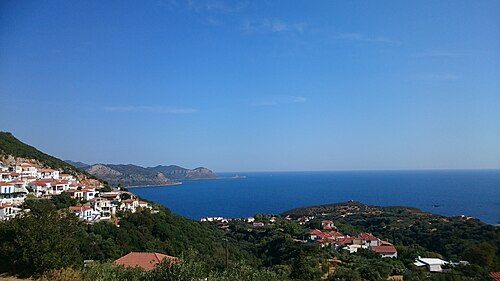
Aratus was born around 315 or 310 BC in Soli, a Greek city in Cilicia. Very little about his life is certain: our information comes from four short anonymous ancient Lives and an entry in the Byzantine dictionary known as the Suda, and some of their details are doubtful. As a young man he went to Athens, where he came into contact with Stoic philosophy, the school that taught that one divine reason runs through the whole world.
Around 276 BC King Antigonus Gonatas of Macedonia invited him to his court at Pella. The occasion was the king’s marriage to Phila, and Aratus wrote a Hymn to Pan for the celebration; it is now lost. According to the ancient Lives, Antigonus admired the prose astronomy of Eudoxus of Cnidus and asked Aratus to turn it into verse. The result was the Φαινόμενα (Phaenomena, “Appearances”).
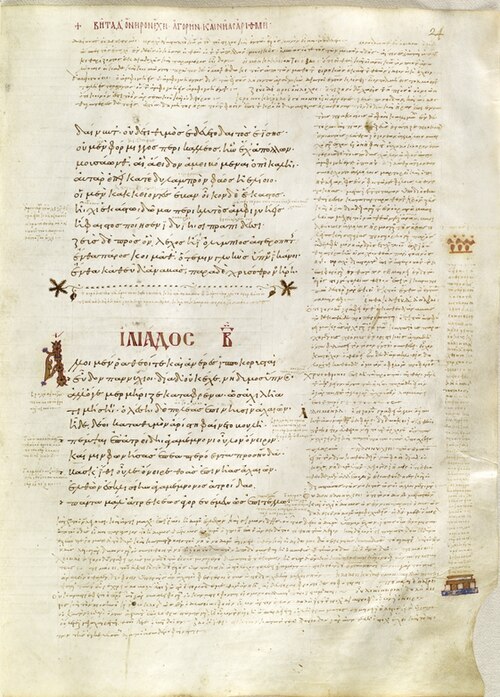
Aratus also spent time at the court of Antiochus I in Syria, and he is said to have worked on an edition of Homer. Other poems are known only by their titles, and two short epigrams survive in the Greek Anthology. He died around 240 BC. He was not a working astronomer, but a poet who knew how to make difficult knowledge clear and memorable.
Works

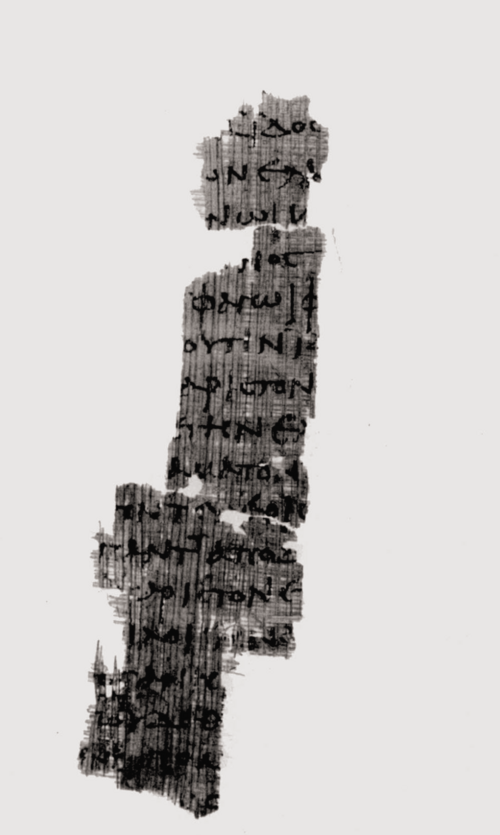
The Phaenomena is a teaching poem of 1,154 hexameters, the metre of Homer and Hesiod. It opens with a short hymn to Zeus that begins «Ἐκ Διὸς ἀρχώμεσθα» (Let us begin from Zeus) and shows the god present in every street, market, sea and harbour. The main part then walks the reader across the sky: first the northern constellations, then the southern ones, then the great circles of the heavens and the stars that rise and set through the year. The last part, from line 758 to the end, turns to weather signs: the horns of the Moon, clouds and winds, crows, ants and cranes.
Aratus draws pictures with words. The two Bears, the Ἄρκτοι, turn around the pole; Greek sailors steer by the larger one, Phoenician sailors by the smaller. Between them the Dragon winds like a branch of a river. The Pleiades are called seven, he notes, although only six can be seen. His great model was Hesiod, and much of the astronomy came from Eudoxus; the weather section probably drew on Theophrastus. Callimachus praised the poem for its refined language, and it was soon widely read and commented on across the Greek world.
Legacy in Greece today
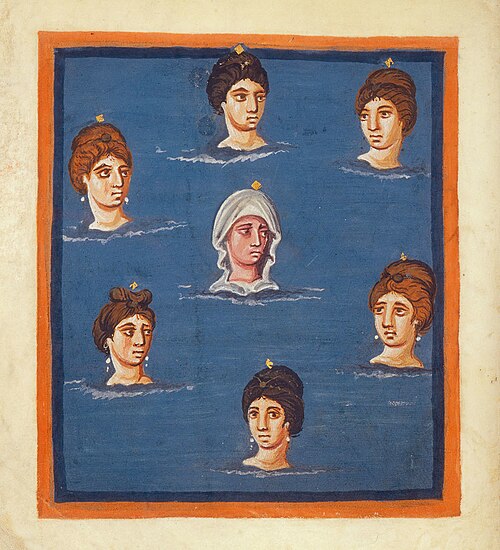
The Romans loved the Phaenomena. Cicero, Germanicus and Avienus translated it into Latin, Virgil echoed it in the Georgics, and illustrated copies such as the Leiden Aratea, made around 830–840, carried its constellation pictures into medieval Europe. In Acts 17:28 Paul, speaking in Athens, quotes its fifth line: «Τοῦ γὰρ καὶ γένος ἐσμέν» (For we too are his offspring). Modern Greek still uses names found in the poem, such as η Μεγάλη Άρκτος (the Great Bear), ο Δράκων (the Dragon) and οι Πλειάδες (the Pleiades), and its title lives on in the everyday word το φαινόμενο (phenomenon). Try this: open a current labelled sky chart, find the two Bears and the Dragon, and write three Greek sentences with πάνω, κάτω and δίπλα. Treat Aratus’s weather signs as history, not as a forecast.
Did you know?
- The Phaenomena has 1,154 lines, and the hymn to Zeus at its start fills only the first 18.
- Callimachus wrote a short epigram that greets the poem’s “fine words” as the sign of Aratus’s sleepless nights.
- Aratus says the Pleiades are called seven, but only six are visible; the Leiden Aratea paints all seven as heads of women.
- The weather signs include the thin horns of the new Moon and the busy work of ants, but they are ancient lore, not modern science.
Key works
| Greek title | Title | Year |
|---|---|---|
| Ὕμνος εἰς Πᾶνα | Hymn to Pan — for the wedding of Antigonus and Phila, lost | c. 276 BC |
| Φαινόμενα, στ. 1–18 | Phaenomena, lines 1–18 — the opening hymn to Zeus | after c. 276 BC |
| Φαινόμενα, στ. 26–62 | Phaenomena, lines 26–62 — the two Bears and the Dragon | after c. 276 BC |
| Φαινόμενα, στ. 254–267 | Phaenomena, lines 254–267 — the seven Pleiades | after c. 276 BC |
| Φαινόμενα, στ. 758–1154 | Phaenomena, lines 758–1154 — weather signs | after c. 276 BC |
A line to remember
ἑπτάποροι δὴ ταί γε μετʼ ἀνθρώπους ὑδέονται, ἓξ οἶαί περ ἐοῦσαι ἐπόψιαι ὀφθαλμοῖσιν.
In today's GreekΕπτά λέγονται ανάμεσα στους ανθρώπους, κι ας είναι μόνο έξι ορατές στα μάτια.
heptáporoi dḕ taí ge met’ anthrṓpous hydéontai, hèx hoîaí per eoûsai epópsiai ophthalmoîsin.
Among people they are spoken of as seven, though only six of them can be seen with the eyes.