Life
Botsaris was born around 1788 in Souli, a group of fortified villages in the mountains of Epirus, into one of its leading clans; his father was Kitsos Botsaris. The Souliots, Orthodox Christians who spoke both Greek and Albanian, had long resisted Ali Pasha of Ioannina. In 1803 Souli finally fell, and the Souliot families left their homes: some went to Parga, and many, the Botsaris family among them, crossed to Corfu and the other Ionian Islands. There the young Markos served for years in an Albanian regiment under foreign command, and around 1809 he wrote down a small Greek and Albanian word list of the Souliot speech, a document that still survives.
When Ali Pasha broke with the Sultan in 1820, the Souliots returned to Epirus, and Botsaris joined the secret Filiki Etaireia. In the Revolution he fought in western Greece: at the battle of Peta in July 1822, a heavy Greek defeat, and in the first siege of Missolonghi in the winter of 1822–23, which the defenders survived. In August 1823 a large Ottoman army under Mustafa Pasha was marching south. On the night of 8 to 9 August (21 August in the modern calendar) Botsaris led a few hundred Souliots in a surprise attack on its camp near Karpenisi. The attack succeeded, but Botsaris was shot and died that night. His men carried his body to Missolonghi, where he was buried.
Works

Botsaris left no books and few letters; what he left is a battle and an example. The night attack at Karpenisi was a small action in military terms, and it did not stop the Ottoman army. But the story of a captain who chose the most dangerous place, at the head of his men, and fell in the moment of victory spread at once across Greece and Europe. Solomos noted, and Greek school books still tell, how on the eve of the battle, when other captains resented the general's commission the government had given him, he tore it up to keep the Greeks united.
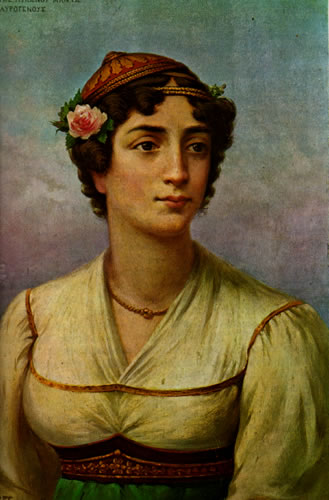
Abroad, his death came in the years when Europe was full of enthusiasm for the Greek cause. In 1825 the American poet Fitz-Greene Halleck published Marco Bozzaris, a long poem that American schoolchildren learned by heart for decades, and Dionysios Solomos, the poet of the Greek national anthem, also wrote lines for him. His family stayed close to the new Greek state: his brother Kostas Botsaris became a general and a senator, and his daughter Katerina, called Rosa, became a lady-in-waiting to Queen Amalia in Athens, famous for her beauty. For Greeks, Botsaris is part of the story of Souli as a whole: the resistance to Ali Pasha, the women of Zalongo, the exile in Corfu, and the return to fight in 1821.
Legacy in Greece today
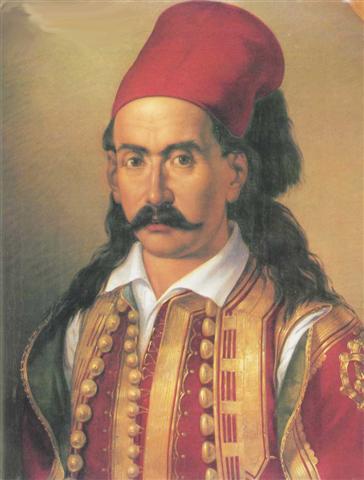
Walk through any Greek town and you will probably find an οδός Μάρκου Μπότσαρη, a Markos Botsaris Street; schools and squares carry his name too. In Missolonghi his grave stands in the Κήπος των Ηρώων (Garden of Heroes), the park where the town keeps the memory of the siege and of the foreigners, such as Lord Byron, who helped the Greeks. Children learn his name in primary school as one of the heroes of 1821, and on 25 March, Greek Independence Day, his portrait appears with those of Kolokotronis and Bouboulina. The site of the night attack, at Kefalovryso near Karpenisi is marked by a monument to him. If you read English, Halleck's poem is the best way to see how 19th-century readers abroad saw him.
Did you know?
- The Greek and Albanian word list he wrote down in Corfu around 1809 is one of the few written records of the Souliot speech.
- Fitz-Greene Halleck's poem «Marco Bozzaris» (1825) made him famous in the United States.
- He died on the night his attack succeeded, near Karpenisi in August 1823.
- His daughter Rosa Botsari became a lady-in-waiting at the court of King Otto and Queen Amalia.
Key works
| Greek title | Title | Year |
|---|---|---|
| Λεξικό ελληνικό και αρβανίτικο (σουλιώτικο) | Greek and Albanian (Souliot) word list | c. 1809 |
| Η μάχη του Πέτα | The battle of Peta | 1822 |
| Η πρώτη πολιορκία του Μεσολογγίου | The first siege of Missolonghi | 1822–1823 |
| Η νυχτερινή επίθεση στο Κεφαλόβρυσο του Καρπενησίου | The night attack at Kefalovryso near Karpenisi | 1823 |
From the works


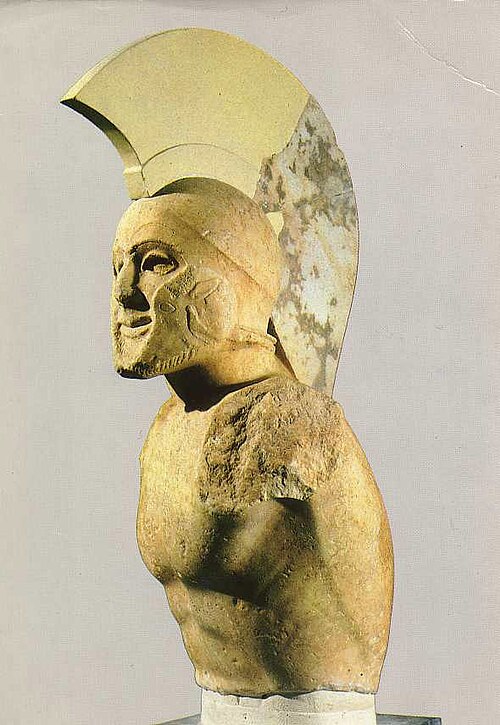
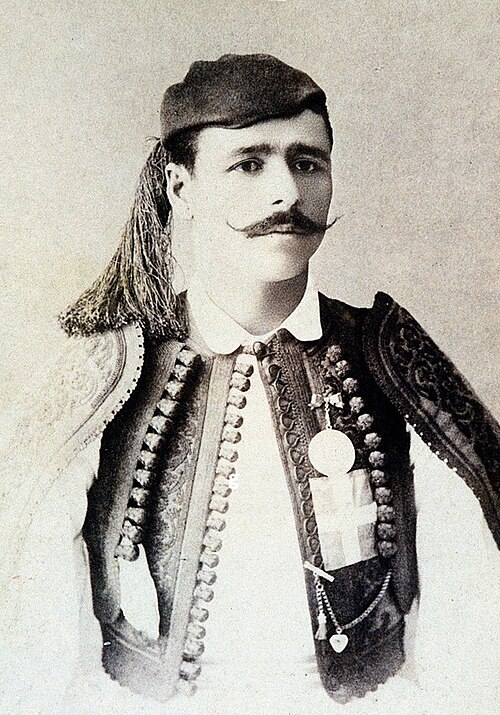
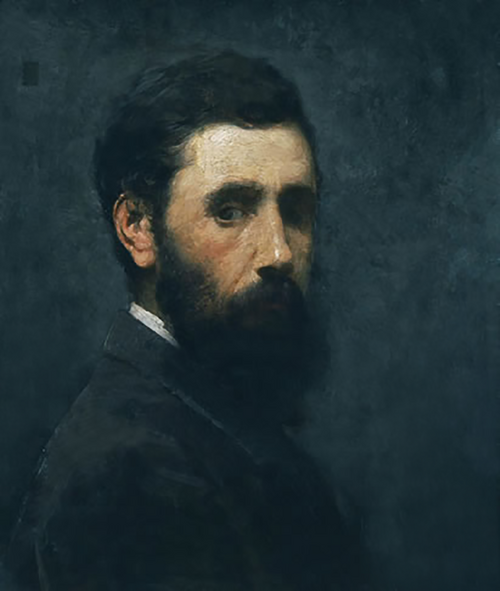
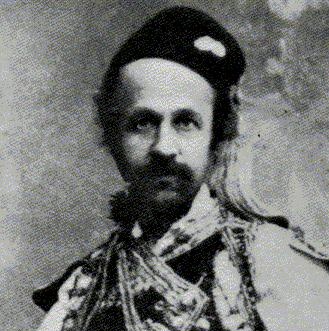
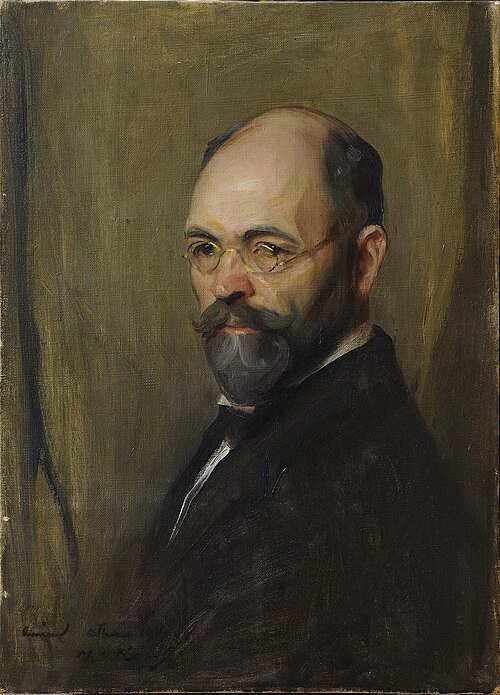
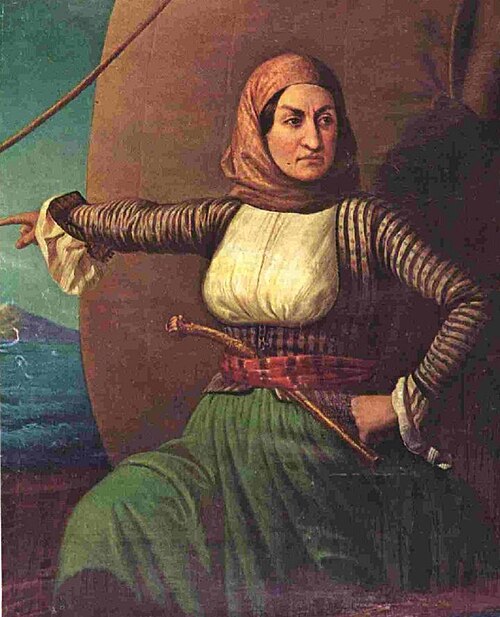
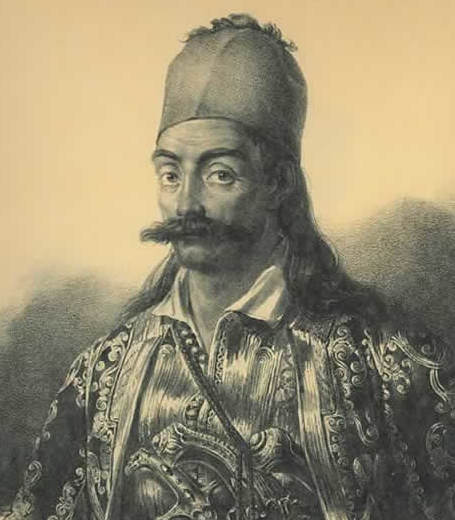
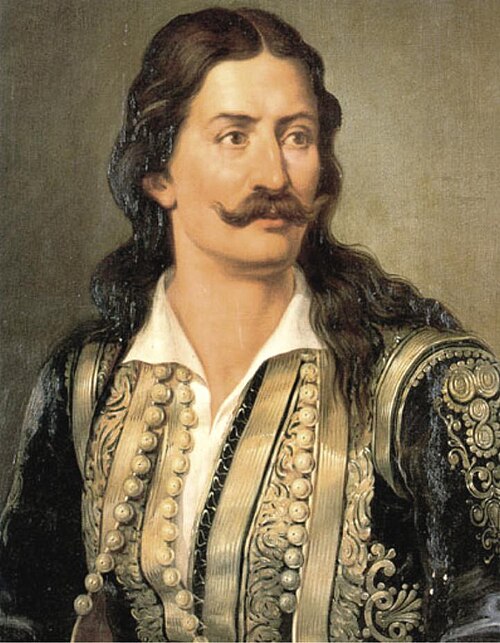
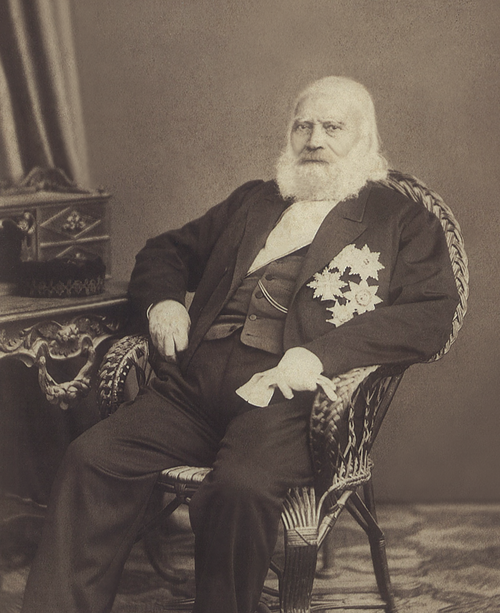
Public-domain pictures from Wikimedia Commons.
A line to remember
Έσκισε το δίπλωμα της στρατηγίας του.
Eskise to diploma tis stratigias tou.
He tore up his general's commission.