Life
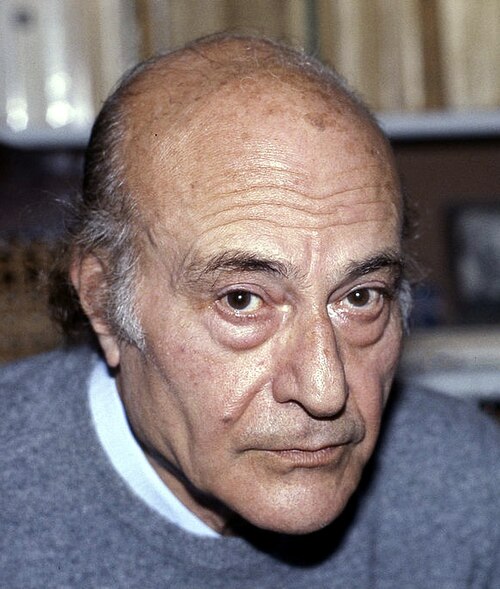
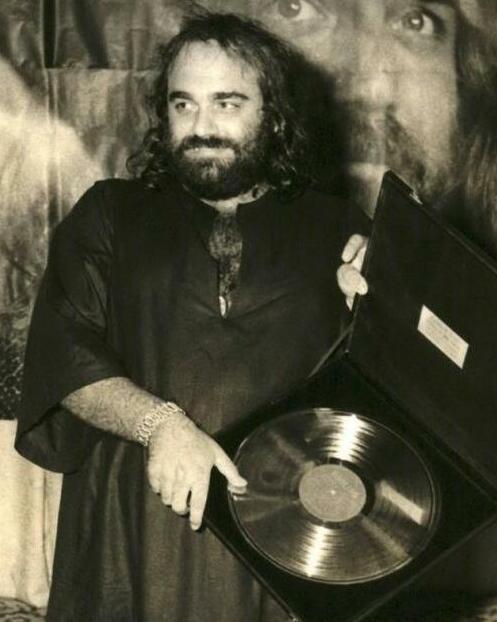
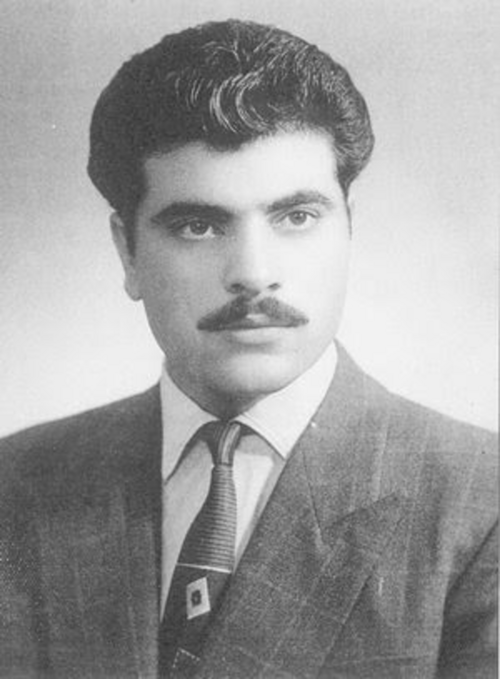
Kazantzidis was born on 29 August 1931 in Nea Ionia, a refugee suburb of Athens built for Greeks who had been driven out of Asia Minor in 1922. His family was poor, he lost his father while still a boy, and he left school early to work at whatever he could find. He sang for the workers around him, taught himself the guitar, and in the early 1950s began to make records.
By the end of the decade he was the most popular singer in Greece. The great composers of laïko and rebetiko, Vassilis Tsitsanis among them, wrote for him, and from the late 1950s he sang in a famous duo with the young Marinella, whom he married in 1964; they divorced in 1966. Records sold in huge numbers and the nightclubs where he sang were full every night.
Then, in the mid-1960s, at the height of his fame, he stopped singing in the night clubs. He said he was tired of being exploited by club owners and record companies, and he kept his word: for the rest of his life he hardly ever appeared on a stage again, and reached his public only through records. The distance made the legend bigger. He died of cancer on 14 September 2001, and thousands of people came to say goodbye to him.
Works

Kazantzidis did not write his songs; he gave them a voice. That voice was high, powerful and full of pain, with a slight tremble and long held notes that could make a whole room go quiet. He sang in the style called βαριά λαϊκά, the «heavy» popular songs, slow ζεϊμπέκικα and χασάπικα with bouzouki, about subjects that ordinary people knew well: a mother waiting, a love that betrayed you, a factory shift, a boat or a train carrying you away.
The theme that made him unique was ξενιτιά, exile and emigration. In the 1950s and 1960s hundreds of thousands of Greeks left their villages to work in West Germany, Belgium, Australia and America, and Kazantzidis became their singer. Many of his songs spoke of the cardboard suitcase and the station platform, and emigrants played his records in their rented rooms to feel closer to home.
Among his best-known songs are Μαντουμπάλα (Mandubala), inspired by the Indian film star Madhubala, whose record, around 1959, sold some 100,000 copies, a record for Greece at the time; Η ζωή μου όλη (My Whole Life, 1974), by Akis Panou, which he called his favourite; and Υπάρχω (I Exist, 1975), with lyrics by Pythagoras. For many Greeks his records are less a style of music than a part of family memory.
Legacy in Greece today
Kazantzidis is still everywhere in Greece: on the radio, in tavernas, at weddings and in the cars of taxi drivers. A good start for a learner is Υπάρχω, a slow song with simple words, or any recording of him with Marinella from the early 1960s. Many Greeks of the diaspora, from Stuttgart to Melbourne, speak of his songs as the sound of the years when their families emigrated, and the word ξενιτιά is hard to explain without him. In Nea Ionia, the suburb where he was born, he is remembered as the local boy who became the voice of a whole people, and every anniversary of his death brings tributes on Greek television and radio. Singers of every generation record his songs again.
Did you know?
- In the mid-1960s, at the peak of his career, he gave up singing in night clubs and never went back.
- He and Marinella sang together for years; they married in 1964 and divorced in 1966.
- Greeks call him «ο Στελάρας», an affectionate form of his first name meaning «big Stelios».
- For Greek emigrants in Germany in the 1960s, his records were among the most precious things they took with them.
Key works
| Greek title | Title | Year |
|---|---|---|
| Δεν θέλω το κακό σου (Οι βαλίτσες) | I Don't Wish You Harm (The Suitcases) | early 1950s |
| Μαντουμπάλα | Mandubala | c. 1959 |
| Δυο πόρτες έχει η ζωή | Life Has Two Doors | c. 1959 |
| Η ζωή μου όλη | My Whole Life (Akis Panou) | 1974 |
| Υπάρχω | I Exist (lyrics Pythagoras) | 1975 |
A line to remember
Ο Στελάρας
O Stelaras
Big Stelios