Life
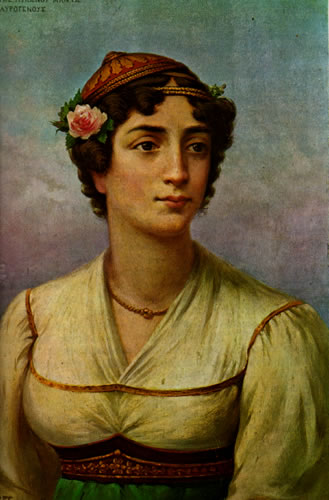
Manto Mavrogenous was born in 1796 in Trieste, then an Austrian port with a rich Greek merchant community. Her father, Nikolaos Mavrogenis, was a trader from Mykonos, and the family was related to Phanariot nobility. Manto received an education that few Greek girls of her time had: she studied ancient Greek history and philosophy and learned French and Italian. After her father's death the family settled on Mykonos.
When the Revolution broke out in the spring of 1821, Manto was about twenty-five. She persuaded the notables of Mykonos to join the uprising and used her inheritance to equip ships and pay their crews. In 1822, when Ottoman forces tried to land on the island, she is remembered for leading the local men who drove them back. She then went to the Peloponnese and to Euboea, financing and accompanying bands of fighters, and she wrote letters to women in Western Europe, notably in Paris, asking them to support the Greek cause. In these years she was engaged to Dimitrios Ypsilantis, one of the leaders of the Revolution, but the engagement was broken off.
After independence she lived in Nafplio, the first capital of the new state, and asked the government for help, since almost nothing was left of her wealth. She received little. She spent her last years on Paros, poor and largely forgotten, and died there in July 1848.
Works

Manto Mavrogenous did not write books or win famous battles; what she did was give. Revolutions need money as much as courage, and in 1821 there was no Greek state, no treasury and no regular army. Ships had to be bought, armed and crewed by private people, and soldiers had to be fed. Manto put her inheritance, one of the largest on Mykonos, into this effort, and by the end of the war she had spent nearly all of it.
She is remembered for three things. First, she brought her island into the Revolution and helped organise its fleet. Second, she took part in the fighting herself: the repulse of the Ottoman landing on Mykonos in 1822 is the episode that every account of her life tells, and she later travelled with armed men on the mainland. Third, she understood the power of public opinion abroad. Educated in Trieste, fluent in European languages, she wrote to European women to ask for their sympathy and support at a time when philhellenism was spreading across France, Britain and Germany.
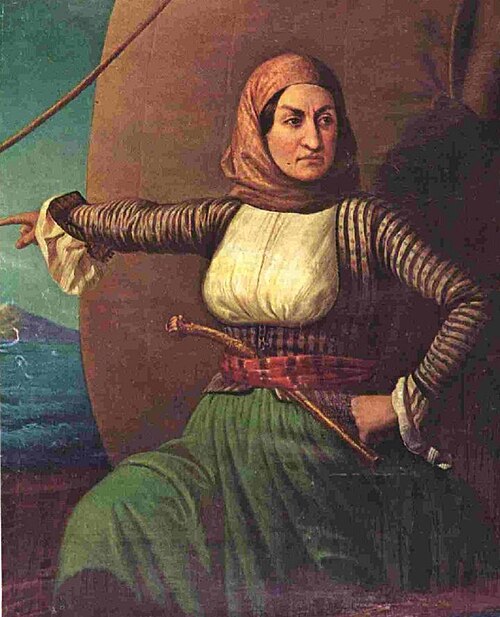
Together with Laskarina Bouboulina of Spetses, she is one of the two women Greek schoolchildren meet first when they learn about 1821: two wealthy island women who turned their fortunes into ships. Her story is also a quiet lesson about the young state, which was slow to thank those who had paid for it.
Legacy in Greece today
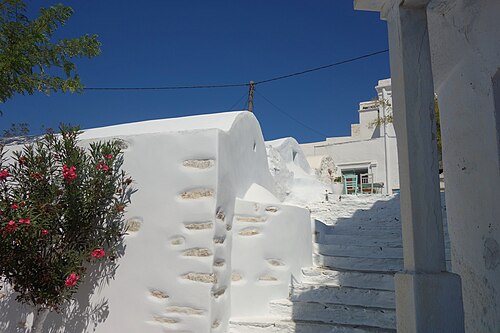
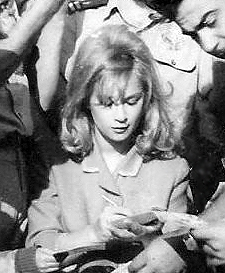
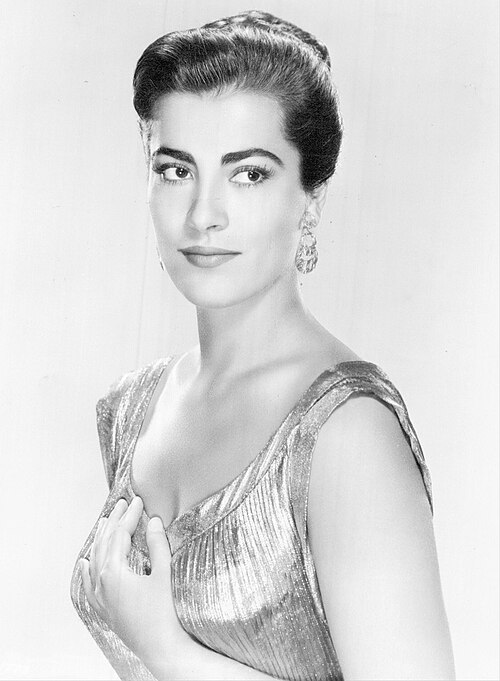
Go to Mykonos and you will meet her at once. The square by the harbour of Mykonos town is popularly called Πλατεία Μαντώς (Manto Square), and her bronze statue stands there. Her family house in the town is also pointed out to visitors. Greeks of a certain age remember her face on the two-drachma coin, which was in circulation until the euro arrived in 2002. Streets named Μαντώς Μαυρογένους exist in Athens, Piraeus and many other towns, and schools celebrate her each year around 25 March, the national holiday of the Revolution. Her life has inspired a Greek feature film, Μαντώ Μαυρογένους (1971), with Jenny Karezi in the title role, and several novels and biographies.
Did you know?
- She was born not in Greece but in Trieste, which was then part of the Austrian Empire.
- She spoke French and Italian and wrote to the women of Paris to ask for help for Greece.
- Her portrait was on the Greek two-drachma coin, while Bouboulina was on the one-drachma coin.
- Although she had been one of the richest women of the Aegean, she died poor on the island of Paros in 1848.
Key works
| Greek title | Title | Year |
|---|---|---|
| Η ένταξη της Μυκόνου στην Επανάσταση | Bringing Mykonos into the Revolution | 1821 |
| Εξοπλισμός πλοίων με δικά της χρήματα | Arming ships with her own money | 1821–1822 |
| Η απόκρουση της απόβασης στη Μύκονο | Repelling the Ottoman landing on Mykonos | 1822 |
| Εκστρατείες στην Πελοπόννησο και την Εύβοια | Campaigns in the Peloponnese and Euboea | 1822–1823 |
| Επιστολή προς τις γυναίκες του Παρισιού | Letter to the women of Paris | 1820s |
From the works


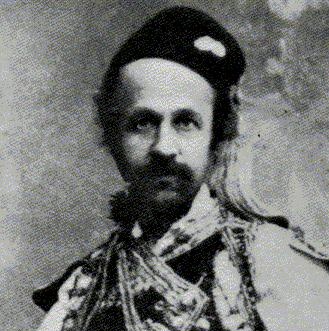
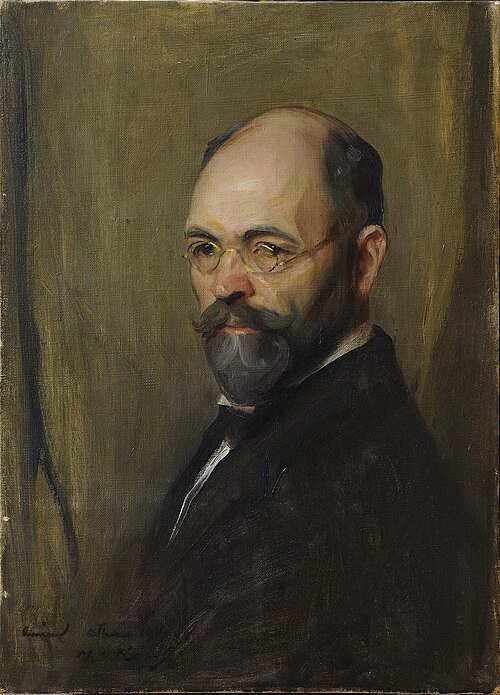
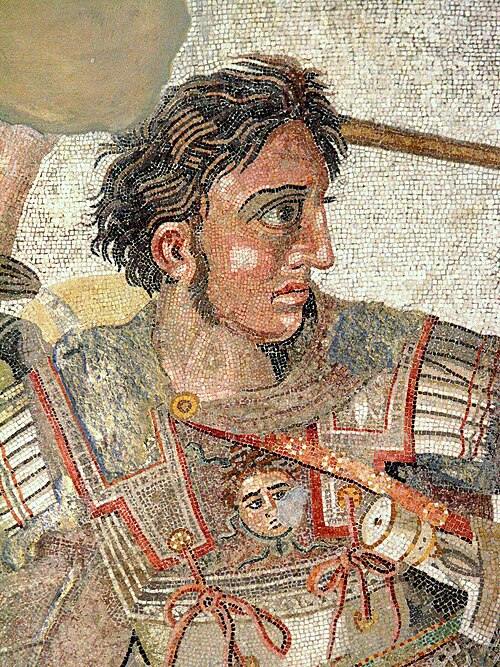
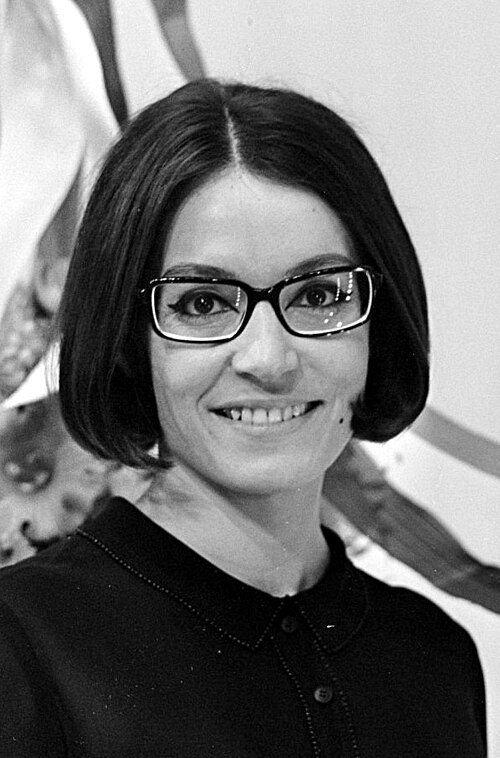
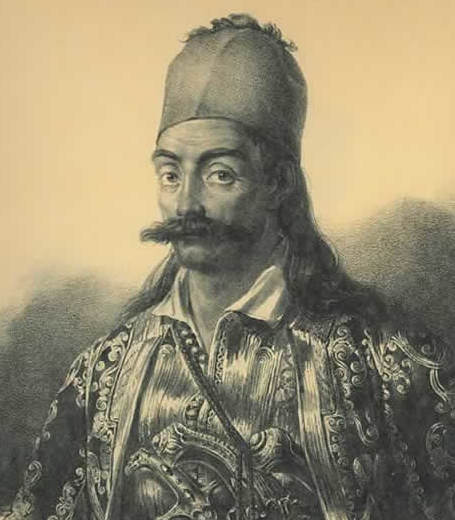
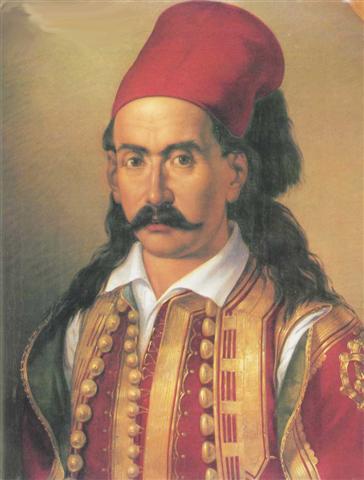
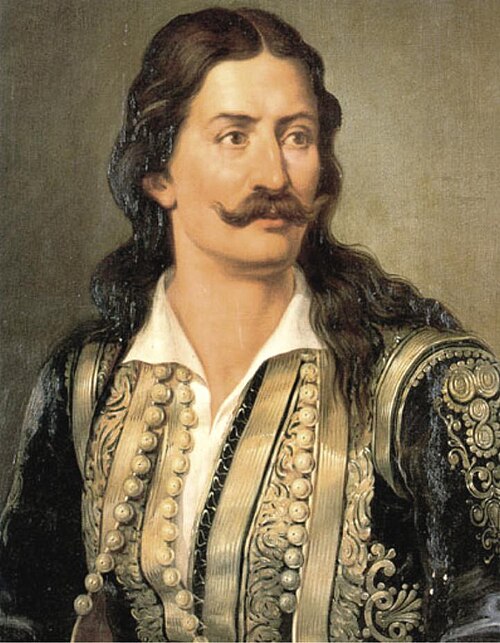
Public-domain pictures from Wikimedia Commons.
A line to remember
Πλατεία Μαντώς
Plateia Mantos
Manto's Square