
Greek for Greek-Americans
Greek family words: theia, theios, pappou, yiayia, nouna, and who is who at the table
Aunt in Greek is «η θεία» (i THEE-a) and uncle is «ο θείος» (o THEE-os). Grandmother is «η γιαγιά» (i ya-YA), grandfather is «ο παππούς» (o pa-POOS), and godmother is «η νονά» (i no-NA). The words for men change when you call them: «θείε» (THEE-e), «παππού» (pa-POO), which is why what you heard at home does not always match the dictionary.
This page is a taste of the course: Greek written, spoken and practiced, from the alphabet to real conversation. Start free →
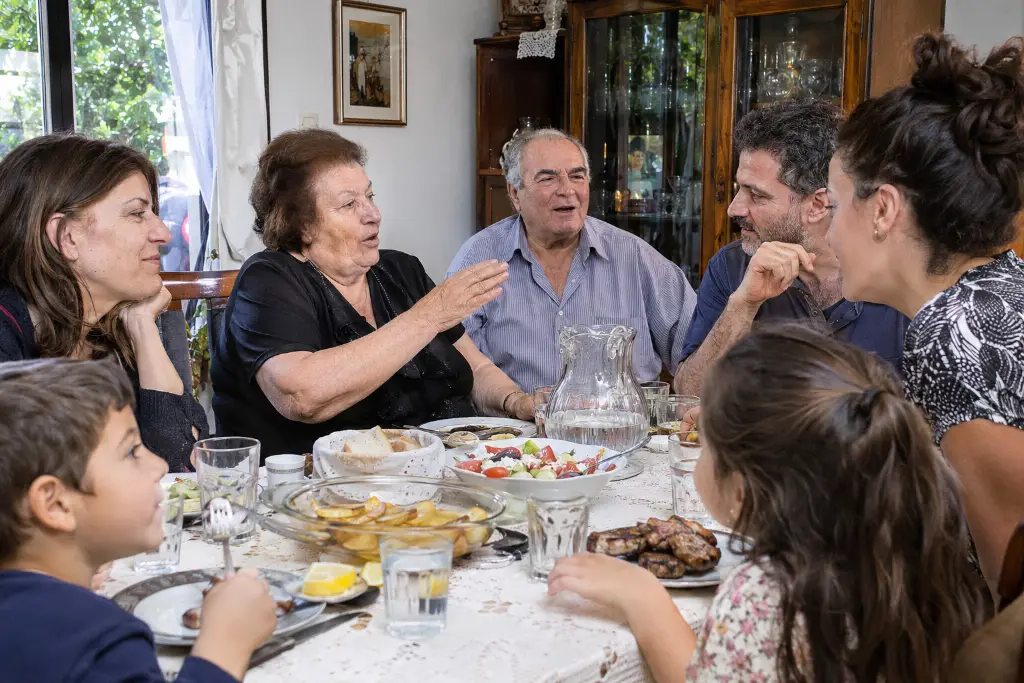
Who is who at the table
| In Greek | How it sounds | What it means |
|---|---|---|
| i ya-YA | GrandmotherWritten yiayia or yaya in English. The same form when you call her. | |
| o pa-POOS | GrandfatherWhen you call him: «παππού» (pa-POO). | |
| i THEE-a | AuntWritten theia, thea or thia in English. With her name: «η θεία Ελένη». | |
| o THEE-os | UncleWhen you call him: «θείε» (THEE-e). In casual speech you will also hear «θείο» (THEE-o). | |
| i ma-MA | MomThe formal word is «η μητέρα» (i mi-TE-ra), mother. | |
| o bam-BAS | DadWhen you call him: «μπαμπά» (bam-BA). The formal word is «ο πατέρας» (o pa-TE-ras). | |
| o a-ther-FOS, i a-ther-FEE | Brother, sisterAlso spelled «αδελφός» and «αδελφή». Brothers and sisters together: «τα αδέρφια» (ta a-THER-fya). | |
| o KSA-ther-fos, i ksa-THER-fi | Cousin (male), cousin (female)All the cousins together: «τα ξαδέρφια» (ta ksa-THER-fya). | |
| o no-NOS, i no-NA | Godfather, godmotherSome families say «νουνός» and «νουνά» (nouno, nouna). When you call him: «νονέ» (no-NE). | |
| i i-ko-YE-ni-a | Family«Η οικογένειά μου», my family. | |
| to SO-i | The whole extended family, all the relativesEveryone you are related to, by blood or by marriage. | |
| pe-THEE moo | My childWhat a yiayia or a theia calls you, at any age. |
From the course
Try it the way the course teaches it
Question 1 of 4. What does it mean?
η γιαγιά
Learn the Greek your family speaks, properly
CHF 129 for all six levels, paid once. No subscription. A free starter course at every level.
One click, no password to create · the free course starts at once
The family, generation by generation
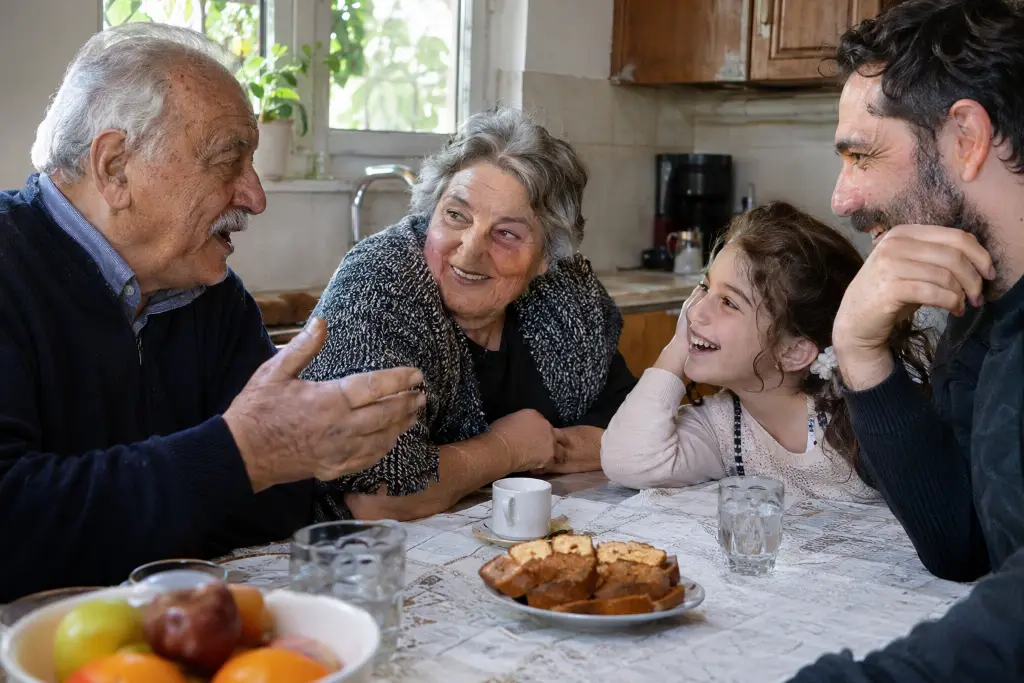
Picture the table on a feast day and go around it.
- Grandparents: η γιαγιά and ο παππούς. Together: οι παππούδες (i pa-POO-thes).
- Parents: η μαμά and ο μπαμπάς. Together: οι γονείς (i go-NEES).
- Aunts and uncles: η θεία and ο θείος.
- Brothers and sisters: ο αδερφός and η αδερφή.
- Cousins: ο ξάδερφος and η ξαδέρφη.
- Children: ο γιος (o yos), son, and η κόρη (i KO-ri), daughter.
- Nephew and niece: ο ανιψιός (o a-ni-PSYOS) and η ανιψιά (i a-ni-PSYA).
- Godparents: ο νονός and η νονά.
Why the word changes when you call someone
In Greek, a masculine word changes its ending when you speak to the person. If you grew up saying “pappou”, you already do it.
- ο παππούς → «παππού!»
- ο θείος → «θείε!»
- ο μπαμπάς → «μπαμπά!»
- ο νονός → «νονέ!»
- ο ξάδερφος → «ξάδερφε!» (KSA-ther-fe)
First names do the same: ο Νίκος is called «Νίκο!», ο Γιώργος is called «Γιώργο!». The words for women stay as they are: γιαγιά, θεία, μαμά, νονά.
Theia and theios are not only relatives
Θεία and θείος are your parents’ sisters and brothers, and the people they married. Greek does not have separate words for an aunt by blood and an aunt by marriage.
Children also say θεία and θείος to close family friends of their parents’ generation. So the “Theia Maria” of your childhood may not appear anywhere on the family tree, and she is your theia all the same.
In English you will see theia, thea, thia and theios, theio, thio. In Greek letters there is one spelling each: θεία, θείος.
Family words English does not have
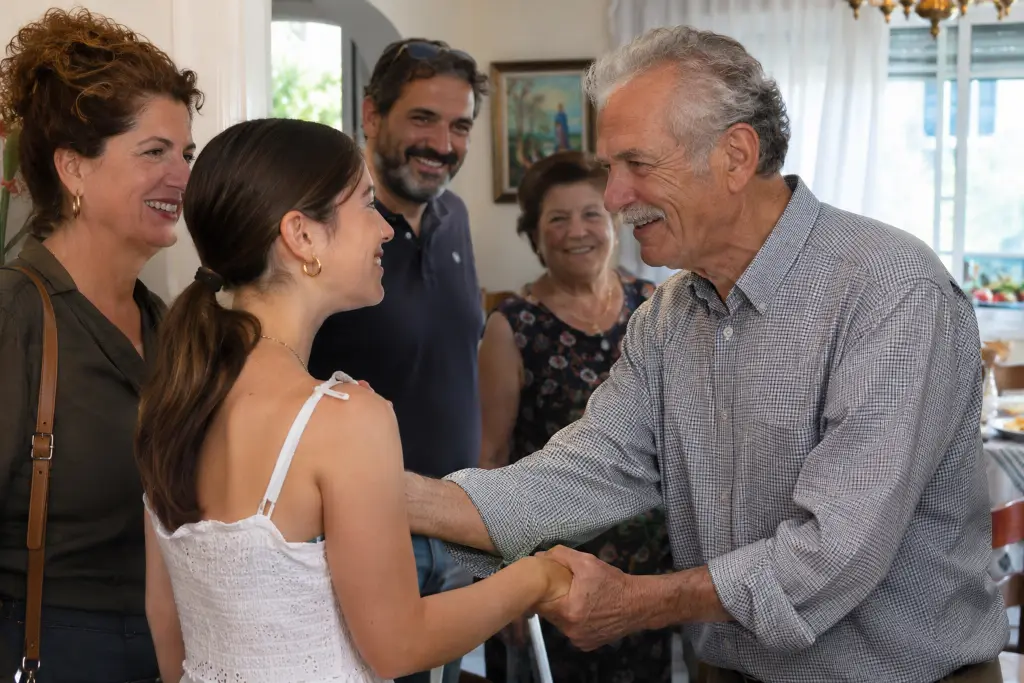
- οι συμπέθεροι (i sim-BE-the-ri): what your parents and your spouse’s parents are to each other. English has no single word for it.
- ο γαμπρός (o gam-BROS): the groom, and also a son-in-law or a brother-in-law. Η νύφη (i NEE-fi): the bride, and also a daughter-in-law or a sister-in-law. The man or woman who married into the family keeps the wedding word for life.
- ο κουμπάρος (o koom-BA-ros) and η κουμπάρα (i koom-BA-ra): the sponsors of your wedding, or the godparent of your child.
- το σόι: the whole extended family, on both sides.
Mother-in-law is η πεθερά (i pe-the-RA) and father-in-law ο πεθερός (o pe-the-ROS).
Sitting down to Sunday lunch
- YiayiaE-la, pe-THEE moo, KA-tse THEE-pla ston pa-POO.Come, my child, sit next to Grandpa.
- Youya soo, pa-POO! poo EE-ne i THEE-a e-LE-ni?Hi, Grandpa! Where is Aunt Eleni?
- Pappoustin koo-ZEE-na, me ta ksa-THER-fya soo.In the kitchen, with your cousins.
- YouTHEE-e NEE-ko, E-la sto tra-PE-zi!Uncle Nikos, come to the table!
Questions people ask
What is the Greek word for aunt: theia or thea?
The word is «θεία» (THEE-a). Theia, thea and thia are all ways of writing it in Latin letters. With a name it comes first: «θεία Μαρία», Aunt Maria.
What is the Greek word for uncle?
«Θείος» (THEE-os). When you call him, the ending changes: «θείε» (THEE-e), and in casual speech also «θείο» (THEE-o), which Greek-Americans often write as Theio.
What is the Greek word for grandfather?
«Παππούς» (pa-POOS). When you call him you say «παππού» (pa-POO), which Greek-Americans write as pappou or papou. Grandmother is «γιαγιά» (ya-YA).
How do you say family in Greek?
«Οικογένεια» (i-ko-YE-ni-a). The wider family, with all the cousins and in-laws, is «το σόι» (to SO-i).
What do Greeks call their cousins?
A male cousin is «ξάδερφος» (KSA-ther-fos) and a female cousin «ξαδέρφη» (ksa-THER-fi). Together they are «τα ξαδέρφια» (ta ksa-THER-fya). You will also see the spelling «ξάδελφος».
Why do Greeks call people theia and theios who are not relatives?
It is a mark of closeness and respect. Children use «θεία» and «θείος» for their parents’ close friends and for older people they know well, so the word reaches beyond blood relatives.
You can say it. Now learn to read it.
Where are you starting from?
Born abroad, Greek by family: you never have to choose. Start from the Greek you already carry.
- About 1.2 million Americans are of Greek descent. About one in five speaks Greek at home. (US Census Bureau, 2019)
Learn the Greek you grew up hearing: Greek-Americans · Greek-Australians · Greek-Canadians · British Greeks and Cypriots · Deutschgriechen (auf Deutsch) · All Greek Heritage pages