
Greek for Greek-Americans
What to say at a Greek baptism, and what to write in the card
To the parents you say «Να σας ζήσει» (na sas ZEE-si), “may your child live a long life”. To the godfather you say «Πάντα άξιος» (PAN-da A-ksi-os), “always worthy”, and to a godmother «Πάντα άξια» (PAN-da A-ksi-a). In the card, write «Να σας ζήσει ο νεοφώτιστος» for a boy or «Να σας ζήσει η νεοφώτιστη» for a girl.
This page is a taste of the course: Greek written, spoken and practiced, from the alphabet to real conversation. Start free →
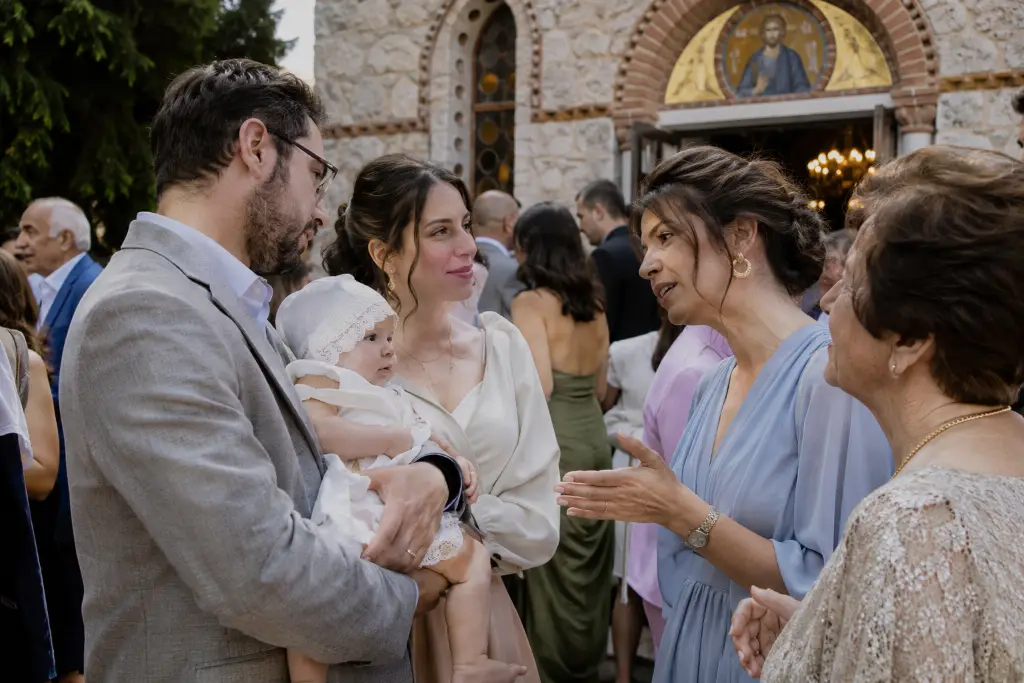
The words for the day
| In Greek | How it sounds | What it means |
|---|---|---|
| na sas ZEE-si | May your child live a long lifeTo the parents, as a couple. The one wish everybody says. The same words work for a boy and for a girl. | |
| na soo ZEE-si | The same wish, to one personTo one parent alone, when it is someone you know well. | |
| PAN-da A-ksi-os | Always worthyTo the godfather. To a godmother it is «Πάντα άξια» (A-ksi-a), to two godparents «Πάντα άξιοι» (A-ksi-i). | |
| na ton HE-re-ste | May he bring you joyTo the parents of a boy. For a girl: «Να τη χαίρεστε» (na ti HE-re-ste). | |
| sin-ha-ri-TEE-ri-a | CongratulationsSafe with everyone: parents, godparents, grandparents. | |
| na sas ZEE-si to e-GO-ni | May your grandchild live a long lifeTo the grandparents. | |
| ef-ha-ri-STOO-me | Thank you (from two or more people)What the parents answer. One person answers «Ευχαριστώ» (ef-ha-ri-STO). | |
| i VAF-ti-si | The baptismThe everyday word. You will also hear «τα βαφτίσια» (ta vaf-TEE-sya). | |
| o no-NOS | The godfatherThe godmother is «η νονά» (i no-NA). | |
| o ne-o-FO-ti-stos | The newly baptized boyA card word. For a girl: «η νεοφώτιστη» (i ne-o-FO-ti-sti). | |
| me a-GA-pi | With loveHow to sign the card. |
From the course
Try it the way the course teaches it
Question 1 of 4. What does it mean?
Να σας ζήσει
Learn the Greek your family speaks, properly
CHF 129 for all six levels, paid once. No subscription. A free starter course at every level.
One click, no password to create · the free course starts at once
Who gets which wish
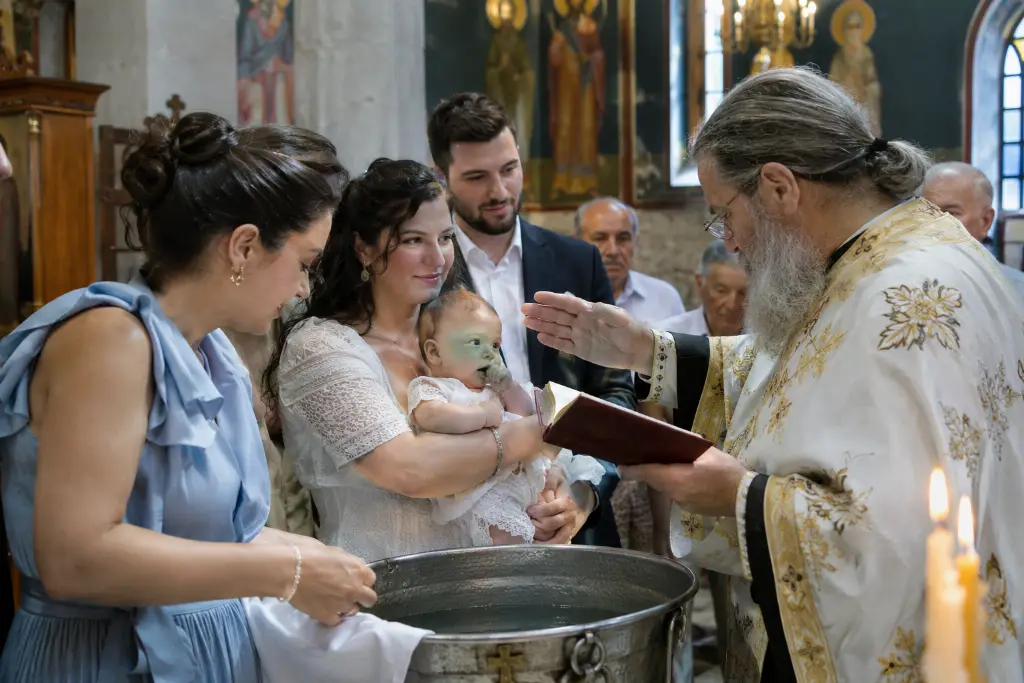
When the service ends, guests go up to the family. You will hear the same few words again and again, and you only need three of them.
- The parents: «Να σας ζήσει». It means “may this child live long, for you”. You do not change it for a boy or a girl.
- The godparent: «Πάντα άξιος» to a man, «Πάντα άξια» to a woman. It means “may you always be worthy”, and it honors the person who has become the child’s godparent. «Να σας ζήσει» is said to the godparent too.
- The grandparents: «Να σας ζήσει το εγγόνι», “may your grandchild live a long life”.
If your mind goes blank, «Συγχαρητήρια», “congratulations”, is never wrong.
Sas or sou: who you are talking to
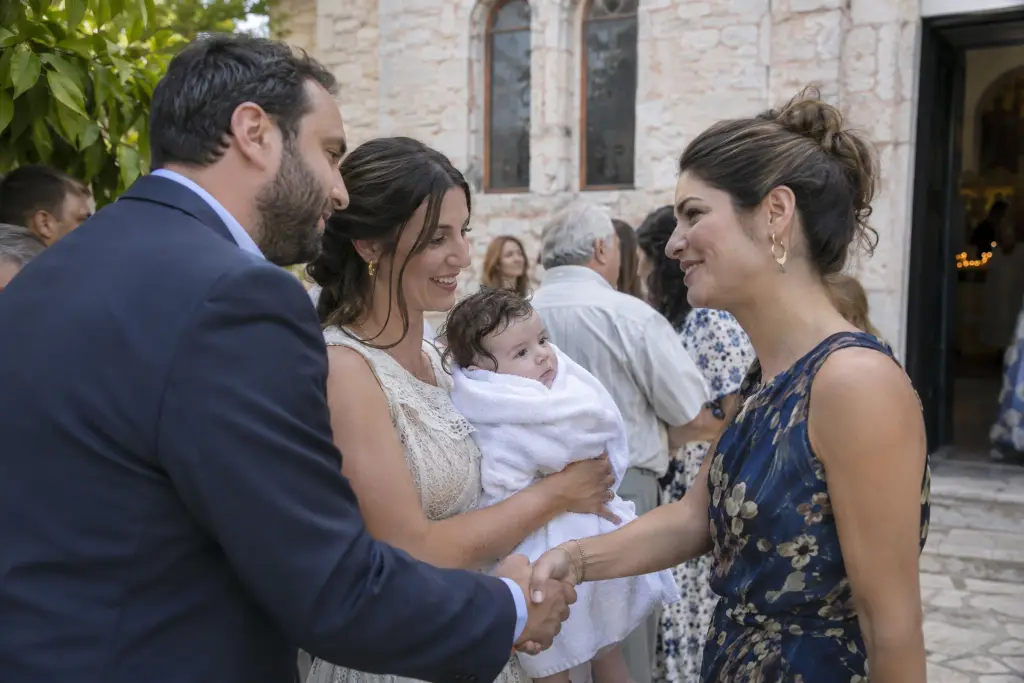
The small word in the middle says who you are talking to.
- «Να σας ζήσει»: to two people, or to one person you address politely. This is the form for the parents together.
- «Να σου ζήσει»: to one person you know well, such as your cousin holding the baby.
- «Να ζήσετε» (na ZEE-se-te) is a different wish. It means “may you live” and is said to a bride and groom, so you will hear it at weddings, not at baptisms.
In Latin letters people write it many ways: na sas zisi, na sas zisei, na sas zhsei, na sas zeesee. They are all the same Greek: «Να σας ζήσει».
What to write in the card

Two lines in Greek letters are enough, and the family will keep the card. Choose the boy or the girl version.
- For a boy: «Να σας ζήσει ο νεοφώτιστος! Να είναι πάντα γερός και καλότυχος.» May the newly baptized boy live a long life. May he always be healthy and fortunate.
- For a girl: «Να σας ζήσει η νεοφώτιστη! Να είναι πάντα γερή και καλότυχη.» The same wish for a girl.
- To the child: «Για τη βάφτισή σου, με όλη μας την αγάπη.» For your baptism, with all our love.
- To sign: «Με αγάπη», “with love”, and your name.
You can put the child’s name in place of the long word: «Να σας ζήσει ο Νικόλας», «Να σας ζήσει η Ελένη».
Words you will hear around you
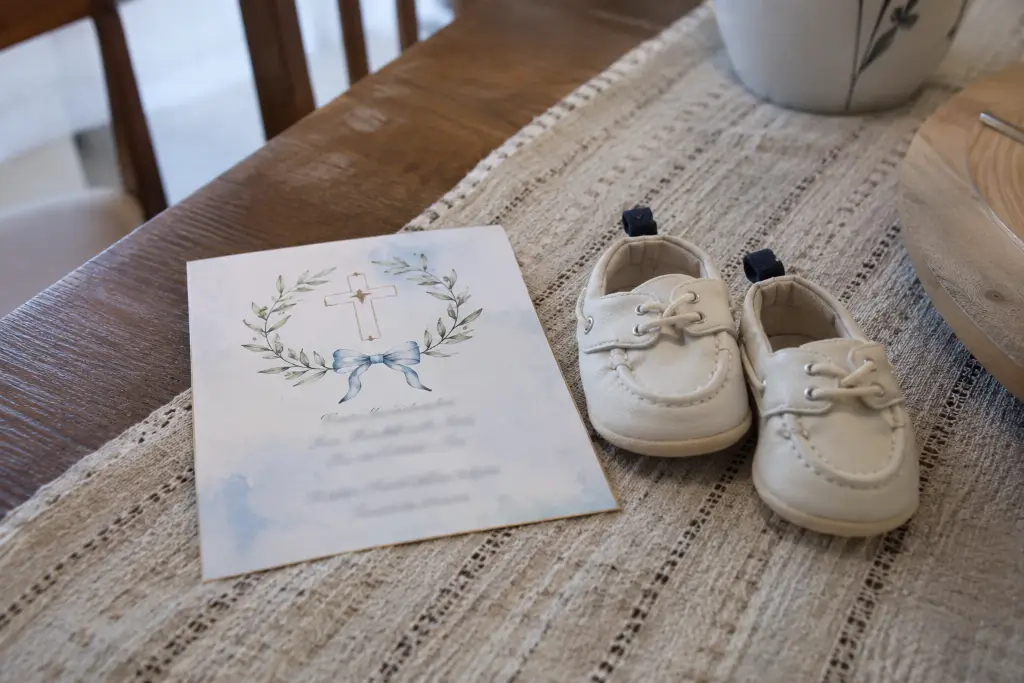
A few more words you will hear during the day.
- η βάφτιση or τα βαφτίσια: the baptism.
- ο νονός, η νονά: the godfather, the godmother. A child calls them «νονέ» (no-NE) and «νονά».
- τα μαρτυρικά (ta mar-ti-ri-KA): the small pins, usually a cross on a ribbon, given to the guests, who are the witnesses of the baptism.
- οι μπομπονιέρες (i bom-bo-NYE-res): the favors with sugared almonds that you take home.
Outside the church, after the service
- Youna sas ZEE-si! sin-ha-ri-TEE-ri-a.May your child live a long life! Congratulations.
- Motheref-ha-ri-STOO-me po-LEE.Thank you very much.
- YouPAN-da A-ksi-a, no-NA!Always worthy, godmother!
- Godmotheref-ha-ri-STO. na EE-se ka-LA.Thank you. May you be well.
Questions people ask
What do you say at a Greek baptism?
To the parents: «Να σας ζήσει» (na sas ZEE-si), “may your child live a long life”. To the godfather: «Πάντα άξιος» (PAN-da A-ksi-os), and to a godmother «Πάντα άξια». «Συγχαρητήρια» (sin-ha-ri-TEE-ri-a), “congratulations”, works for everyone.
What do you write in a Greek baptism card?
For a boy: «Να σας ζήσει ο νεοφώτιστος». For a girl: «Να σας ζήσει η νεοφώτιστη». Add «Να είναι πάντα γερός και καλότυχος» (boy) or «γερή και καλότυχη» (girl), and sign «Με αγάπη», “with love”.
What does na sas zisi mean?
«Να σας ζήσει» means “may he or she live for you”. It is a wish for the child’s long life, said to the parents. It is also spelled na sas zisei or na sas zhsei in Latin letters.
What do you say to the godparents at a Greek baptism?
«Πάντα άξιος» (PAN-da A-ksi-os) to a godfather and «Πάντα άξια» (PAN-da A-ksi-a) to a godmother. It means “always worthy”. They answer «Ευχαριστώ», “thank you”.
How do you reply to na sas zisi?
The parents answer «Ευχαριστούμε» (ef-ha-ri-STOO-me), “we thank you”. A warmer reply is «Να είστε καλά» (na EE-ste ka-LA), “may you be well”.
Is it panta axios or panta axia?
It depends on who you are speaking to. «Πάντα άξιος» is for a man, «Πάντα άξια» for a woman, and «Πάντα άξιοι» for two godparents together.
You can say it. Now learn to read it.
Where are you starting from?
Born abroad, Greek by family: you never have to choose. Start from the Greek you already carry.
- About 1.2 million Americans are of Greek descent. About one in five speaks Greek at home. (US Census Bureau, 2019)
Learn the Greek you grew up hearing: Greek-Americans · Greek-Australians · Greek-Canadians · British Greeks and Cypriots · Deutschgriechen (auf Deutsch) · All Greek Heritage pages