
Greek for Greek-Americans
A new baby: what Greeks say to the parents
When a baby is born, Greeks say «Να σας ζήσει» (na sas ZEE-si) to the parents: “may your child live a long life”. Before the birth, the wish is «Με το καλό» (me to ka-LO), “may it go well”. The parents answer «Ευχαριστούμε» (ef-ha-ri-STOO-me), “we thank you”.
This page is a taste of the course: Greek written, spoken and practiced, from the alphabet to real conversation. Start free →

Before the birth, and after
| In Greek | How it sounds | What it means |
|---|---|---|
| na sas ZEE-si | May your child live a long lifeTo both parents, once the baby is born. The same words for a boy and for a girl. | |
| na soo ZEE-si | The same wish, to one personTo one parent you know well: your cousin, your friend. | |
| me to ka-LO | May it go wellBefore the birth, to the mother or father to be. Literally “with the good”. | |
| ka-LEE lef-te-RYA | Have an easy deliveryTo a pregnant woman, near her time. A traditional wish; the words are literally “good freedom”. | |
| sin-ha-ri-TEE-ri-a | CongratulationsTo anyone in the family, at the news. | |
| na to HE-re-ste | May your baby bring you joyTo the parents. For a boy also «Να τον χαίρεστε», for a girl «Να τη χαίρεστε». | |
| na EE-ne ye-RO ke ka-LO-ti-ho | May the baby be healthy and fortunateFollows «Να σας ζήσει», in speech or in a card. | |
| na sas ZEE-si to e-GO-ni | May your grandchild live a long lifeTo the new grandparents. | |
| ftoo ftoo, na min to ma-TYA-so | Ftou ftou, so I don’t give the baby the evil eyeAfter a compliment to the baby. Said with a smile. | |
| ef-ha-ri-STOO-me | Thank you (from two or more people)What the parents answer. |
From the course
Try it the way the course teaches it
Question 1 of 4. What does it mean?
Να σας ζήσει
Learn the Greek your family speaks, properly
CHF 129 for all six levels, paid once. No subscription. A free starter course at every level.
One click, no password to create · the free course starts at once
Before the baby comes: “me to kalo”

While the family is waiting, the wish looks ahead.
- «Με το καλό»: “may it go well”. It is the wish for anything good that is on its way, and you will hear it before a wedding or a trip as well.
- «Καλή λευτεριά»: “have an easy delivery”. A traditional wish, said to the mother in the last weeks.
In Latin letters you will see me to kalo and kali lefteria.
When the baby is born: “na sas zisei”
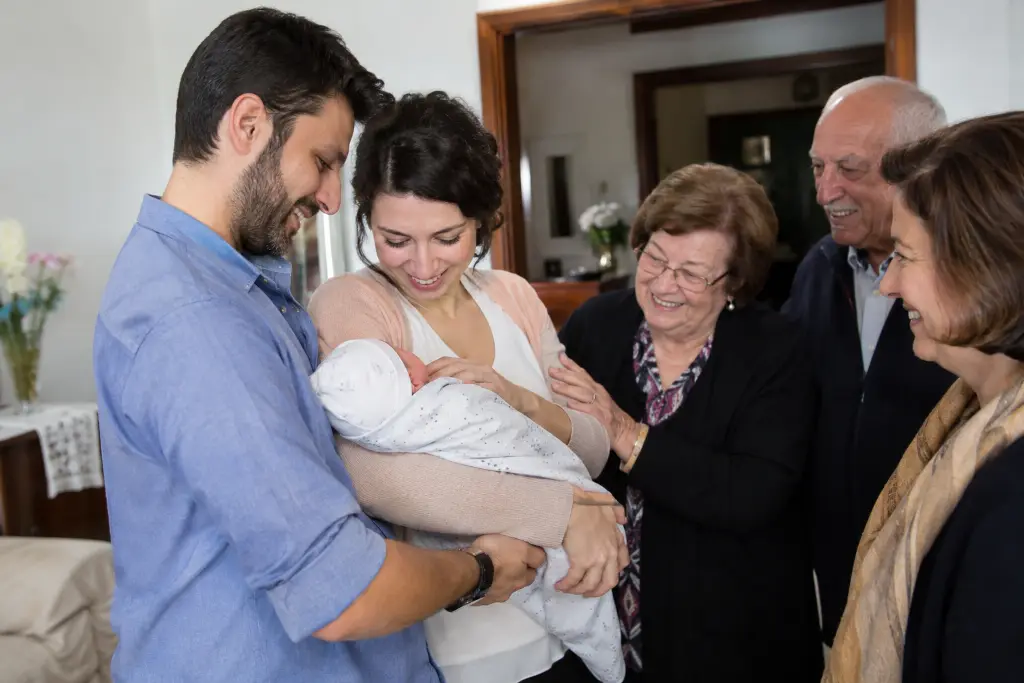
From the day of the birth, one wish does almost all the work: «Να σας ζήσει». It means “may he or she live, for you”. People write it na sas zisei, na sas zisi or na sas zhsei.
- To the two parents: «Να σας ζήσει».
- To one parent you know well: «Να σου ζήσει».
- For twins: «Να σας ζήσουν» (ZEE-soon), “may they live”.
- To the grandparents: «Να σας ζήσει το εγγόνι».
You can name the child: «Να σας ζήσει ο γιος» (o yos), “your son”, or «Να σας ζήσει η κόρη» (i KO-ri), “your daughter”. Then add «Να είναι γερό και καλότυχο», “may the baby be healthy and fortunate”.
The “ftou ftou” you remember
If your yiayia praised a baby and then made a small spitting sound, «φτου φτου», this is what she was doing. By custom, a compliment to a baby is followed by «Φτου φτου, να μην το ματιάσω»: “so I don’t give the baby the evil eye”.
Today it is said lightly, as a habit of affection.
What to write in the card

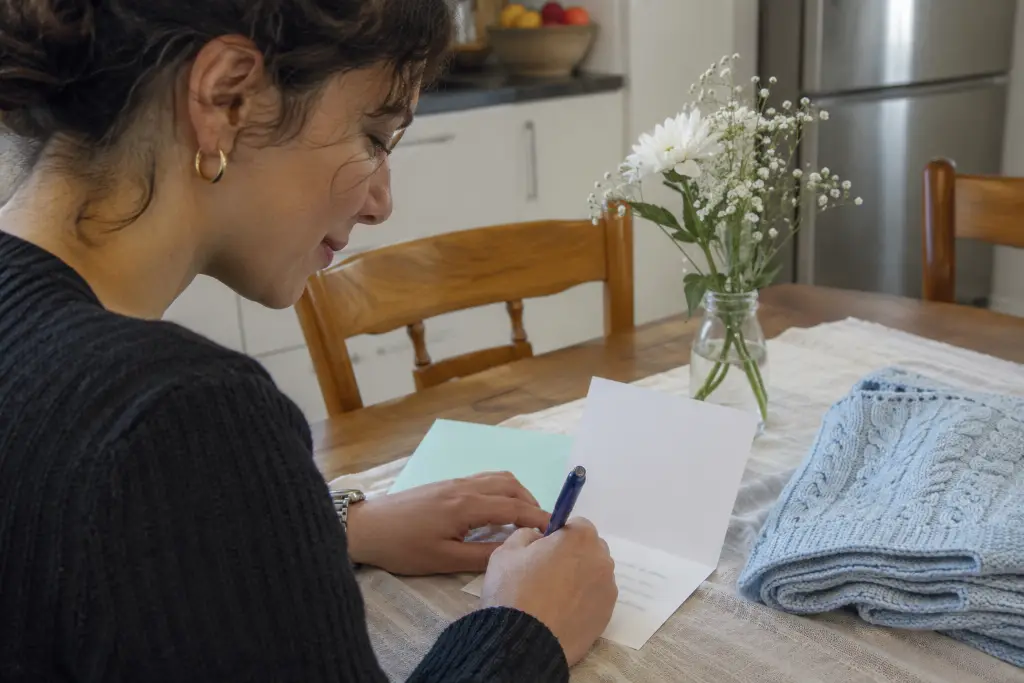
Two short lines are plenty.
- «Συγχαρητήρια! Να σας ζήσει το μωρό.» Congratulations! May your baby live a long life.
- «Να είναι γερό και καλότυχο.» May the baby be healthy and fortunate.
- «Να το χαίρεστε!» May your baby bring you joy.
- Sign with «Με αγάπη» (me a-GA-pi), “with love”, and your name.
The word for the baby is το μωρό (to mo-RO). It is a neuter word in Greek, which is why the wish says γερό and καλότυχο for a boy and for a girl alike.
On the phone with your cousin
- Yousin-ha-ri-TEE-ri-a! na sas ZEE-si to mo-RO.Congratulations! May your baby live a long life.
- Cousinef-ha-ri-STOO-me po-LEE!Thank you very much!
- Youna EE-ne ye-RO ke ka-LO-ti-ho.May the baby be healthy and fortunate.
- Cousinna EE-se ka-LA.May you be well.
Questions people ask
What do Greeks say when a baby is born?
«Να σας ζήσει» (na sas ZEE-si), “may your child live a long life”, to the parents. Many add «Να είναι γερό και καλότυχο», “may the baby be healthy and fortunate”, or simply «Συγχαρητήρια», “congratulations”.
What does na sas zisei mean?
«Να σας ζήσει» means “may he or she live for you”. The wish is for the child’s long life, and it is addressed to the parents. It is also spelled na sas zisi and na sas zhsei.
What does me to kalo mean?
«Με το καλό» (me to ka-LO) is literally “with the good”: may it go well. It is said before the birth, and before any awaited event such as a wedding or a journey.
What do you say to a pregnant woman in Greek?
«Με το καλό» (me to ka-LO), “may it go well”, or «Καλή λευτεριά» (ka-LEE lef-te-RYA), “have an easy delivery”. «Να σας ζήσει» comes only after the baby is born.
How do you say congratulations on the new baby in Greek?
«Συγχαρητήρια! Να σας ζήσει το μωρό.» (sin-ha-ri-TEE-ri-a! na sas ZEE-si to mo-RO). To one parent you know well, say «Να σου ζήσει».
How do the parents reply to na sas zisei?
With «Ευχαριστούμε» (ef-ha-ri-STOO-me), “we thank you”, or «Να είστε καλά» (na EE-ste ka-LA), “may you be well”.
You can say it. Now learn to read it.
Where are you starting from?
Born abroad, Greek by family: you never have to choose. Start from the Greek you already carry.
- About 1.2 million Americans are of Greek descent. About one in five speaks Greek at home. (US Census Bureau, 2019)
Learn the Greek you grew up hearing: Greek-Americans · Greek-Australians · Greek-Canadians · British Greeks and Cypriots · Deutschgriechen (auf Deutsch) · All Greek Heritage pages