
Greek for Greek-Americans
What to say at a Greek wedding: na zisete and the other wishes
To the bride and groom you say «Να ζήσετε» (na ZEE-se-te), “may you live”: a long, happy life together. To their parents you say «Να σας ζήσουν» (na sas ZEE-soon), “may they live long, for you”. If you are single, expect to hear «Και στα δικά σου» (ke sta thi-KA soo), “and at yours”, a wish that your own wedding comes next.
This page is a taste of the course: Greek written, spoken and practiced, from the alphabet to real conversation. Start free →
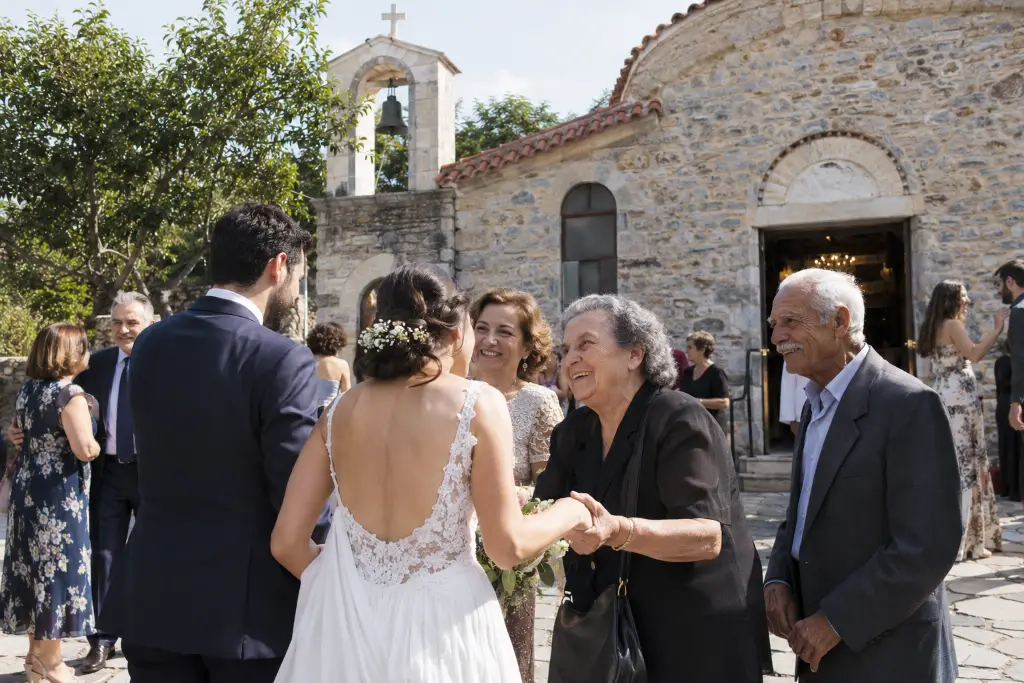
The wedding wishes
| In Greek | How it sounds | What it means |
|---|---|---|
| na ZEE-se-te | May you live (a long life together)To the bride and groom. The one wish everybody says. Also written na zisete or na zeesete. | |
| na ZEE-se-te ef-ti-hi-SME-ni | May you live happilyA fuller version, to the couple. | |
| na sas ZEE-soon | May they live long, for youTo the parents of the bride or the groom, and to the grandparents. | |
| ke sta thi-KA soo | And at yours: may your wedding be nextA wish to an unmarried guest, often from the couple or their parents as they thank you. To several: «Και στα δικά σας» (ke sta thi-KA sas). Answer «Ευχαριστώ». | |
| stis ha-RES soo | To your own wedding (literally: to your joys)Another wish to an unmarried guest: may you marry soon. | |
| ka-LA STE-fa-na | A good wedding (literally: good crowns)To a couple who are engaged, before the wedding. | |
| VEE-on an-THO-spar-ton | A life strewn with flowersA formal, old-style wish to newlyweds, written in cards more often than spoken. | |
| sin-ha-ri-TEE-ri-a | CongratulationsSafe with everyone. | |
| ef-ha-ri-STOO-me po-LEE | Thank you very much (from two or more)What the couple answers. One person says «Ευχαριστώ» (ef-ha-ri-STO). | |
| i NEE-fi | The brideThe groom is «ο γαμπρός» (o gam-BROS). | |
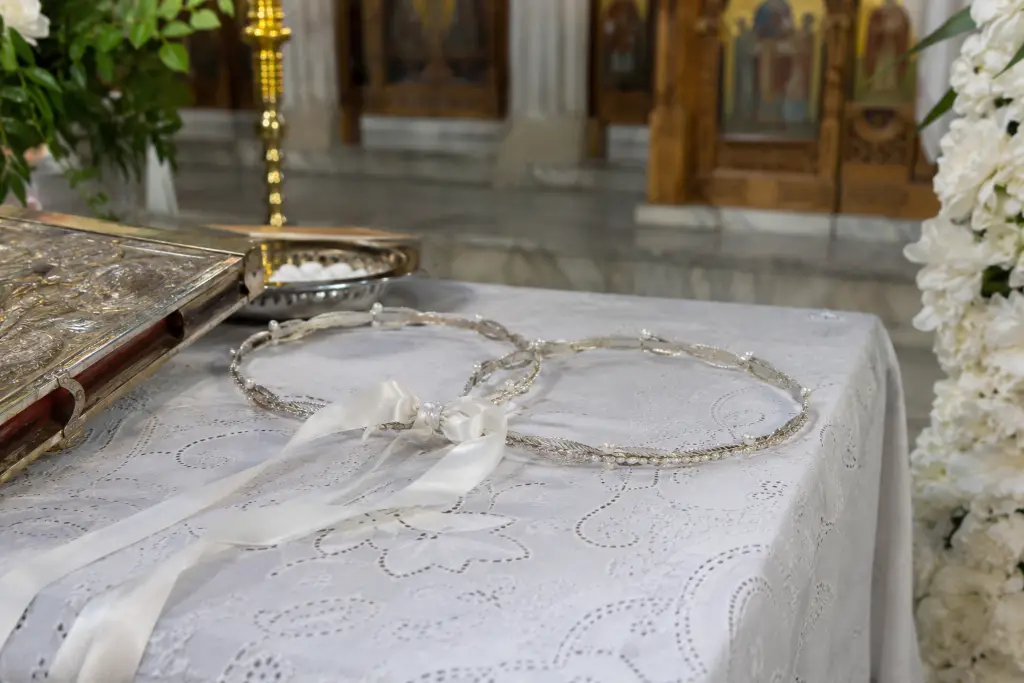
| ta STE-fa-na | The wedding crownsThe two crowns joined by a ribbon, exchanged over the couple’s heads by the koumbaros or koumbara. | |
| ta koo-FE-ta | Sugared almondsThe favors guests take home, traditionally an odd number in each little bag. |
From the course
Try it the way the course teaches it
Question 1 of 4. What does it mean?
Να ζήσετε
Learn the Greek your family speaks, properly
CHF 129 for all six levels, paid once. No subscription. A free starter course at every level.
One click, no password to create · the free course starts at once
Who gets which wish
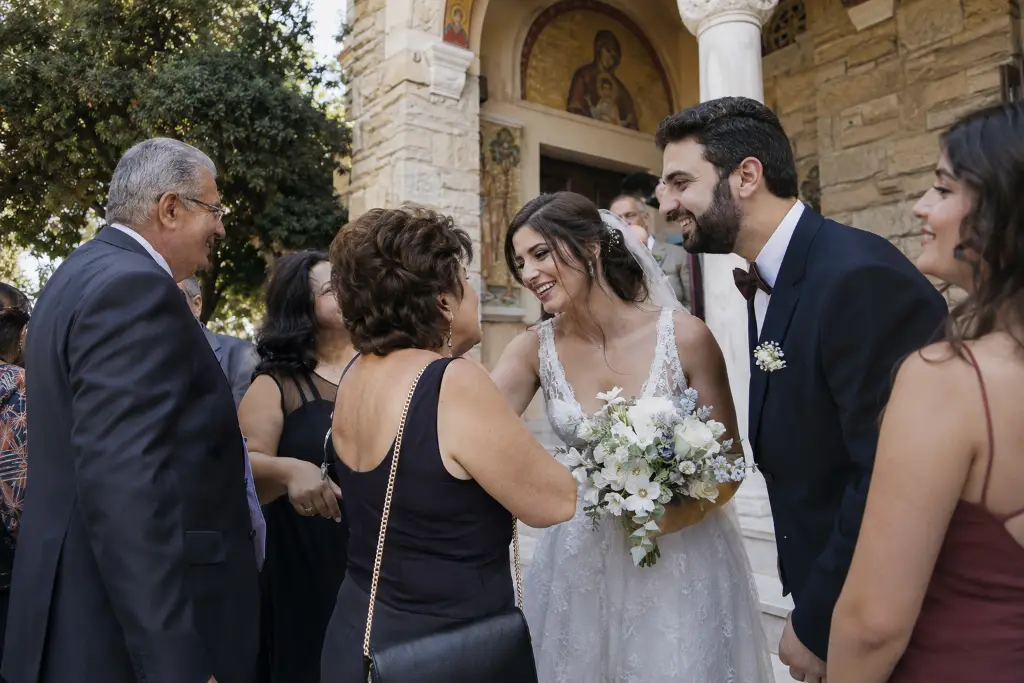
After the ceremony, guests go up to the couple, their parents and the koumbaros. You need three phrases.
- The bride and groom: «Να ζήσετε!». Add «Συγχαρητήρια» if you like.
- Their parents and grandparents: «Να σας ζήσουν!», “may they live long, for you”.
- If you are single: you will hear «Και στα δικά σου!» or «Στις χαρές σου!». Both mean “may your own wedding come soon”. Smile and say «Ευχαριστώ».
Before the wedding, to the engaged couple or their family, the wish is «Καλά στέφανα», “good crowns”: may the wedding go well.
Na zisete, na sas zisi, na sas zisoun: which is which
All three come from ζω, “I live”. The difference is who you are talking to and who you are talking about.
- «Να ζήσετε»: may you two live. Said to the couple themselves.
- «Να σας ζήσουν»: may they live, for you. Said to the parents about the couple.
- «Να σας ζήσει»: may he or she live, for you. That is the wish for one child, which you hear at baptisms.
In Latin letters you will see na zisete, na zeesete and na zhsete. They are all «Να ζήσετε», said na ZEE-se-te, with the stress on the first syllable of the long word.
What to write in the card

A few lines in Greek letters make the card one the couple keeps.
- «Να ζήσετε! Σας ευχόμαστε μια ζωή γεμάτη αγάπη και ευτυχία.» May you live long! We wish you a life full of love and happiness.
- From one person: «Σας εύχομαι…» (sas EF-ho-me), “I wish you…”, in place of «Σας ευχόμαστε…» (sas ef-HO-ma-ste), “we wish you…”.
- Formal and old-style, often printed in cards: «Βίον ανθόσπαρτον», “a life strewn with flowers”.
- To sign: «Με αγάπη», “with love”, and your name.
What you will see and hear in church
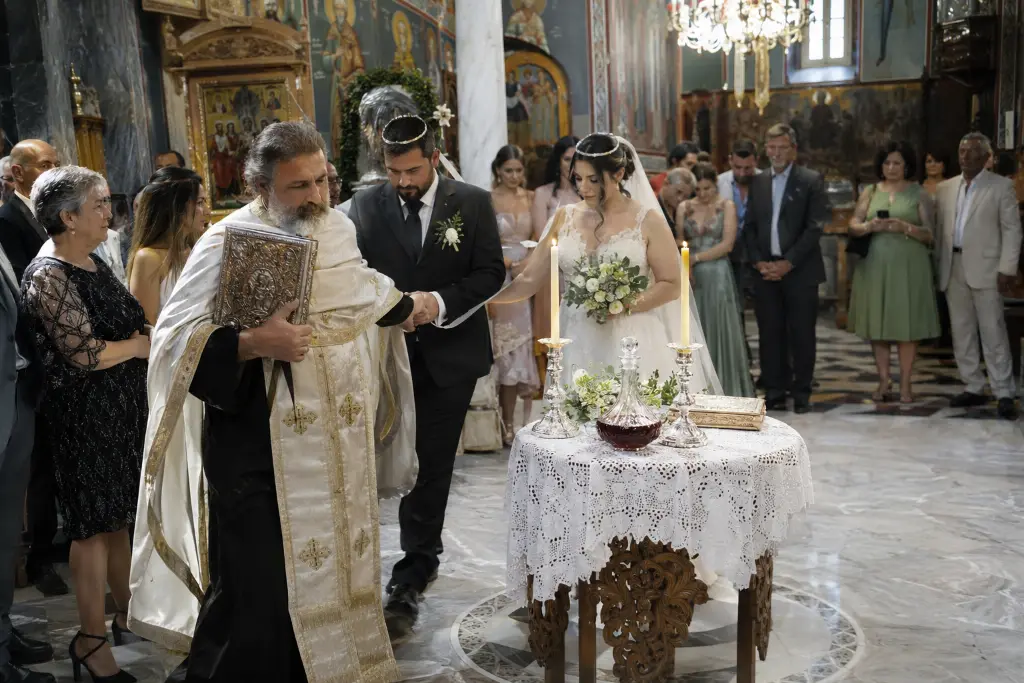
- τα στέφανα: the crowns. The koumbaros or koumbara crosses them three times over the couple’s heads.
- «Ησαΐα, χόρευε» (i-sa-EE-a, HO-re-ve): the hymn the priest sings as he leads the couple three times around the table. It is often called the Dance of Isaiah.
- ο κουμπάρος, η κουμπάρα: the wedding sponsors.
- τα κουφέτα: the sugared almonds, handed out as guests leave.
Outside the church, after the ceremony
- Youna ZEE-se-te! na EE-ste PAN-da ef-ti-hi-SME-ni!Long life to you! May you always be happy!
- Brideef-ha-ri-STOO-me po-LEE!Thank you so much!
- Youna sas ZEE-soon, ki-REE-a e-LE-ni!May they live long, Mrs. Eleni!
- Motheref-ha-ri-STO, ko-REE-tsi moo. ke sta thi-KA soo!Thank you, my girl. And may your wedding be next!
Questions people ask
What do Greeks say at weddings?
To the couple: «Να ζήσετε» (na ZEE-se-te), “may you live long together”. To the parents: «Να σας ζήσουν» (na sas ZEE-soon). «Συγχαρητήρια» (sin-ha-ri-TEE-ri-a), “congratulations”, works for everyone.
What does na zisete mean?
«Να ζήσετε» means “may you live”, said to two or more people. At a wedding it is the wish for a long, happy life together. It is also spelled na zeesete or na zhsete.
What do you write in a Greek wedding card?
«Να ζήσετε! Σας ευχόμαστε μια ζωή γεμάτη αγάπη και ευτυχία», “May you live long! We wish you a life full of love and happiness.” Sign «Με αγάπη», “with love”.
What do you say to the parents of the bride and groom?
«Να σας ζήσουν» (na sas ZEE-soon), “may they live long, for you”. They answer «Ευχαριστώ», and to a single guest often «Και στα δικά σου».
What does kai sta dika sou mean?
«Και στα δικά σου» (ke sta thi-KA soo) means “and at yours”: may we soon celebrate your wedding. It is a wish to unmarried guests, often from the couple or their parents. Answer «Ευχαριστώ».
What does kala stefana mean?
«Καλά στέφανα» (ka-LA STE-fa-na) means “good crowns”, after the crowns of the Orthodox wedding. It is said to an engaged couple: may your wedding go well.
You can say it. Now learn to read it.
Where are you starting from?
Born abroad, Greek by family: you never have to choose. Start from the Greek you already carry.
- About 1.2 million Americans are of Greek descent. About one in five speaks Greek at home. (US Census Bureau, 2019)
Learn the Greek you grew up hearing: Greek-Americans · Greek-Australians · Greek-Canadians · British Greeks and Cypriots · Deutschgriechen (auf Deutsch) · All Greek Heritage pages