
Greek for Greek-Americans
Dimitrios or Jim? Greek names and their American equivalents
Some Greek names have a true English twin: «Γιώργος» (YOR-gos) is George, «Γιάννης» (YA-nis) is John, «Ελένη» (e-LE-ni) is Helen. Others took an American name that is not a translation at all: in many Greek-American families «Δημήτρης» (thi-MEE-tris) became Jim, «Κωνσταντίνος» (kon-stan-DEE-nos) became Gus, «Βασίλης» (va-SEE-lis) became Bill and «Θανάσης» (tha-NA-sis) became Tom. The Greek name never went away: it is the one on the baptism certificate and the one yiayia used.
This page is a taste of the course: Greek written, spoken and practiced, from the alphabet to real conversation. Start free →

The Greek names and their American names
| In Greek | How it sounds | What it means |
|---|---|---|
| o YOR-gos | GeorgeOfficial form «Γεώργιος» (ye-OR-yi-os). Calling him: «Γιώργο!» (YOR-go). | |
| o thi-MEE-tris | Jim, Jimmy or James; also Demetrios, DemetriOfficial form «Δημήτριος». Calling him: «Δημήτρη!». At home often «Μήτσος» (MEE-tsos). | |
| o kon-stan-DEE-nos | Gus or ConstantineEveryday form «Κώστας» (KO-stas), calling him «Κώστα!». At home also «Ντίνος» (DEE-nos). | |
| o va-SEE-lis | Bill, Billy, or BasilOfficial form «Βασίλειος» (va-SEE-li-os). Calling him: «Βασίλη!». | |
| o tha-NA-sis | Often Tom or TommyOfficial form «Αθανάσιος» (a-tha-NA-si-os). Calling him: «Θανάση!». | |
| o YA-nis | JohnOfficial form «Ιωάννης» (i-o-A-nis). Calling him: «Γιάννη!». | |
| o NEE-kos | NickOfficial form «Νικόλαος» (ni-KO-la-os). Calling him: «Νίκο!». | |
| o pa-na-YO-tis | Often Peter or PeteAt home often «Τάκης» (TA-kis) or «Πάνος» (PA-nos). Calling him: «Παναγιώτη!». | |
| i pa-na-YO-ta | Often PennyAt home often «Γιώτα» (YO-ta). A woman’s name does not change when you call her. | |
| i e-LE-ni | Helen, EllenCalling her: «Ελένη!», the same form. | |
| i e-ka-te-REE-ni | Katherine, KathyEveryday form «Κατερίνα» (ka-te-REE-na). | |
| i va-si-li-KEE | Often Vicky or BessieAt home often «Βάσω» (VA-so) or «Κική» (ki-KEE). |
From the course
Try it the way the course teaches it
Question 1 of 4. What does it mean?
Ο Γιώργος
Learn the Greek your family speaks, properly
CHF 129 for all six levels, paid once. No subscription. A free starter course at every level.
One click, no password to create · the free course starts at once
Translations, sound-alikes and family choices
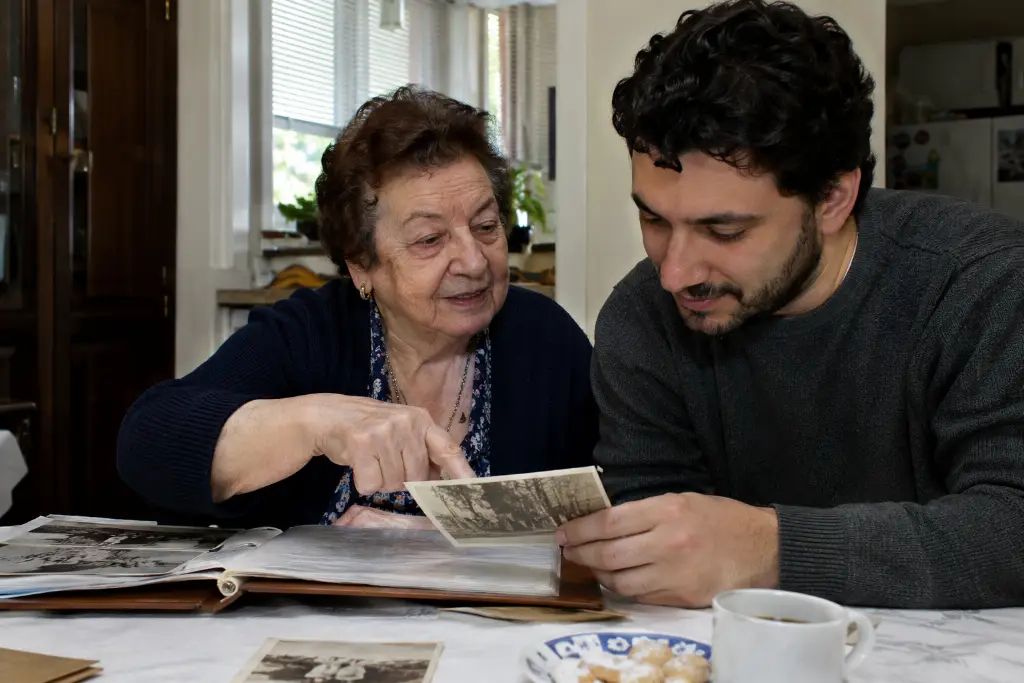
The American names in Greek families came about in three ways.
- The same name in English. Γιώργος and George, Γιάννης and John, Νίκος and Nick, Ελένη and Helen, Αικατερίνη and Katherine all go back to the same saints.
- A name that sounds or starts the same. Penny for Παναγιώτα, Peter or Pete for Παναγιώτης, Vicky for Βασιλική.
- A name that simply stuck. Jim for Δημήτρης, Gus for Κωνσταντίνος, Bill for Βασίλης, Tom for Θανάσης, Bessie for Βασιλική. These are not translations. They are the names people used at school, at work, behind the counter of the diner, and they passed from one family to the next. Not every family chose the same one.
None of this erased the Greek name. Your grandfather could be Gus at the store and Κώστα at the kitchen table on the same afternoon.
One Greek name, three forms

Many Greek men’s names have an official form, an everyday form and a form for calling someone.
- Official: Δημήτριος, Γεώργιος, Αθανάσιος. The forms on baptism certificates, passports and in church.
- Everyday: Δημήτρης, Γιώργος, Θανάσης. What everyone says.
- Calling him: «Δημήτρη!», «Γιώργο!», «Θανάση!». The final s drops when you speak to him.
The s also drops in «Με λένε Δημήτρη» (me LE-ne thi-MEE-tri), “my name is Dimitris”, because after με λένε the name changes its ending. Women’s names such as Ελένη and Μαρία stay the same.
In many families the first son is named after his father’s father and the first daughter after her father’s mother. That is why one family tree can hold four Georges and why a name often comes with a story.
Dimitrios, Demetrios, Dimitri: the Latin spellings

For most of the last century there was no fixed way to write Greek names in Latin letters, so each family, clerk and priest wrote what they heard. You will find:
- Dimitrios, Demetrios, Dimitri, Demetri for Δημήτριος.
- Konstantinos, Constantine, Kostas, Costas for Κωνσταντίνος.
- Vasilios, Vasileios, Vassilis, Basil for Βασίλειος.
- Panagiotis, Panayiotis, Panayotis for Παναγιώτης.
- Ioannis, Yiannis, Giannis for Ιωάννης and Γιάννης.
- Aikaterini, Ekaterini for Αικατερίνη.
They are all the same name. The one spelling that never changes is the Greek one.
Meeting a cousin in Greece
- Cousinpos se LE-ne?What is your name?
- Youstin a-me-ri-KEE me LE-ne JIM, a-LA EE-me thi-MEE-tris.In America they call me Jim, but I am Dimitris.
- Cousinsan ton pa-POO! HE-ro po-LEE, thi-MEE-tri.Like Grandpa! Nice to meet you, Dimitris.
- Youe-PEE-sis!Likewise!
Questions people ask
What are Greek names and their English equivalents?
Some are true twins: «Γιώργος» George, «Γιάννης» John, «Νίκος» Nick, «Ελένη» Helen, «Αικατερίνη» Katherine. Others are names many Greek-American families chose: «Δημήτρης» Jim, «Κωνσταντίνος» Gus, «Βασίλης» Bill, «Θανάσης» Tom, «Παναγιώτα» Penny.
What is the English version of Dimitrios?
The direct equivalent is Demetrius, but in many Greek-American families Dimitrios became Jim, Jimmy or James. In Greek he is «Δημήτρης» (thi-MEE-tris), and you call him «Δημήτρη!».
Why are so many Greek-Americans named Gus?
Gus is the American name many families gave to «Κωνσταντίνος» (kon-stan-DEE-nos), Konstantinos, whose everyday Greek form is «Κώστας». It is a family tradition, not a translation.
What is Athanasios in English?
In many Greek-American families Athanasios became Tom or Tommy. In Greek he goes by «Θανάσης» (tha-NA-sis); the full form «Αθανάσιος» is used in church and on documents.
Is Jim really the English name for Dimitrios?
Not as a translation. Jim comes from James, which is a different name. It became the American name of so many men called Dimitrios that it now feels like a pair. The Greek name stays «Δημήτρης».
How do I say my Greek name in Greek?
«Με λένε» (me LE-ne), “they call me”, then the name without its final s: «Με λένε Δημήτρη», «Με λένε Γιώργο», «Με λένε Κώστα». Women’s names do not change: «Με λένε Ελένη».
You can say it. Now learn to read it.
Where are you starting from?
Born abroad, Greek by family: you never have to choose. Start from the Greek you already carry.
- About 1.2 million Americans are of Greek descent. About one in five speaks Greek at home. (US Census Bureau, 2019)
Learn the Greek you grew up hearing: Greek-Americans · Greek-Australians · Greek-Canadians · British Greeks and Cypriots · Deutschgriechen (auf Deutsch) · All Greek Heritage pages