
Greek for Greek-Americans
Greek name days: what to say and what to answer
On a name day you say «Χρόνια πολλά» (HRO-nya po-LA), “many years”, often followed by «Να χαίρεσαι το όνομά σου» (na HE-re-se to O-no-MA soo), “may you enjoy your name”. The person celebrating answers «Ευχαριστώ» (ef-ha-ri-STO), “thank you”. To the wife, husband or mother of someone celebrating, say «Να τον χαίρεσαι» (na ton HE-re-se) for a man, «Να τη χαίρεσαι» for a woman.
This page is a taste of the course: Greek written, spoken and practiced, from the alphabet to real conversation. Start free →
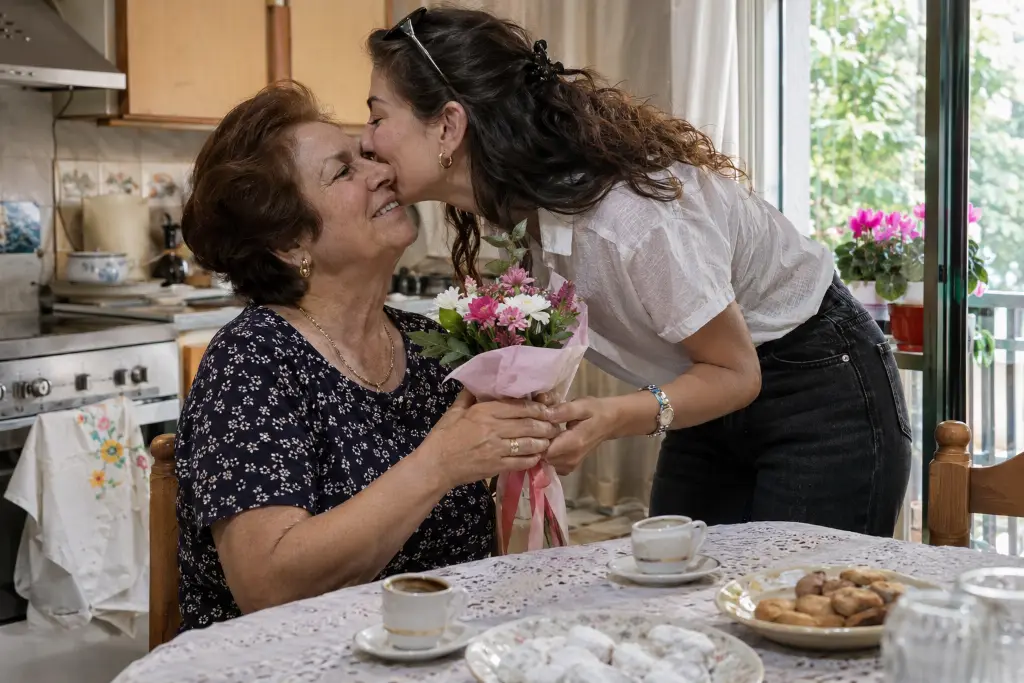
The wishes, the answers, and the words around them
| In Greek | How it sounds | What it means |
|---|---|---|
| HRO-nya po-LA | Many years: happy name dayThe wish itself. Also written chronia, xronia or hronia polla. | |
| HRO-nya po-LA, YOR-go! | Happy name day, George!Add the name in the calling form: «Δημήτρη», «Κώστα», «Νίκο». Women’s names stay the same: «Ελένη», «Μαρία». | |
| na HE-re-se to O-no-MA soo | May you enjoy your nameThe classic name-day wish, said after «Χρόνια πολλά». | |
| na ton HE-re-se | May he bring you joyTo the wife, husband, mother or father of a man celebrating. For a woman: «Να τη χαίρεσαι» (na ti HE-re-se). | |
| O-ti e-pi-thi-MEES | Whatever you wish forAdded at the end of the wish. | |
| po-LEE-hro-nos | May you live long (to a man)A one-word wish. To a woman: «Πολύχρονη» (po-LEE-hro-ni). | |
| ef-ha-ri-STO, na EE-se ka-LA | Thank you, may you be wellWhat the person celebrating answers. To an older person or to several: «να είστε καλά» (na EE-ste ka-LA). | |
| ke too HRO-noo | And next year tooMay we celebrate it again next year. Either side can say it, often as a goodbye. | |
| PO-te yor-TA-zis? | When is your name day?The answer starts with «Γιορτάζω…» (yor-TA-zo), “I celebrate…”. | |
| SEE-me-ra yor-TA-zo | Today is my name dayYou will hear it at work and at the café in Greece, followed by «κερνάω» (ker-NA-o), “it’s on me”. | |
| HRO-nya po-LA stoos e-or-TA-zon-des | Happy name day to everyone celebratingA more formal wish to everyone named for the day’s saint, heard on radio and TV and seen on social media. |
From the course
Try it the way the course teaches it
Question 1 of 4. What does it mean?
Χρόνια πολλά
Learn the Greek your family speaks, properly
CHF 129 for all six levels, paid once. No subscription. A free starter course at every level.
One click, no password to create · the free course starts at once
What a name day is
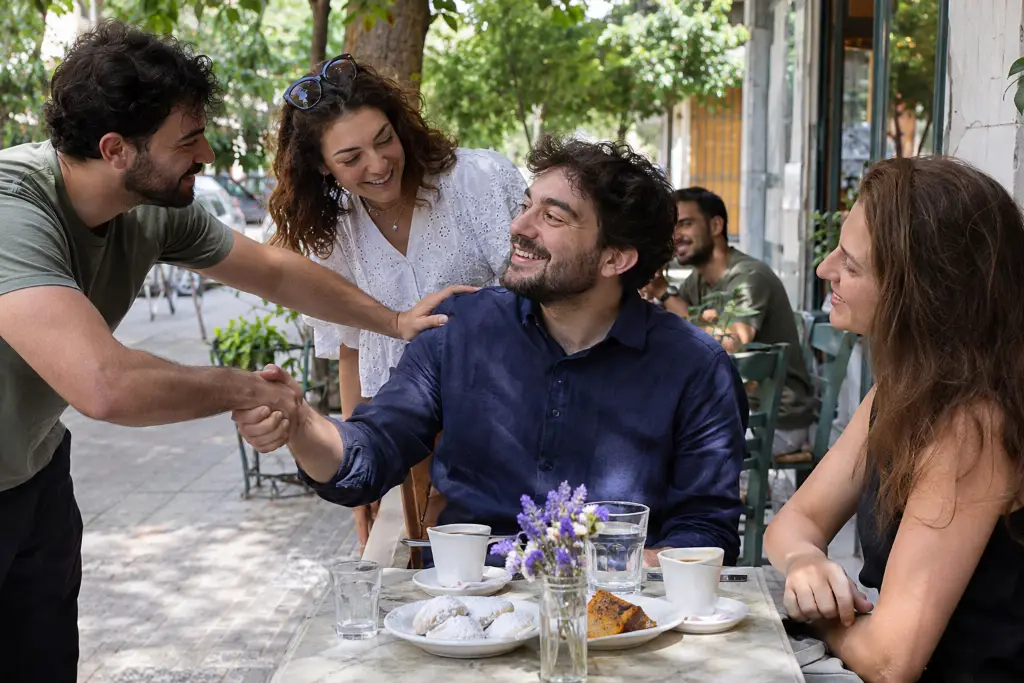
A name day, η γιορτή (i yor-TEE), is the feast of the saint you are named after. Every George celebrates on the feast of Saint George, every Helen and every Constantine on the feast of Saints Constantine and Helen.
That is why a name day is shared. On August 15 much of the family may be celebrating at once: every Maria, Panagiotis and Panagiota. A birthday is τα γενέθλια (ta ye-NE-thli-a), and in Greece the name day has traditionally mattered as much or more.
Who gets which wish

- The person celebrating: «Χρόνια πολλά!», then «Να χαίρεσαι το όνομά σου» or «Ό,τι επιθυμείς».
- Their family: «Να τον χαίρεσαι» to a man’s wife, mother or father; «Να τη χαίρεσαι» for a woman. To a couple: «Να τον χαίρεστε» (na ton HE-re-ste).
- Everyone who shares the name: «Χρόνια πολλά στους εορτάζοντες».
The answer is simple: «Ευχαριστώ», or warmer, «Ευχαριστώ, να είσαι καλά». «Επίσης», “same to you”, only fits if the other person shares your name.
In a card or a text, two lines are enough: «Χρόνια πολλά, Ελένη! Να χαίρεσαι το όνομά σου.»
The big name days
- January 1: Βασίλης, Βασιλική
- January 7: Γιάννης, Ιωάννα
- January 18: Θανάσης, Αθανασία
- March 25: Ευάγγελος, Ευαγγελία
- April 23: Γιώργος, Γεωργία. When April 23 falls before Easter Sunday or on it, the feast moves to Easter Monday.
- May 21: Κωνσταντίνος, Ελένη
- June 29: Πέτρος, Παύλος
- August 15: Μαρία, Παναγιώτης, Παναγιώτα, Δέσποινα
- October 26: Δημήτρης, Δήμητρα
- November 8: Μιχάλης, Γαβριήλ
- November 25: Κατερίνα
- December 6: Νίκος
- December 12: Σπύρος
- December 25: Χρήστος
A name with no saint of its own is usually celebrated on All Saints’ Sunday, των Αγίων Πάντων, the Sunday after Pentecost.
A phone call to Greece on April 23
- YouHRO-nya po-LA, THEE-e YOR-go!Happy name day, Uncle George!
- Uncleef-ha-ri-STO, pe-THEE moo! thi-MEE-thi-kes!Thank you, my child! You remembered!
- Youna HE-re-se to O-no-MA soo. O-ti e-pi-thi-MEES!Enjoy your name day. Whatever you wish for!
- Unclena EE-se ka-LA. ke too HRO-noo!Be well. And next year too!
Questions people ask
How do you say happy name day in Greek?
«Χρόνια πολλά» (HRO-nya po-LA), “many years”. Add the name: «Χρόνια πολλά, Γιώργο!», «Χρόνια πολλά, Ελένη!».
What do you say to someone on their Greek name day?
«Χρόνια πολλά», then «Να χαίρεσαι το όνομά σου» (na HE-re-se to O-no-MA soo), “may you enjoy your name”, or «Ό,τι επιθυμείς» (O-ti e-pi-thi-MEES), “whatever you wish for”.
How do you reply to a name-day wish?
«Ευχαριστώ» (ef-ha-ri-STO), “thank you”, or «Ευχαριστώ, να είσαι καλά», “thank you, be well”. «Επίσης», “same to you”, only fits if the other person shares your name.
When is my Greek name day?
On the feast of the saint you are named after. Some of the big ones: Vasilis January 1, Giannis January 7, Giorgos April 23, Konstantinos and Eleni May 21, Maria and Panagiotis August 15, Dimitris October 26, Nikos December 6.
What if my name has no saint?
Names without a saint of their own are usually celebrated on All Saints’ Sunday, «των Αγίων Πάντων», the Sunday after Pentecost.
When is Saint George’s name day if April 23 is before Easter?
It moves to Easter Monday, so that it is celebrated in the joy of Easter and not during Lent or Holy Week. The same happens when April 23 is Easter Sunday itself. In 2027 Easter is May 2, so Saint George’s day is Monday, May 3. In other years it stays on April 23.
You can say it. Now learn to read it.
Where are you starting from?
Born abroad, Greek by family: you never have to choose. Start from the Greek you already carry.
- About 1.2 million Americans are of Greek descent. About one in five speaks Greek at home. (US Census Bureau, 2019)
Learn the Greek you grew up hearing: Greek-Americans · Greek-Australians · Greek-Canadians · British Greeks and Cypriots · Deutschgriechen (auf Deutsch) · All Greek Heritage pages