
Greek for Greek-Americans
What to say in Greek when someone dies: condolences, zoi se sas, memory eternal
The simplest condolence in Greek is «Συλλυπητήρια» (si-li-pi-TEE-ri-a), “condolences”. At a funeral, Greeks also say «Ζωή σε σας» (zo-EE se sas), “life to you”, to the family. “May his memory be eternal” is «Αιωνία του η μνήμη» (e-o-NEE-a too i MNEE-mi), and for a woman «Αιωνία της η μνήμη».
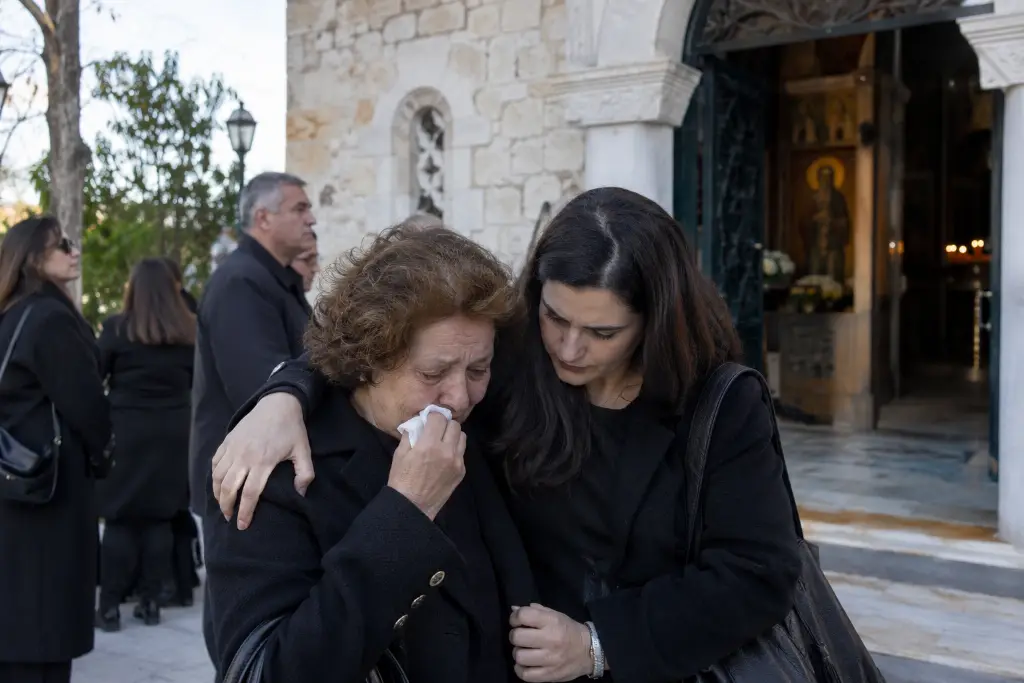
The words, and when each is said
| In Greek | How it sounds | What it means |
|---|---|---|
| si-li-pi-TEE-ri-a | CondolencesRight in every situation: in person, on the phone, in a card. | |
| ta si-li-pi-TEE-ri-a moo | My condolencesA little fuller. «Θερμά συλλυπητήρια» (ther-MA), “heartfelt condolences”, is the form for a card. | |
| zo-EE se sas | Life to youAt the funeral and at a memorial, to the family of the person who died. | |
| zo-EE se LO-goo sas | Life to you (an older wording)The same wish in an older wording. You are most likely to hear it from older people. | |
| e-o-NEE-a i MNEE-mi | Eternal be the memoryChurch Greek, sung at the funeral and at memorial services. Also written in notices and cards. | |
| e-o-NEE-a too i MNEE-mi | May his memory be eternalFor a woman: «Αιωνία της η μνήμη» (tis). For more than one person: «Αιωνία τους η μνήμη» (toos). | |
| o the-OS na ton a-na-PAF-si | May God give him restEveryday Greek. For a woman: «Ο Θεός να την αναπαύσει» (na tin). | |
| na ZEE-se-te na ton thi-MA-ste | May you live to remember himTo the family. For a woman: «να τη θυμάστε» (na ti). | |
| ka-LO pa-RA-thi-so | Literally “a good paradise”: may he or she be in heavenSaid of the person who died. Everyday Greek. | |
| li-PA-me po-LEE | I am very sorryWhen you first hear the news. | |
| koo-RA-yo | Courage, strengthTo someone close to you. | |
| na EE-ste ka-LA | May you be wellWhat the family answers, with «Ευχαριστώ» (ef-ha-ri-STO), “thank you”. |
What to say to the family
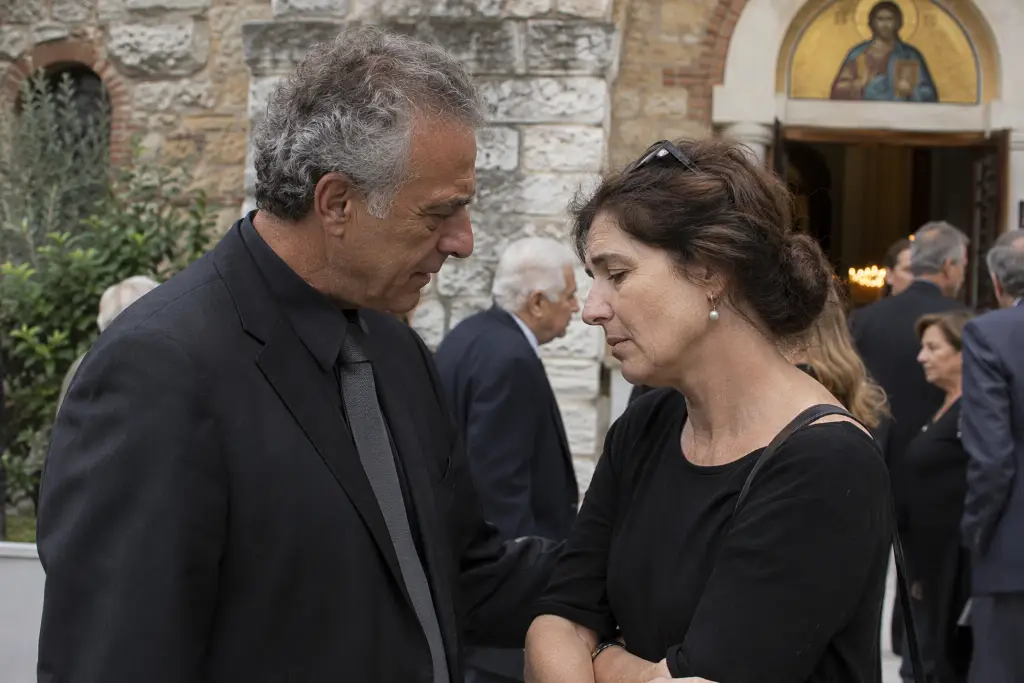
You do not need many words. One of these, said quietly, is enough.
- «Συλλυπητήρια»: “condolences”. If you learn one word, learn this one.
- «Ζωή σε σας»: “life to you”. The wish is long life for those who remain.
- «Να ζήσετε να τον θυμάστε»: “may you live to remember him”. For a woman, «να τη θυμάστε».
The family answers «Ευχαριστώ», “thank you”, or «Να είστε καλά», “may you be well”. Nothing more is needed.
You may also hear «Ζωή σε μας» (zo-EE se mas), “life to us”. Relatives who share the loss say it to each other.
“May his memory be eternal” in Greek
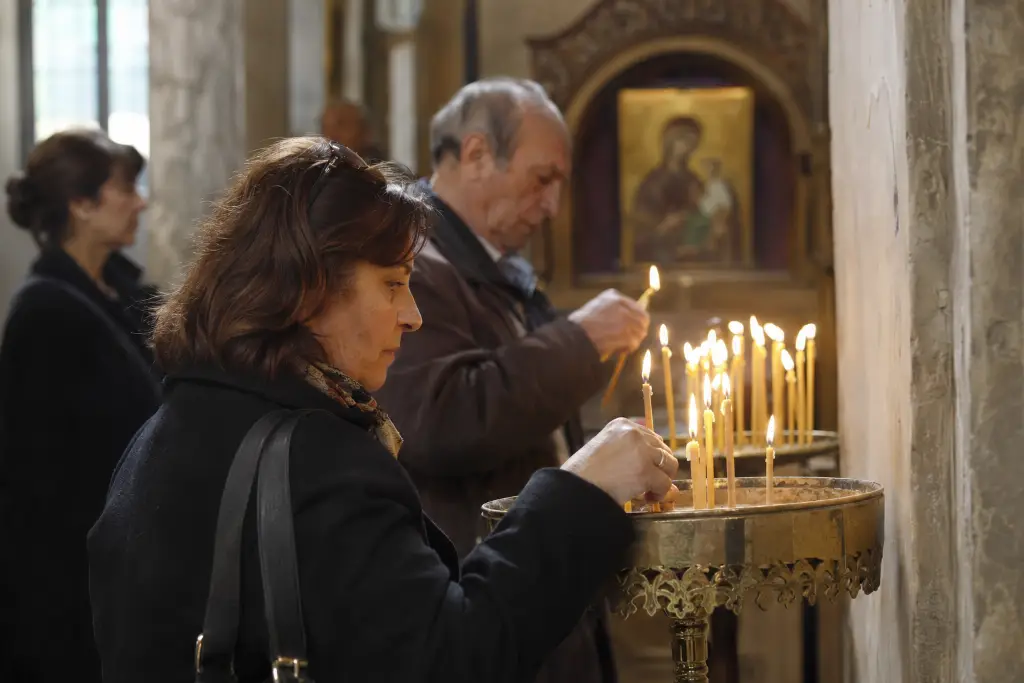
The words are «Αιωνία η μνήμη» (e-o-NEE-a i MNEE-mi), “eternal be the memory”. They are sung at the end of the Orthodox funeral service and at memorial services.
- For a man: «Αιωνία του η μνήμη», “may his memory be eternal”.
- For a woman: «Αιωνία της η μνήμη», “may her memory be eternal”.
- For more than one person: «Αιωνία τους η μνήμη».
This is church Greek, an older form of the language. In everyday Greek the word is αιώνια, with the stress one syllable earlier, but the phrase is fixed and keeps its old form. The everyday wishes with the same feeling are «Ο Θεός να τον αναπαύσει», “may God give him rest”, and «Καλό παράδεισο».
What to write in a card or a message

A short line in Greek letters is enough. Each of these is complete as it stands.
- «Θερμά συλλυπητήρια.» Heartfelt condolences.
- «Θερμά συλλυπητήρια για την απώλεια του πατέρα σας.» Heartfelt condolences for the loss of your father. For a mother: «της μητέρας σας».
- «Είμαστε κοντά σας.» (EE-ma-ste kon-DA sas) We are with you.
- «Αιωνία του η μνήμη.» or «Αιωνία της η μνήμη.» May his, or her, memory be eternal.
Sign with «Με αγάπη» (me a-GA-pi), “with love”, and your name.
The spellings you may have seen, and the memorial
These phrases are hard to spell in Latin letters, and you will find many versions: syllypitiria, silipitiria or sillipitiria; zoi se sas or zoe se sas; eonia i mnimi or aionia i mnimi. Each set is one Greek phrase.
A memorial service is called μνημόσυνο (mni-MO-si-no). Families commonly hold one about forty days after the death, and often again at one year. Boiled wheat, κόλλυβα (KO-li-va), is shared after the service. At a memorial you say the same words as at the funeral: «Αιωνία του η μνήμη», «Να ζήσετε να τον θυμάστε».
When Greeks speak of someone who has died, they often add a word before the name: ο μακαρίτης (o ma-ka-REE-tis) for a man, η μακαρίτισσα (i ma-ka-REE-ti-sa) for a woman, “the late”.
At the church, after the service
- Yousi-li-pi-TEE-ri-a, THEE-a. zo-EE se sas.My condolences, Aunt. Life to you.
- Auntef-ha-ri-STO, pe-THEE moo.Thank you, my child.
- Youna ZEE-se-te na ton thi-MA-ste.May you live to remember him.
- Auntna EE-se ka-LA.May you be well.
Questions people ask
What do Greeks say when someone dies?
To the family: «Συλλυπητήρια» (si-li-pi-TEE-ri-a), “condolences”, and «Ζωή σε σας» (zo-EE se sas), “life to you”. Of the person who died: «Αιωνία του η μνήμη», “may his memory be eternal”, or «Ο Θεός να τον αναπαύσει», “may God give him rest”.
How do you say condolences in Greek?
«Συλλυπητήρια» (si-li-pi-TEE-ri-a). “My condolences” is «Τα συλλυπητήριά μου». In a card, write «Θερμά συλλυπητήρια», “heartfelt condolences”.
What does zoi se sas mean?
«Ζωή σε σας» means “life to you”. It is said at a funeral or a memorial to the relatives of the person who died, as a wish that they live long. They answer «Ευχαριστώ», “thank you”.
Is it zoi se sas or zoi se mas?
Both exist. «Ζωή σε σας», “life to you”, is what a visitor says to the family. «Ζωή σε μας», “life to us”, is said among relatives who share the loss.
How do you say “may his memory be eternal” in Greek?
«Αιωνία του η μνήμη» (e-o-NEE-a too i MNEE-mi). For a woman it is «Αιωνία της η μνήμη». Without “his” or “her” it is «Αιωνία η μνήμη», the form sung in church.
How do you respond to Greek condolences?
With «Ευχαριστώ» (ef-ha-ri-STO), “thank you”, or «Να είστε καλά» (na EE-ste ka-LA), “may you be well”. A short answer is enough.
If one day you would like to read and write the Greek your family speaks, this is where to start.
Learn the Greek you grew up hearing: Greek-Americans · Greek-Australians · Greek-Canadians · British Greeks and Cypriots · Deutschgriechen (auf Deutsch) · All Greek Heritage pages