
Greek for Greek-Americans
May his memory be eternal in Greek: Aionia i mnimi, written and pronounced
“May his memory be eternal” in Greek is «Αιωνία του η μνήμη» (e-o-NEE-a too i MNEE-mi). For a woman it is «Αιωνία της η μνήμη» (tis), and the general form sung in church is «Αιωνία η μνήμη» (e-o-NEE-a i MNEE-mi), “eternal be the memory”. It is church Greek, said at the funeral and at memorial services, and written in cards and notices.
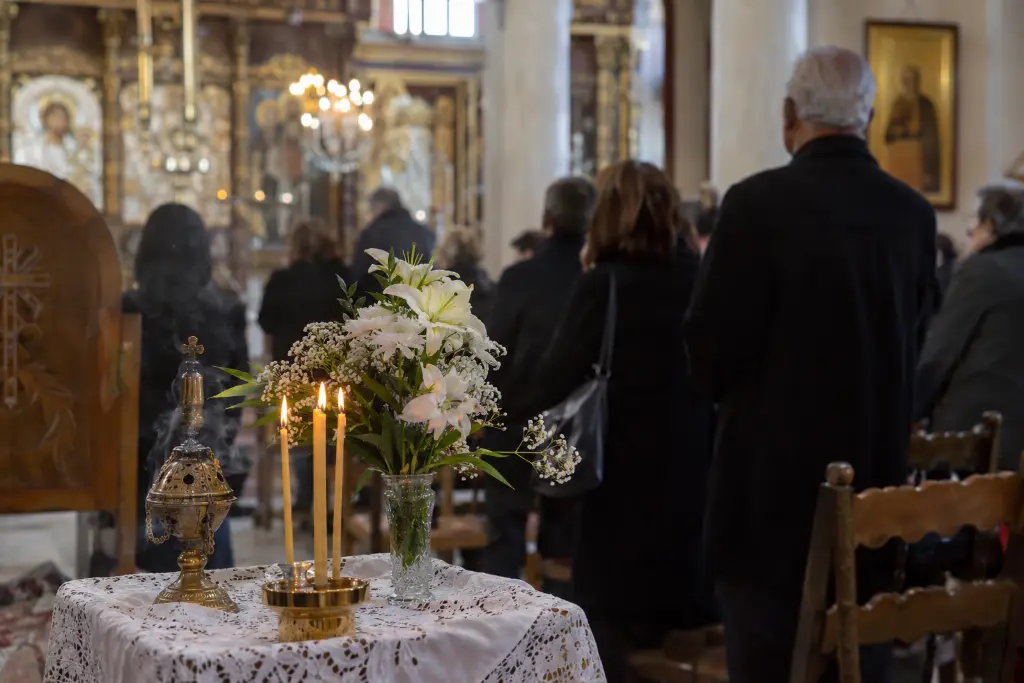
The phrase, its forms, and the words beside it
| In Greek | How it sounds | What it means |
|---|---|---|
| e-o-NEE-a i MNEE-mi | Eternal be the memory, memory eternalThe church form, sung three times at the end of the funeral and of memorial services. | |
| e-o-NEE-a too i MNEE-mi | May his memory be eternalOf a man. Said to the family, or written in a card or a message. | |
| e-o-NEE-a tis i MNEE-mi | May her memory be eternalOf a woman. | |
| e-o-NEE-a toos i MNEE-mi | May their memory be eternalOf more than one person. | |
| o the-OS na ton a-na-PAF-si | May God give him restEveryday Greek. For a woman: «Ο Θεός να την αναπαύσει» (na tin). | |
| o the-OS na ton sin-ho-RE-si | May God forgive himEveryday Greek, often said when the person’s name comes up. For a woman: «να τη συγχωρέσει» (na ti). | |
| si-li-pi-TEE-ri-a | CondolencesWhat you say first to the family, before any other words. | |
| ther-MA si-li-pi-TEE-ri-a | Heartfelt condolencesThe usual opening line of a card. | |
| na EE-ste ka-LA | May you be well, thank youWhat the family often answers, with «Ευχαριστώ» (ef-ha-ri-STO), “thank you”. |
What the words mean
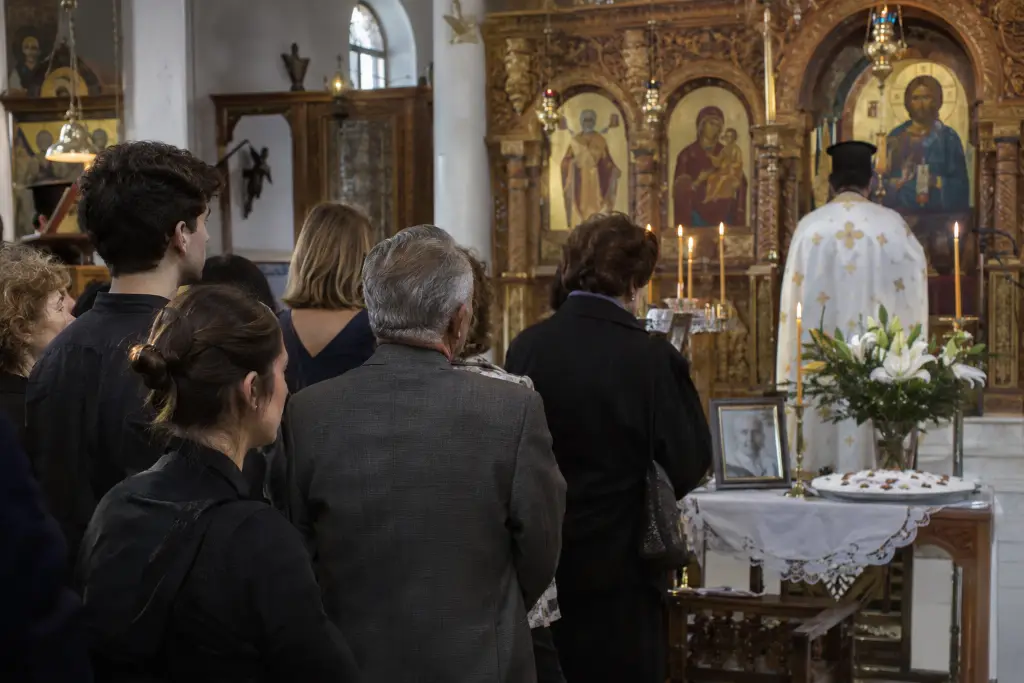
«Αιωνία η μνήμη» is a short sentence in two parts.
- αιωνία: eternal, lasting for ages.
- η μνήμη (i MNEE-mi): the memory, the remembrance.
Put together: “eternal be the memory”. Adding του, της or τους after the first word makes it personal: his memory, her memory, their memory.
At the funeral the priest may also address the person directly with «Αιωνία σου η μνήμη» (e-o-NEE-a soo i MNEE-mi), “may your memory be eternal”.
Why it is “aionia” and not the everyday word
The phrase is church Greek, kept unchanged from the service. In the Greek spoken today, “eternal” in the feminine is αιώνια (e-O-ni-a), with the stress one syllable earlier. αιωνία (e-o-NEE-a) is the older, learned form, and the fixed phrase keeps it.
So say the phrase exactly as it is, as you would say a line of a prayer. It is also the form Greeks write in cards and messages.
The two letters αι at the start sound like the e of “met”. That is why the phrase is spelled both aionia and eonia in Latin letters. You will also find aiwnia, eonia i mnimi, aionia h mnhmh and aionia tou i mnimi. All of them are the same Greek.
When you hear it, and when to say it

You will hear «Αιωνία η μνήμη» sung three times at the end of these services:
- the Τρισάγιο (tri-SA-yi-o), the short prayer service for the person who died;
- the funeral, η κηδεία (i ki-THEE-a);
- the memorial service, το μνημόσυνο (to mni-MO-si-no), commonly held about forty days after the death and often again at one year.
You can say «Αιωνία του η μνήμη» or «Αιωνία της η μνήμη» to the family, quietly, after «Συλλυπητήρια». You can write it in a sympathy card or under a message on the anniversary of a death. It is right on all of these occasions.
Writing it in a card
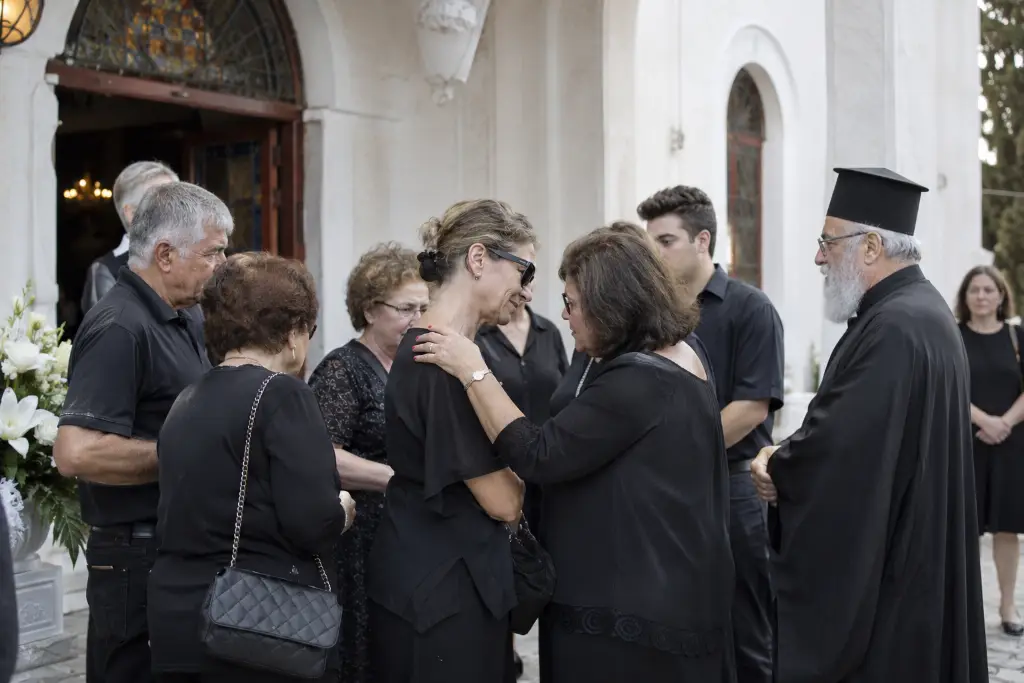
One line in Greek letters is enough. Choose the form for a man, a woman, or more than one person.
- «Αιωνία του η μνήμη.» May his memory be eternal.
- «Αιωνία της η μνήμη.» May her memory be eternal.
- «Θερμά συλλυπητήρια. Αιωνία της η μνήμη.» Heartfelt condolences. May her memory be eternal.
Sign with «Με αγάπη» (me a-GA-pi), “with love”, and your name.
After the memorial service, in the church hall
- Yousi-li-pi-TEE-ri-a, THEE-e. e-o-NEE-a tis i MNEE-mi.My condolences, Uncle. May her memory be eternal.
- Uncleef-ha-ri-STO, pe-THEE moo.Thank you, my child.
- Youo the-OS na tin a-na-PAF-si.May God give her rest.
- Unclena EE-se ka-LA.Be well, my dear.
Questions people ask
How do you say “may his memory be eternal” in Greek?
«Αιωνία του η μνήμη» (e-o-NEE-a too i MNEE-mi). For a woman: «Αιωνία της η μνήμη» (tis). For more than one person: «Αιωνία τους η μνήμη» (toos).
How do you pronounce “memory eternal” in Greek?
«Αιωνία η μνήμη» is said e-o-NEE-a i MNEE-mi. The first letters αι sound like the e of “met”, the stress falls on NEE, and μνήμη starts with both m and n.
What does aionia i mnimi mean?
“Eternal be the memory”, or “memory eternal”. It is the church wish for a person who has died, sung at the end of the funeral and of memorial services. It is also spelled eonia i mnimi.
How do you say “may her memory be eternal” in Greek?
«Αιωνία της η μνήμη» (e-o-NEE-a tis i MNEE-mi). Only the small word changes: «του» for him, «της» for her.
What do you reply to aionia i mnimi?
The family usually answers «Ευχαριστώ» (ef-ha-ri-STO), “thank you”, or «Να είστε καλά» (na EE-ste ka-LA), “may you be well”. Nothing more is needed.
Why is aionia stressed on NEE, when everyday Greek says aionia with the stress on O?
Because the phrase is church Greek. Everyday Greek says «αιώνια» (e-O-ni-a), but the fixed phrase keeps the older, learned form «αιωνία» (e-o-NEE-a).
If one day you would like to read and write the Greek your family speaks, this is where to start.
Learn the Greek you grew up hearing: Greek-Americans · Greek-Australians · Greek-Canadians · British Greeks and Cypriots · Deutschgriechen (auf Deutsch) · All Greek Heritage pages