

Use this original AI-generated teaching image to practise describing what you can see. It is not a historical artwork or a reproduction attributed to a Greek artist. Begin with observable details, then add a personal response without presenting it as a fact about the painter.
Look at the still life
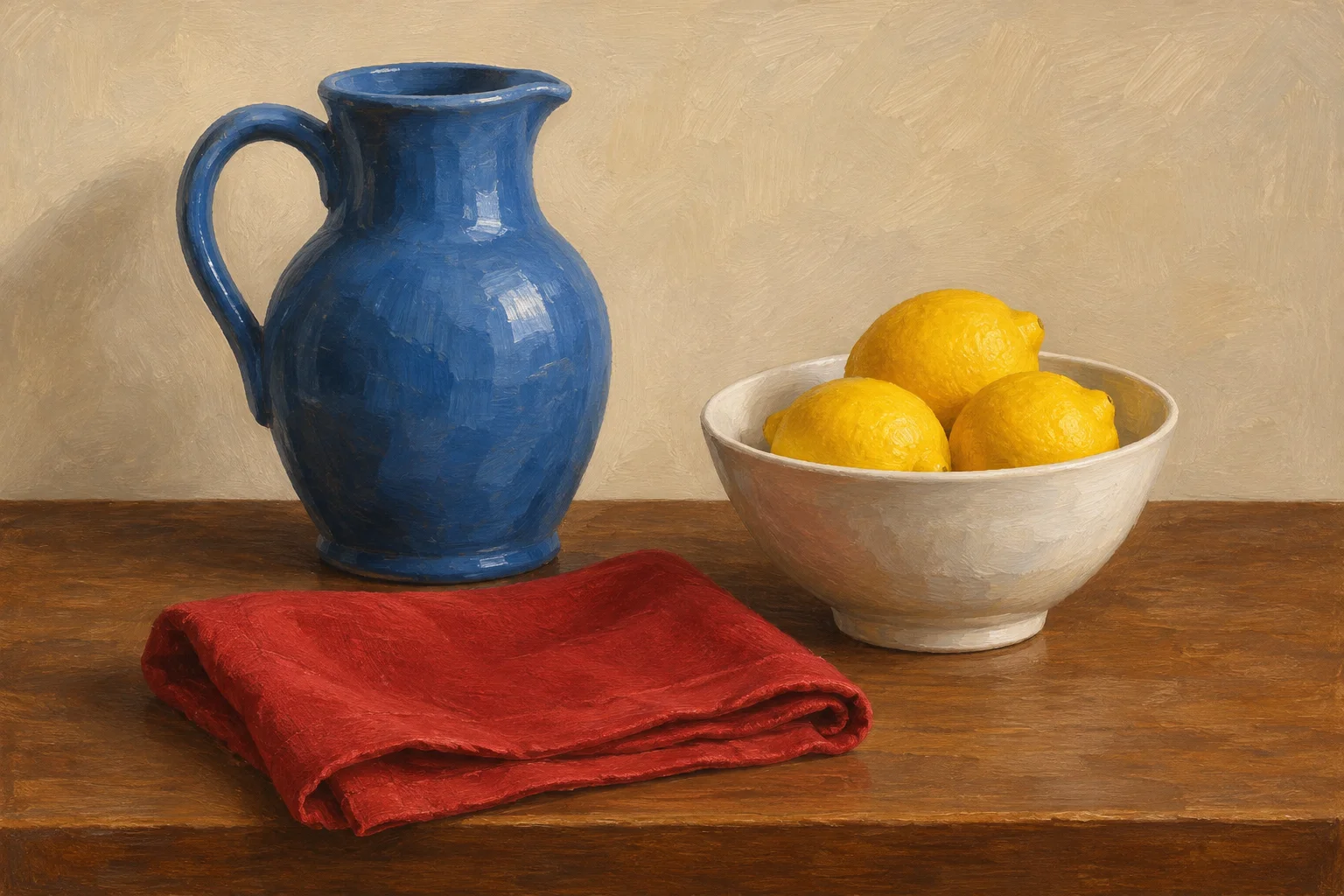
Words for the visible objects
| η κανάτα | the jug |
| το μπολ | the bowl |
| το λεμόνι — τα λεμόνια | the lemon — the lemons |
| το πανί | the cloth |
| το τραπέζι | the table |
Build a short description
Αριστερά βλέπω μια μπλε κανάτα. Δεξιά υπάρχει ένα άσπρο μπολ με τρία κίτρινα λεμόνια. Μπροστά υπάρχει ένα κόκκινο πανί.
On the left I see a blue jug. On the right there is a white bowl with three yellow lemons. In front there is a red cloth. Here left and right refer to the image as you view it. The description does not claim where the objects were made or who owns them.
Check the visible details
- Is the jug on the viewer’s left or right?
- How many yellow lemons can you see in the bowl?
- Is the cloth red or blue?
- Does the image identify the person who owns the objects?
Answers
1. Left: αριστερά. 2. Three: τρία. 3. Red: κόκκινο. 4. No: no owner is identified.
Keep colour and noun together
Learn the complete phrases ένα άσπρο μπολ, τρία κίτρινα λεμόνια and ένα κόκκινο πανί. The adjective forms match these nouns and their number. Μπλε does not change in μια μπλε κανάτα. Do not assume that every colour behaves identically; compare the adjective guide when you want to change the noun.
Add a response and label it as yours
Μου αρέσει η μπλε κανάτα means “I like the blue jug”. That is your preference, not a claim about the artist’s intention. You might find the scene calm, but the image alone cannot tell you what a named artist wanted to express. Avoid inventing a date, museum or biography for this generated example.
Write three sentences without copying
Cover the model description and name one object, give its colour and locate it. Then choose a second object and say how many there are if a count is clear. Compare your sentences with the picture, not only with the model: a different correct description can use a different order. Finish with one personal preference and keep it separate from the observable details.
Continue with useful language
The adjective guide helps you match descriptive words to nouns. The museum guide adds vocabulary for discussing a visit. Use these tools to describe another image without guessing facts that are not visible.